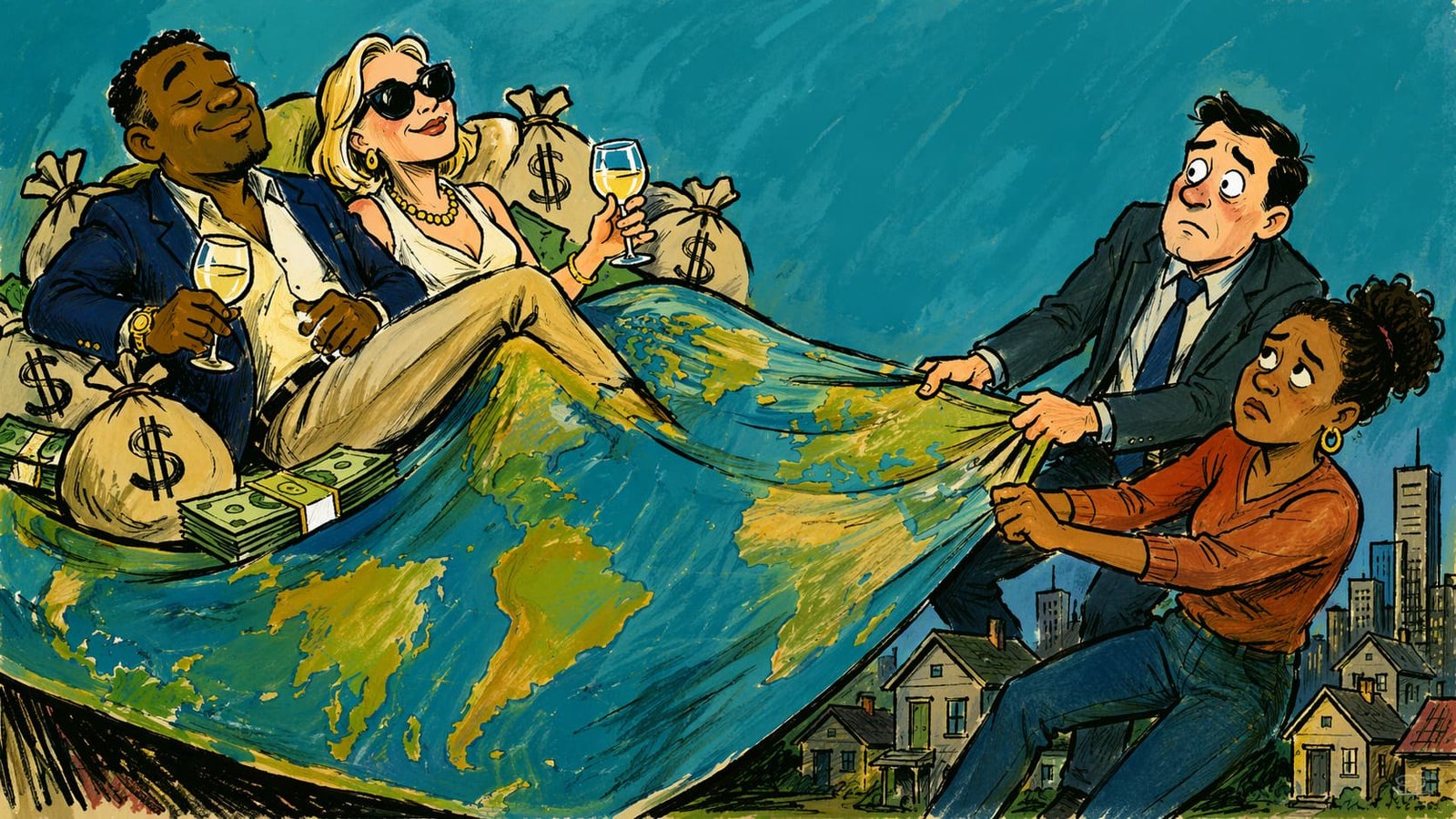
A private jet descends over a coastline that did not used to matter. The runway is new, the air feels curated, the silence expensive. A convoy waits, engines idling like a promise. Within weeks, a cluster of villas rises where scrubland once held its ground. No announcement, no ceremony. The map shifts anyway. Wealth does not argue with geography. It edits it.
For decades, cities competed for status through culture, industry, history. Now they compete for something more fluid: capital that travels without nostalgia. Places like Miami and Dubai have become magnets for high-net-worth migration, not by accident but by design. Tax policy, climate, infrastructure, lifestyle, all tuned to attract a specific class of resident. The result feels less like growth and more like reconfiguration. The tension sits quietly beneath the surface: belonging versus mobility.
There is a pattern to these movements that rarely gets described in simple terms. The wealthy do not just relocate, they reassemble environments around themselves. A financier leaves one city, arrives in another, and within months familiar structures appear. Restaurants that mirror previous tastes, schools aligned with familiar standards, networks that replicate old hierarchies. The destination changes, the ecosystem follows. It feels like continuity disguised as change.
A developer named Hassan watched this unfold in real time along a stretch of coastline that had once been considered peripheral. Early buyers arrived quietly, drawn by policy incentives and open space. Within a year, construction accelerated. Within three, the area felt transformed. “They didn’t adapt to the place,” Hassan said. “The place adapted to them.” Property values surged, local businesses shifted, the rhythm of daily life recalibrated.
This recalibration carries both opportunity and tension. New investment can revitalize infrastructure, create jobs, elevate visibility. At the same time, it can displace existing communities, reshape cultural identity, and introduce a pace that feels foreign. The change is not always dramatic. Often it is incremental, visible only when viewed over time. A café closes, replaced by something more polished. A neighborhood feels slightly less familiar, then entirely different.
A small story from a coastal town captures this dynamic. A teacher named Elena had lived there for years, watching seasons change with predictable rhythm. When a wave of new residents arrived, she noticed subtle shifts first. Property listings disappeared faster. Prices rose. Shops adjusted their offerings. Eventually, Elena faced a decision she had not expected. Stay and adapt, or leave and start again elsewhere. “It wasn’t one moment,” she said. “It was a series of small changes that added up.”
The mobility of wealth also changes how cities position themselves. Governments introduce incentives, streamline processes, promote narratives of openness and opportunity. The language becomes aspirational. “Global hub,” “investment destination,” “lifestyle capital.” These phrases signal readiness, a willingness to be shaped by incoming capital. The strategy works, but it also redefines what the city becomes.
Public figures often symbolize this movement. When entrepreneurs or investors announce relocations, attention follows. Consider figures like Elon Musk shifting operations and residence between states, influencing not just business decisions but regional identity. The movement of one individual can signal a broader trend, encouraging others to reconsider their own locations. The effect is less about imitation and more about permission.
A relocation advisor named Sofia described her clients’ motivations with unusual clarity. “They are not leaving something,” she said. “They are optimizing for something.” Tax efficiency, lifestyle alignment, network proximity, each factor weighed carefully. The decision feels personal, yet it is often strategic. Home becomes a variable rather than a constant.
This shift challenges traditional ideas of belonging. When residence becomes flexible, attachment changes. A place is no longer defined solely by history or community, but by utility and alignment. The emotional connection to location competes with practical considerations. For some, this creates freedom. For others, it introduces a sense of detachment.
A restaurateur named Miguel experienced both sides of this transformation. His restaurant thrived as new residents arrived, bringing increased demand and visibility. At the same time, he noticed a change in the clientele. Conversations shifted, expectations evolved, the atmosphere felt different. “It’s still busy,” he said, “but it feels less like a neighborhood and more like a destination.” The distinction was subtle, yet meaningful.
The global nature of this movement amplifies its impact. Wealth flows across borders with increasing ease, responding to policy, opportunity, perception. Cities that position themselves effectively attract this flow. Those that do not may find themselves losing it. The map becomes dynamic, less fixed than it once appeared. Geography remains, but its meaning shifts.
There is also a cultural dimension that unfolds alongside economic change. Art scenes evolve, social norms adjust, public spaces reflect new influences. Some of these changes enrich the environment, introducing diversity and innovation. Others create friction, particularly when new values intersect with established traditions. The outcome is rarely simple. It is layered, sometimes contradictory.
A policy analyst named Ravi once described the phenomenon as “selective gravity.” Certain places pull strongly on specific types of wealth, creating clusters that reinforce themselves. The more capital arrives, the stronger the pull becomes. Over time, these clusters reshape regional dynamics, influencing everything from housing markets to cultural production. The effect is cumulative, not immediate.
A late afternoon in a newly developed district offers a glimpse into this transformation. Streets are clean, architecture precise, businesses aligned with a particular aesthetic. Everything feels intentional. Yet beneath that surface, there is a sense of recentness, as if the place has not fully settled into itself. The energy is forward-looking, but the roots are still forming.
In contrast, older neighborhoods nearby carry a different weight. Buildings show age, stories linger in small details, routines feel established. The coexistence of these spaces creates a layered city, one that holds multiple timelines at once. The tension between them is not always visible, but it shapes the experience of those who move through both.
As evening approaches, lights turn on across both landscapes, reflecting different versions of what a city can be. One feels inherited, the other constructed. Both are real. Both are evolving.
Somewhere between movement and memory, a question begins to take shape, quiet but persistent, like a line drawn on a map that no longer stays still:
When the places people call home can change as easily as a strategy, what remains constant enough to still feel like belonging?
