A pair of shoes sits in a boutique window, oversized, awkward, almost defiant in its refusal to be elegant. The stitching looks exaggerated, the colors slightly off, the silhouette closer to parody than design. A passerby pauses, frowns, then looks again. Inside the store, the same pair is displayed like sculpture. Price tag elevated, lighting intentional. Somewhere between confusion and curiosity, desire begins to form. What once looked wrong now feels deliberate.
Fashion has always flirted with rebellion, but something different is happening. The return of so-called “ugly trends” is not accidental. It is strategic, almost philosophical. When beauty becomes too accessible, too easy to replicate, distinction seeks a new language. That language often arrives disguised as discomfort. Brands like Balenciaga have built entire collections around silhouettes that challenge conventional taste, turning awkwardness into aspiration. The tension is clear: taste versus recognition.
There is a quiet logic behind this shift. When everyone can identify something as beautiful, it loses its power as a signal. A clean white sneaker, a tailored jacket, a minimal silhouette, all become familiar, safe, widely accepted. To stand out, the aesthetic must move elsewhere. It must become harder to read, slightly unsettling, even divisive. Ugly becomes a form of coded language, a way of signaling that one belongs to a different layer of cultural awareness.
A stylist named Renata once described a client who insisted on wearing pieces that initially looked mismatched. Bulky shoes with delicate fabrics, oversized coats with sharp accessories. The combinations felt wrong at first glance, then strangely compelling. Renata noticed how people reacted. Confusion turned into attention, attention into conversation. The outfit was not about harmony. It was about interruption. “If they don’t understand it immediately,” the client said, “they look longer.”
This longer look is where value accumulates. In a culture saturated with images, anything that blends in disappears quickly. Something that disrupts visual expectations holds attention. That attention translates into influence. Influence translates into status. The aesthetic may appear chaotic, but the mechanism is precise. It is not ugliness for its own sake. It is calculated friction.
Pop culture amplifies this dynamic. Celebrities adopt unconventional looks that spark debate, not consensus. Think of Kanye West appearing in silhouettes that challenge proportion, or Billie Eilish embracing oversized, unconventional styling early in her career. The reactions are rarely neutral. Some admire, others criticize, but almost everyone notices. The conversation becomes part of the value.
A buyer named Marcus working for a high-end retailer shared an observation that stayed with him. He noticed that items initially described as “too strange” often sold out once they appeared on influential figures. The same piece that sat untouched on a rack became desirable when contextualized within a narrative of confidence. “People don’t just buy the item,” Marcus said. “They buy the permission to wear it.”
This permission is crucial. Ugly trends often require a shift in perception before they can be embraced. Early adopters carry the burden of interpretation, translating unfamiliar aesthetics into something others can recognize as intentional. Once that translation happens, the trend spreads. What was once ridiculed becomes normalized, then eventually expected.
There is also an emotional dimension to this shift. Wearing something that defies conventional taste can feel liberating. It breaks the quiet pressure to conform, to align with widely accepted standards of beauty. At the same time, it introduces a different kind of pressure, the need to understand and participate in a more complex aesthetic language. The freedom is real, but it is not without structure.
A young designer named Ayo built his early collections around this tension. He created garments that felt slightly off, seams placed unexpectedly, proportions altered just enough to disrupt familiarity. Initial reactions were mixed. Some dismissed the work as impractical. Others saw something deeper. Over time, Ayo noticed a shift. The same critics began to reinterpret his designs, finding meaning in what once felt confusing. “It didn’t change,” he said. “People did.”
This change reflects a broader cultural movement. Taste is no longer fixed. It evolves through exposure, conversation, repetition. Social media accelerates this process, allowing unconventional aesthetics to circulate rapidly. A look that might have remained niche now reaches a global audience within hours. The cycle of rejection and acceptance compresses.
There is a risk within this acceleration. When everything becomes a trend quickly, the meaning behind it can thin out. Ugly trends, once rooted in a challenge to norms, can become another form of conformity. The same oversized silhouettes appear across different brands, the same exaggerated details repeat. What began as disruption becomes pattern. The edge softens.
A fashion editor named Lila once wrote about this phenomenon after attending several runway shows. She noticed how collections that claimed to be radical began to resemble each other. The shock factor diminished. “When everyone is trying to be different in the same way,” she wrote, “difference loses its force.” Her observation lingered because it pointed to a cycle that repeats across culture.
Despite this, the appeal of ugly trends persists. They offer a way to engage with fashion that feels active rather than passive. They invite interpretation, conversation, even disagreement. In a world where images are consumed quickly, they slow the gaze, if only for a moment.
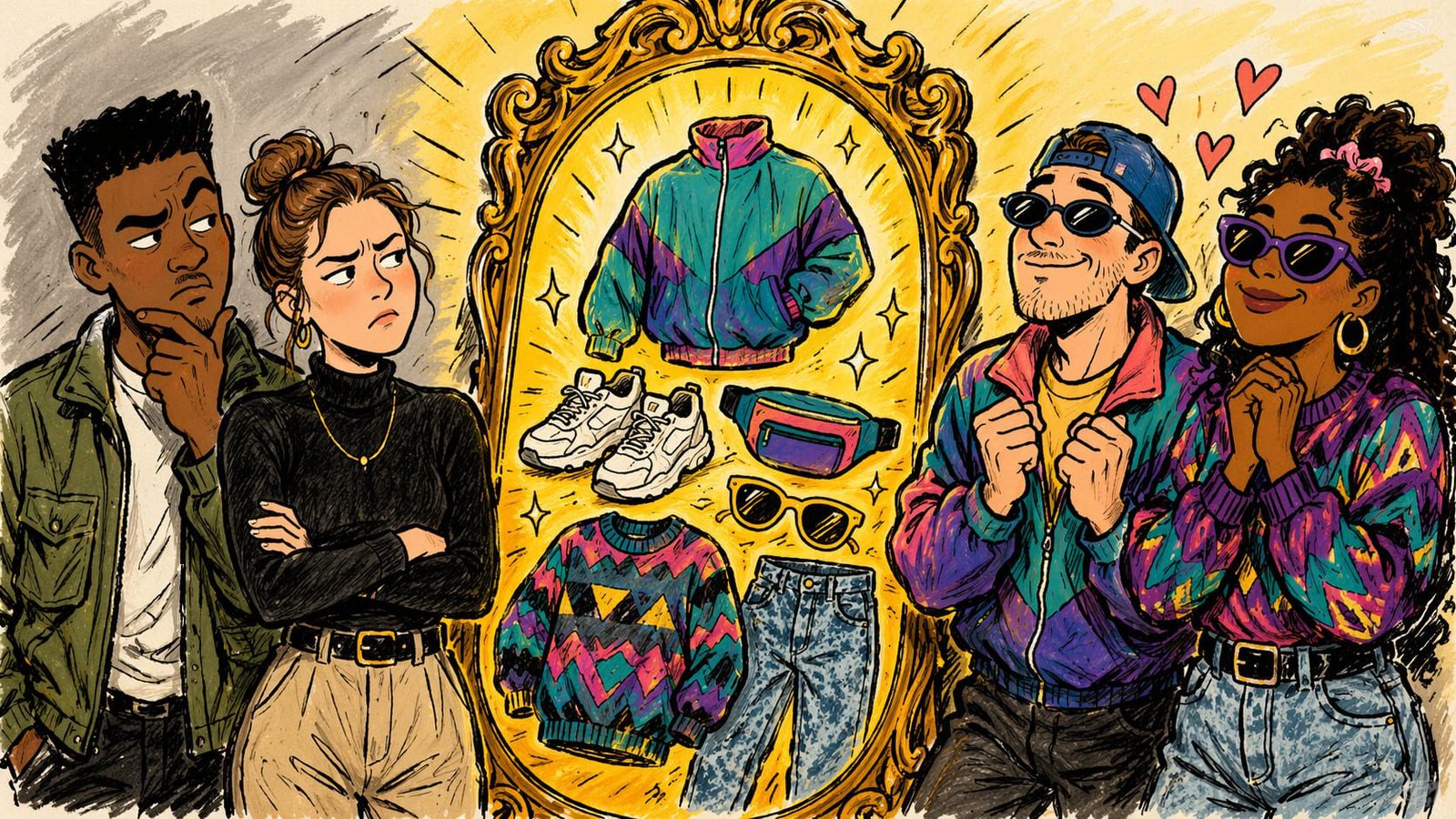
A small scene captures this perfectly. A person stands in front of a mirror, trying on a piece that feels unfamiliar. It does not flatter in the traditional sense. It challenges. There is hesitation, then curiosity. The decision to wear it becomes less about appearance and more about statement. The outfit becomes a question rather than an answer.
Outside, reactions vary. Some glances linger, others move on quickly. The wearer feels both exposed and empowered, navigating a space where approval is uncertain but attention is guaranteed. The experience is not comfortable, but it is alive.
In a quiet studio, a designer adjusts a prototype, deliberately exaggerating a detail that would normally be refined. The choice is intentional, almost philosophical. Perfection is no longer the goal. Distinction is.
Somewhere within this evolving landscape, a thought settles, subtle but persistent, like a pattern that only becomes visible after repeated viewing:
If taste is no longer about what looks good but about what signals awareness, what exactly are you trying to show when you choose what others once rejected?
