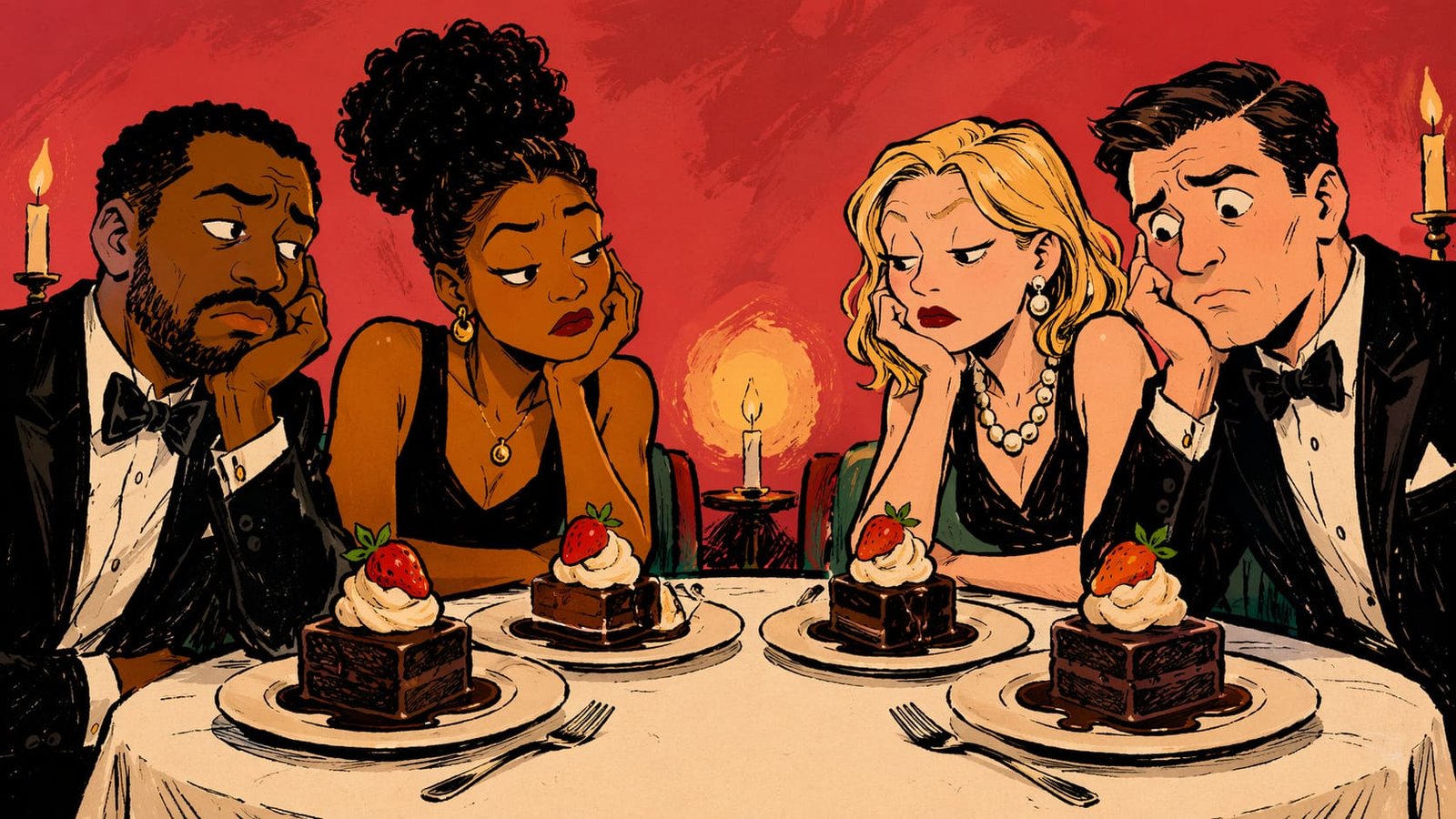
A glass case glows under soft restaurant lighting, each dessert plated with surgical symmetry, each garnish placed as if approved by a committee of algorithms. Chocolate lava cake sits beside crème brûlée, cheesecake waits patiently next to tiramisu. Different names, same feeling. Somewhere between indulgence and expectation, desire has been standardized. The ritual of choosing dessert now feels less like temptation and more like compliance.
The modern dessert menu has become a mirror of something larger, a culture drifting toward safe pleasure. You can walk into a boutique café in Nairobi, a hotel lounge in Dubai, or a polished bistro in New York and encounter near-identical offerings. The vocabulary rarely changes. Molten, decadent, signature, handcrafted. Words stretch, flavors shrink. The tension sits quietly beneath the surface: seduction versus predictability.
A pastry chef named Camille once ran a small restaurant in Lyon where desserts felt like conversation. She served a burnt pear tart that looked slightly imperfect, tasted quietly rebellious, and changed depending on the season. Guests talked about it for weeks. When she later joined a global hospitality group, the menu came pre-designed. Lava cake. Cheesecake. Chocolate mousse. Camille tried to introduce her tart. The response came back polite and firm. “Guests prefer familiarity.” She complied, then noticed something unsettling. Orders increased, but excitement disappeared.
You can feel that shift as a diner. The moment dessert arrives, the senses recognize the experience before the first bite. The texture is known, the sweetness predictable, the presentation rehearsed. Nothing surprises. And without surprise, seduction weakens. Pleasure becomes efficient rather than memorable. It fills a space but does not linger.
This is not accidental. Standardization solves real business problems. Consistency reduces risk, simplifies training, and scales across locations. Chains like The Cheesecake Factory built entire identities on dependable indulgence. You walk in knowing exactly what you will get, and that certainty feels comforting. Yet comfort carries a cost. It slowly erodes the edge that makes an experience feel personal.
A restaurant manager named Daniel once tested a quiet experiment. He added a rotating dessert to his otherwise predictable menu, something seasonal, slightly unconventional. One week it was a rosemary-infused panna cotta. Another week it was a citrus olive oil cake that tasted unfamiliar at first bite. Sales did not spike immediately. Some guests hesitated. But those who ordered it talked, posted, returned. Daniel noticed a subtle pattern. The predictable desserts were consumed. The unusual ones were remembered.
There is a psychological layer beneath this behavior. Familiar desserts operate like background music. They create a pleasant environment without demanding attention. Novel desserts interrupt that rhythm. They require engagement, curiosity, even a small risk. In a culture trained to minimize friction, that risk feels uncomfortable. So menus evolve to remove it entirely. Everything becomes easy to choose, and therefore easy to forget.
The language of dessert has also become inflated. Words like “artisanal” and “signature” appear so often they begin to lose meaning. A chocolate cake described with ten adjectives rarely tastes ten times better. Instead, language compensates for a lack of distinction. It performs uniqueness while delivering sameness. You read the menu and feel intrigued. You take a bite and realize you have been here before.
A young food writer named Laila once described this phenomenon after traveling through multiple cities. She kept a small notebook, sketching desserts she encountered. After several weeks, the pages began to blur. Different restaurants, similar compositions. A quenelle here, a drizzle there, a dusting of powdered sugar that looked identical across continents. Laila wrote a single line across the page that stood out: “It tastes good, but it does not taste like anywhere.”
There is also a cultural dimension that rarely gets discussed. Dessert used to carry local identity. Regional ingredients, inherited techniques, subtle variations passed through generations. When menus merge, that identity softens. A tiramisu in one country begins to resemble a tiramisu everywhere. A cheesecake becomes less about place and more about expectation. The global palate becomes fluent in sameness, but less sensitive to nuance.
Even pop culture reflects this shift. Shows like Chef’s Table celebrate chefs who resist uniformity, who push against predictable flavors, who reintroduce risk into pleasure. These chefs often speak about memory, about creating dishes that surprise rather than satisfy immediately. Their work feels almost radical in a landscape where predictability dominates. They remind audiences that dessert can be more than a closing ritual. It can be a moment of discovery.
A bakery owner named Sandeep learned this lesson through failure. He opened a shop filled with innovative desserts that challenged expectations. Savory notes, unusual textures, combinations that made customers pause. The initial response was confusion. Sales dipped. Friends advised him to simplify. Instead, he adjusted his approach. He kept one or two familiar items, then gently introduced new creations alongside them. Over time, curiosity replaced hesitation. Customers began to trust the unfamiliar. The menu became a conversation rather than a list.
This balance between familiarity and surprise is where seduction lives. Too much predictability and the experience flattens. Too much novelty and it alienates. The art lies in tension, in giving just enough comfort to invite, and just enough risk to intrigue. When that balance disappears, dessert becomes a formality rather than a highlight.
The business world often celebrates scale, but scale tends to favor repetition. A dessert that can be replicated across hundreds of locations will almost always be chosen over one that cannot. The logic is sound. The outcome is subtle. Menus begin to converge, identities blur, and the experience becomes interchangeable. You can close your eyes and imagine the taste before it arrives.
Yet there are small rebellions happening in quiet corners. Independent cafés experimenting with local ingredients. Pastry chefs reintroducing imperfection. Restaurants choosing to risk a slightly confused customer in exchange for a slightly more memorable experience. These moments rarely dominate headlines, but they shift perception slowly. They remind diners that pleasure does not need to be predictable to be satisfying.
A late evening in a small restaurant captures this tension perfectly. Two desserts arrive at a table. One is familiar, comforting, exactly as expected. The other looks slightly unusual, its flavors unclear at first glance. One guest chooses safety, the other chooses curiosity. Both desserts are eaten. Only one becomes a story.
The lights dim, the plates are cleared, and the sweetness lingers differently depending on the choice made. Somewhere between habit and exploration, a quiet realization settles. The best flavors are not always the ones perfected for mass appeal. They are the ones that risk being misunderstood.
A final thought hangs in the air, soft but persistent, almost like the aftertaste of something unexpected: if every indulgence begins to taste the same, what happens to the part of you that once chased surprise?
