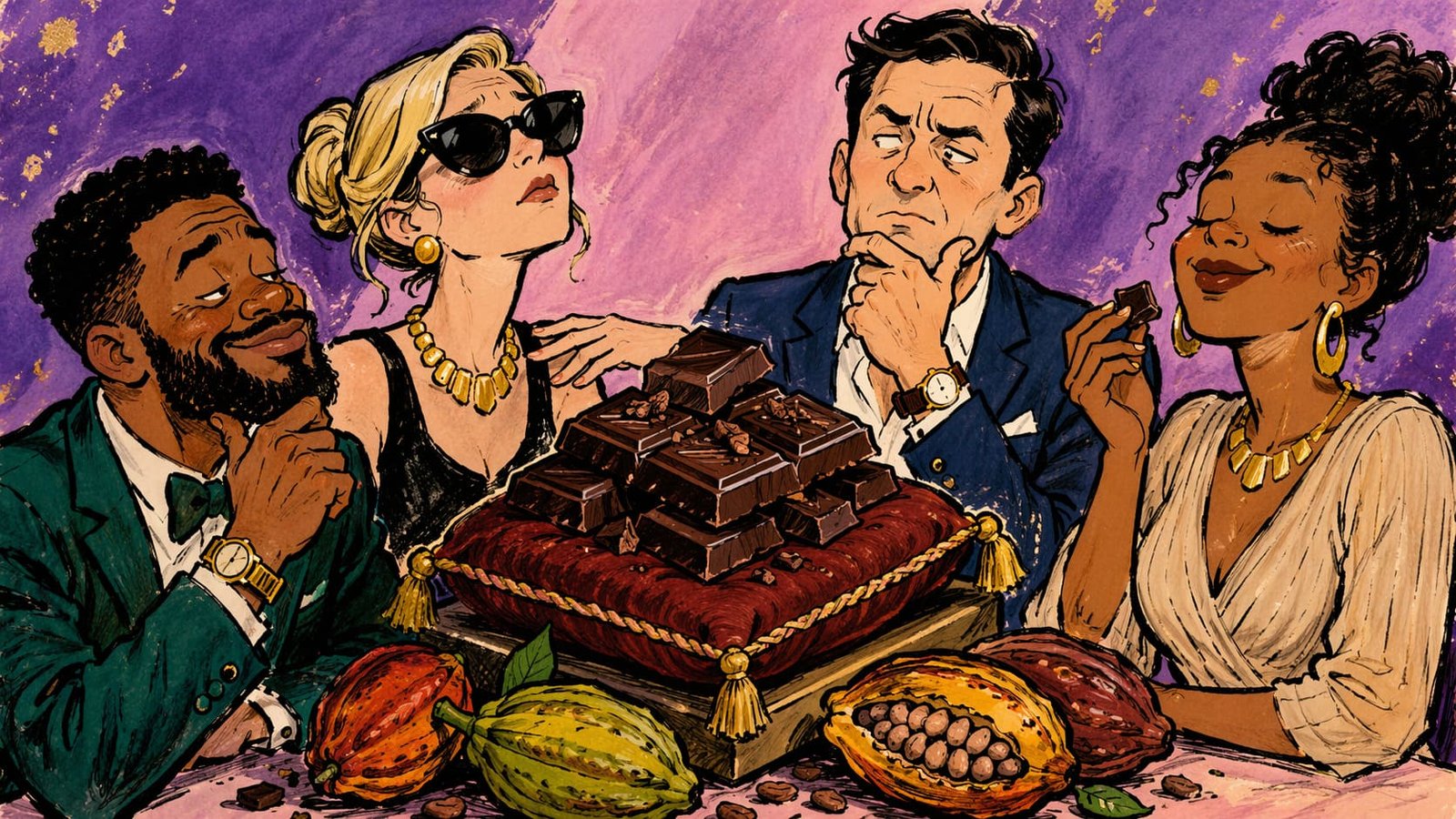
The wrapper looks like a museum piece. Thick paper, muted tones, a typeface that whispers rather than shouts. It sits on a shelf that feels curated instead of stocked, surrounded by other bars that seem to carry biographies instead of ingredients. A customer picks one up, studies the origin story printed on the back, and hesitates just long enough to feel thoughtful. The price is higher than expected, yet the hesitation dissolves into a quiet kind of pride. This is not just chocolate. This is discernment, packaged. Somewhere between cacao and culture, something has shifted. Taste has become performance.
It did not start as performance. The craft chocolate movement began with a genuine push against industrial sameness. Small makers focused on sourcing, transparency, and flavor complexity. They treated cacao with the same seriousness that coffee roasters and winemakers brought to their respective crafts. The results were often remarkable. Subtle notes emerged. Regional differences mattered. Chocolate stopped being a uniform sweetness and became something closer to an experience. That early phase carried integrity. It felt like a correction, not a trend.
Then attention arrived, and with it, amplification. As more consumers became curious about “bean-to-bar” chocolate, the language around it began to evolve. Words like terroir, single origin, ethically sourced started appearing not just as descriptors, but as signals. They communicated more than quality. They communicated identity. Buying a particular bar began to say something about the buyer. It signaled awareness, taste, a kind of cultural literacy that extended beyond food. The product did not change as quickly as the meaning attached to it.
A shop owner named Lila once stocked a small selection of craft bars alongside more familiar brands. At first, customers approached them with curiosity. They asked questions, tasted samples, compared notes. Over time, the interaction changed. Fewer questions, quicker decisions. People began choosing bars based on packaging and origin labels rather than flavor preference. Lila noticed something subtle. Customers were not just buying chocolate. They were buying the story that came with it, and sometimes the story mattered more than the taste.
This is where the tension sharpens. Craft, at its core, is about depth. It asks for attention, for patience, for a willingness to engage with nuance. Hype operates differently. It compresses complexity into signals that can be recognized quickly and shared easily. When craft meets hype, the surface becomes more important than the substance. The language of quality gets repurposed into the language of status. What was once an invitation to explore becomes a badge to display.
You can see this pattern in how certain bars are discussed online. Reviews focus on packaging aesthetics, origin narratives, and price points as much as, if not more than, actual flavor. The experience is framed in a way that makes it legible to an audience that may never taste the product. It becomes content. A photograph of a beautifully wrapped bar on a marble surface travels further than a detailed description of its flavor profile. The visual carries more currency than the sensory.
A chocolatier named Mateo built his reputation on meticulous sourcing and careful roasting. His early batches were inconsistent, sometimes brilliant, sometimes flawed. Customers who followed his work appreciated that variability. It felt honest. As demand grew, distributors encouraged him to standardize, to smooth out the edges that made his chocolate distinctive. He resisted at first. Eventually, he adjusted. The bars became more consistent, more predictable. Sales increased. Mateo admitted later that something had been lost. The chocolate was better by certain measures, yet less alive.
There is also a broader cultural backdrop to consider. In an era where identity is increasingly expressed through consumption, products become proxies for values. What you buy signals what you believe. Craft chocolate fits neatly into this framework. It allows consumers to align themselves with ideas of sustainability, ethics, and refined taste. There is nothing inherently wrong with that alignment. The issue arises when the signal becomes detached from the substance, when the act of purchasing replaces the act of understanding.
Meanwhile, large corporations have learned quickly. They have adopted the language of craft, introduced lines that mimic the aesthetics and narratives of smaller makers, and leveraged their scale to dominate shelf space. The distinction between genuine craft and manufactured authenticity becomes harder to discern. The market fills with options that look similar, sound similar, and promise similar experiences. The original intent of the movement gets diluted, not through failure, but through success.
In a quiet tasting room, a small group gathers around a table scattered with unwrapped bars. The air carries a faint bitterness, a hint of fruit, something earthy that resists easy description. Someone takes a bite and pauses, searching for words that feel precise enough to capture the experience. There is a moment of genuine attention, a brief return to what the product was meant to be. It does not last long. Phones come out. Photos are taken. The moment shifts from experience to documentation.
Somewhere between the first bite and the first post, chocolate stopped being something you simply taste and became something you perform, and the question lingers in that quiet gap between sensation and signal, waiting to be felt: when every indulgence doubles as identity, will you still know how to recognize what you actually enjoy, or only what looks like enjoyment from the outside?
