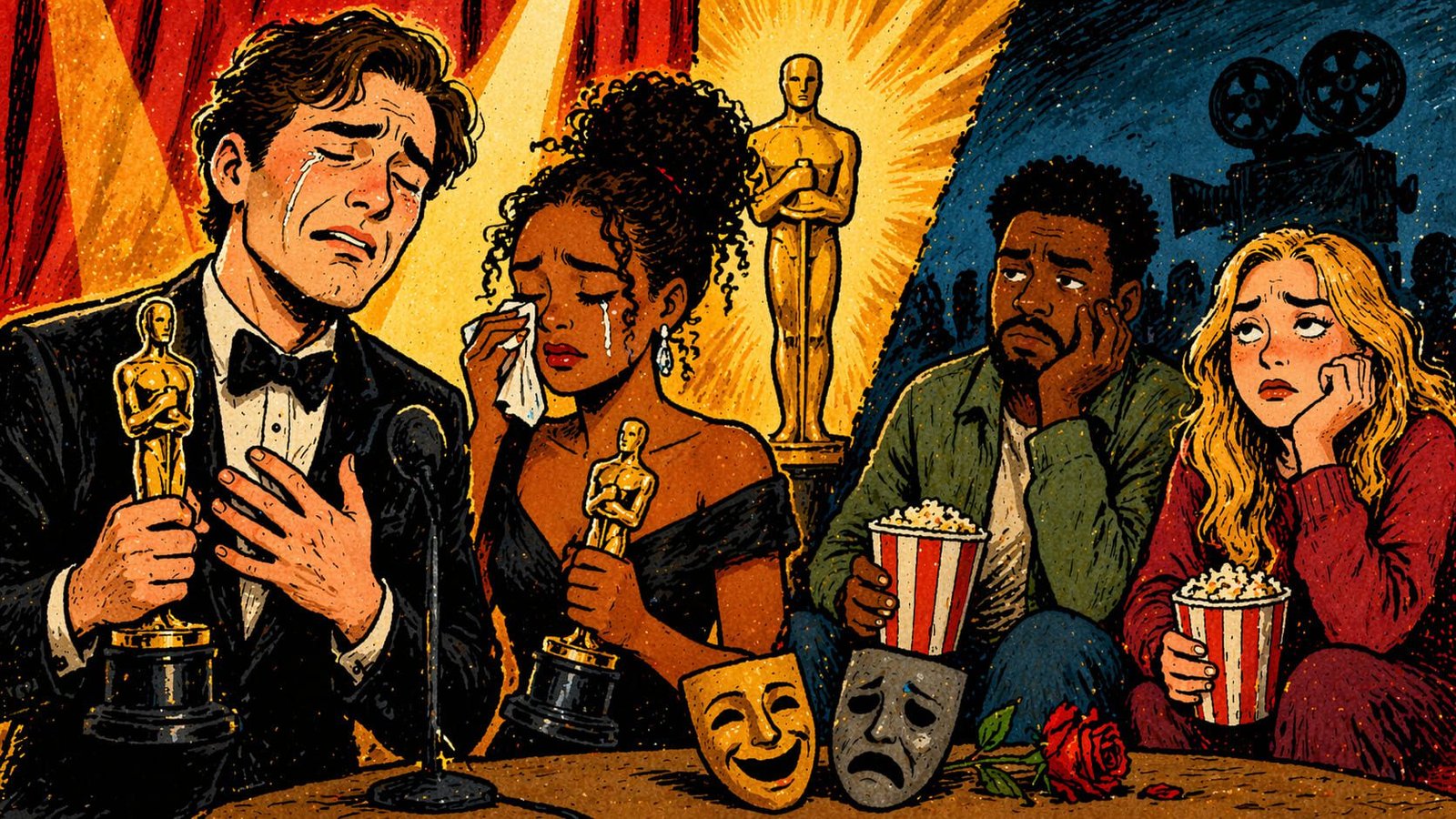
The stage glows with a kind of solemn elegance, velvet curtains framing a performance that feels less like celebration and more like quiet confession. Faces hold expressions calibrated between humility and gravity. Applause rises, not in bursts of joy, but in measured waves of respect. Somewhere beneath the polished speeches and careful pauses, a pattern lingers. Pain, it seems, has become the most reliable path to recognition.
Cinema has always drawn from suffering. The human condition, with all its fractures and contradictions, offers endless material for storytelling. Yet something about the way sorrow is now packaged feels different. It arrives with a certain predictability, shaped to signal importance before the story has even begun to unfold. The audience recognizes it instantly, not just as narrative, but as intent.
The term “Oscar bait” did not emerge from nowhere. It reflects a growing awareness that certain themes, trauma, historical injustice, personal tragedy, carry an aura of seriousness that aligns with awards culture. Films that lean into these elements often arrive with an expectation of acclaim, as if emotional weight alone guarantees artistic value.
This is not to dismiss the importance of these stories. Works like 12 Years a Slave or Manchester by the Sea demonstrate how deeply moving narratives can explore pain without reducing it to spectacle. They linger because they feel lived, not engineered. The distinction lies in how sorrow is treated, whether as a genuine exploration or a calculated device.
You can sense the difference in the pacing of these films. Authentic grief unfolds unevenly, resisting neat arcs or convenient resolutions. It disrupts, lingers, and sometimes refuses to transform into something redeeming. When sorrow is shaped too cleanly, it begins to feel curated, arranged for maximum emotional impact rather than honest reflection.
A producer named Elaine once described a meeting that left her unsettled. A script centered on a complex, quiet character navigating loss was praised for its subtlety. Then came the notes. Amplify the tragedy. Make the suffering more visible. Heighten the moments that will resonate during awards season. The story shifted. It became louder, more explicit, less ambiguous. It also became easier to market.
This dynamic reflects the incentives embedded within the industry. Awards bring visibility, funding, and career momentum. Studios and creators learn quickly which narratives align with these outcomes. The result is a feedback loop where certain types of stories are not just told, but optimized for recognition.
Actors navigate this landscape with a mix of ambition and awareness. Leonardo DiCaprio famously endured extreme conditions for his role in The Revenant, a performance that was widely discussed not only for its artistic merit but for the physical hardship involved. The narrative around the role became part of its appeal, reinforcing the idea that suffering, both on and off screen, signals seriousness.
The audience participates in this cycle as well. There is a cultural tendency to equate emotional heaviness with depth, to assume that a film dealing with tragedy must inherently be more meaningful. Lighter stories, even when crafted with precision and insight, are often dismissed as less significant. This creates an imbalance, where certain forms of storytelling are undervalued.
Yet there is a paradox within this pattern. When sorrow becomes expected, it risks losing its impact. Repetition dulls sensitivity. Audiences begin to recognize the structure, anticipating the emotional beats before they arrive. What was once powerful becomes familiar, and familiarity reduces intensity.
A small independent film screened at a regional festival offers a counterpoint. It focused on ordinary moments, quiet conversations, small decisions that carried subtle weight. There was no overt tragedy, no dramatic crescendo. Viewers left the screening deeply moved, not by what was shown, but by what was felt. The film did not seek prestige. It created connection.
This suggests that emotional resonance does not require overt suffering. It requires honesty, attention to detail, and a willingness to trust the audience. When stories are allowed to breathe, to unfold without the pressure of expectation, they can achieve a different kind of impact.
The broader cultural context also plays a role. In a world saturated with information and constant stimulation, intense emotions cut through the noise more easily. Sorrow, in its rawness, captures attention. It demands engagement. This makes it a powerful tool, but also a tempting shortcut.
Critics and audiences alike have begun to question this dynamic. Discussions around representation, authenticity, and the ethics of portraying trauma have gained prominence. There is a growing awareness that not all depictions of suffering are equal, that context and intention matter.
A director known for character-driven storytelling once remarked during an interview that the most difficult scenes to create were not the loud ones, but the quiet ones. The moments where nothing overt happens, yet everything shifts internally. These scenes require restraint, patience, and a deep understanding of human behavior. They are harder to produce, but often more enduring.
The industry, however, does not always reward restraint. The visibility of awards season amplifies certain narratives, shaping public perception of what constitutes “serious” cinema. This influences not only what gets made, but how it is received.
There is also a generational shift in how audiences engage with these stories. Younger viewers, accustomed to a wide range of content, are less likely to accept emotional manipulation without questioning it. They seek authenticity, even if it is less dramatic. This creates space for alternative approaches to storytelling.
A streaming platform recently highlighted a series of films that focused on everyday life, relationships, and personal growth without relying on overt tragedy. The response was notable. Viewers described feeling seen, understood, and unexpectedly moved. The absence of heavy themes did not diminish the experience. It enhanced it.
This points to a broader possibility. Prestige does not have to be tied to sorrow. It can emerge from craftsmanship, originality, and emotional truth. When the definition of value expands, so does the range of stories that can be recognized.
Somewhere, in a dimly lit editing room, a filmmaker watches a scene unfold on screen. It is simple, almost understated. A character pauses before speaking, the silence carrying more weight than any dialogue. The decision is made to keep it as it is, resisting the urge to amplify, to explain, to ensure it lands.
That choice, quiet and deliberate, carries a different kind of confidence. It trusts that meaning does not need to be forced, that emotion does not need to be exaggerated to be felt.
And perhaps, in that restraint, cinema begins to remember that not all grief needs to perform to be understood.
