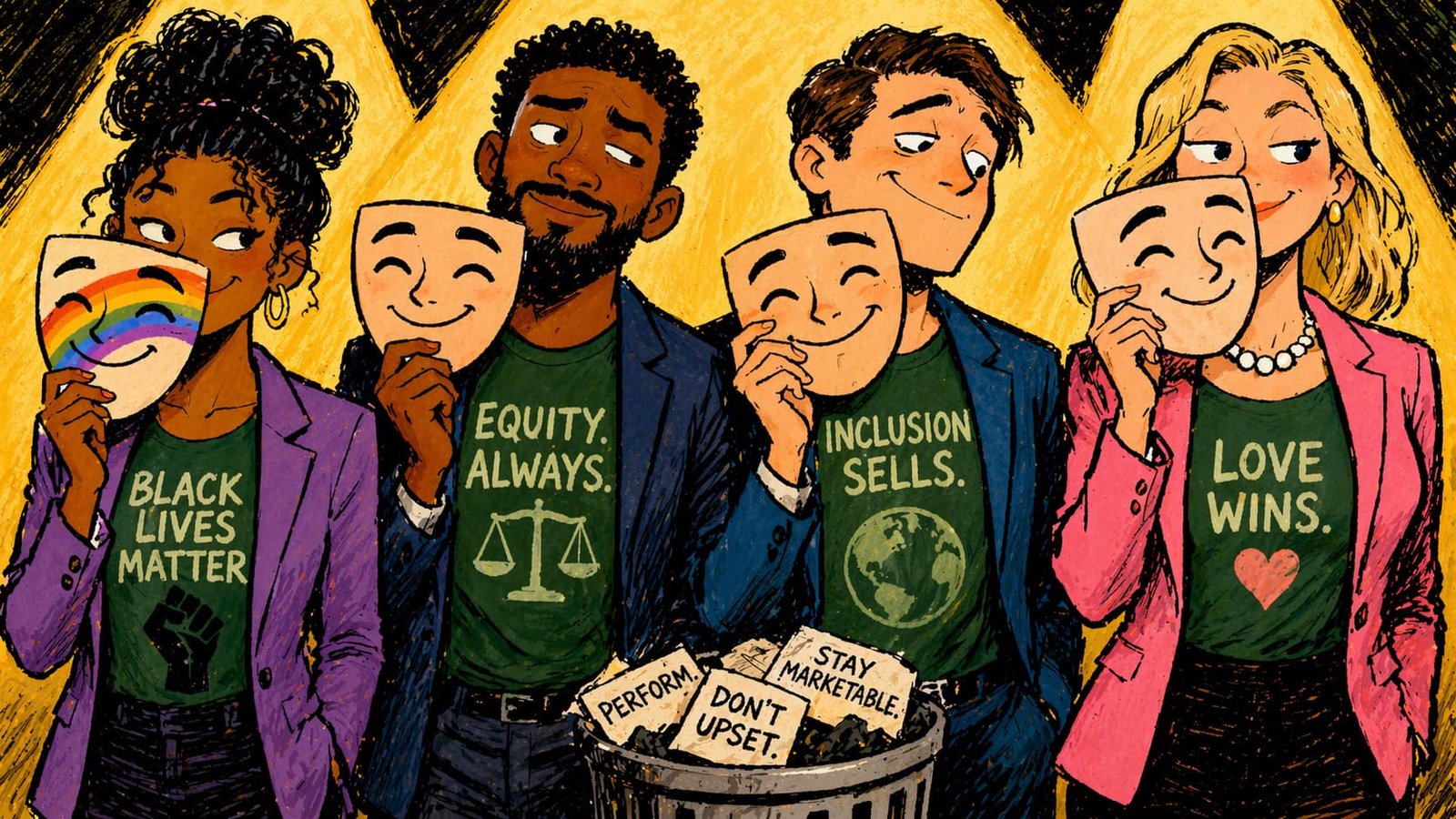
The brand campaign feels polished, almost too polished. Language that once sounded urgent now arrives wrapped in design, softened by tone, carefully aligned with market appeal. The message is still there, but it has changed shape. What was once disruptive now feels integrated, almost expected.
The shift did not happen overnight. It unfolded gradually as ideas moved from the margins into the mainstream. As they gained visibility, they also attracted adaptation. Companies, institutions, and public figures began to adopt the language, not always out of conviction, but out of necessity.
What emerges is a kind of cultural camouflage. The ideas remain, but they are expressed in ways that fit existing structures. Sharp edges are rounded. Complexity is simplified. The goal is not to abandon the message, but to make it compatible with systems that were never designed to accommodate it.
A brand director named Sofia once explained how her team approached a campaign centered on social awareness. She spoke about “balance,” about ensuring the message resonated without alienating. The result was widely praised, yet she admitted privately that much of the original intent had been softened to survive internal approval.
You can see this dynamic across industries. Language that once signaled challenge now signals alignment. Statements are crafted to appear meaningful while remaining broadly acceptable. The effect is subtle. The message persists, but its impact feels diluted.
There is a tension between visibility and integrity. Greater visibility allows ideas to reach wider audiences. At the same time, integration into mainstream systems often requires compromise. The more widely accepted a message becomes, the more it risks losing its original force.
A young activist named Kemi noticed this shift while collaborating with a large organization. What began as a partnership to amplify a cause gradually transformed into a branding exercise. She described the experience as “watching something real become something presentable.” The cause gained exposure, but something essential felt altered.
Pop culture plays a significant role in this transformation. Music, film, advertising, all contribute to how ideas are expressed and understood. When a message becomes part of popular culture, it gains reach. It also becomes subject to reinterpretation.
Yet beneath the adaptation, the core tension remains unresolved. The issues that gave rise to these ideas have not disappeared. They continue to exist, often unchanged, beneath the surface of more polished narratives. The conversation has shifted, but the underlying questions persist.
In a studio filled with drafts of campaigns that will soon reach millions, a creative team debates a line that feels almost right. Not too strong, not too weak. Something that can pass through every filter. The decision will shape how the message is received, and perhaps how it is remembered.
And the thought that lingers, quiet but persistent, carries its own kind of weight: if a message survives by blending in, what happens to the part of it that was meant to stand out?
