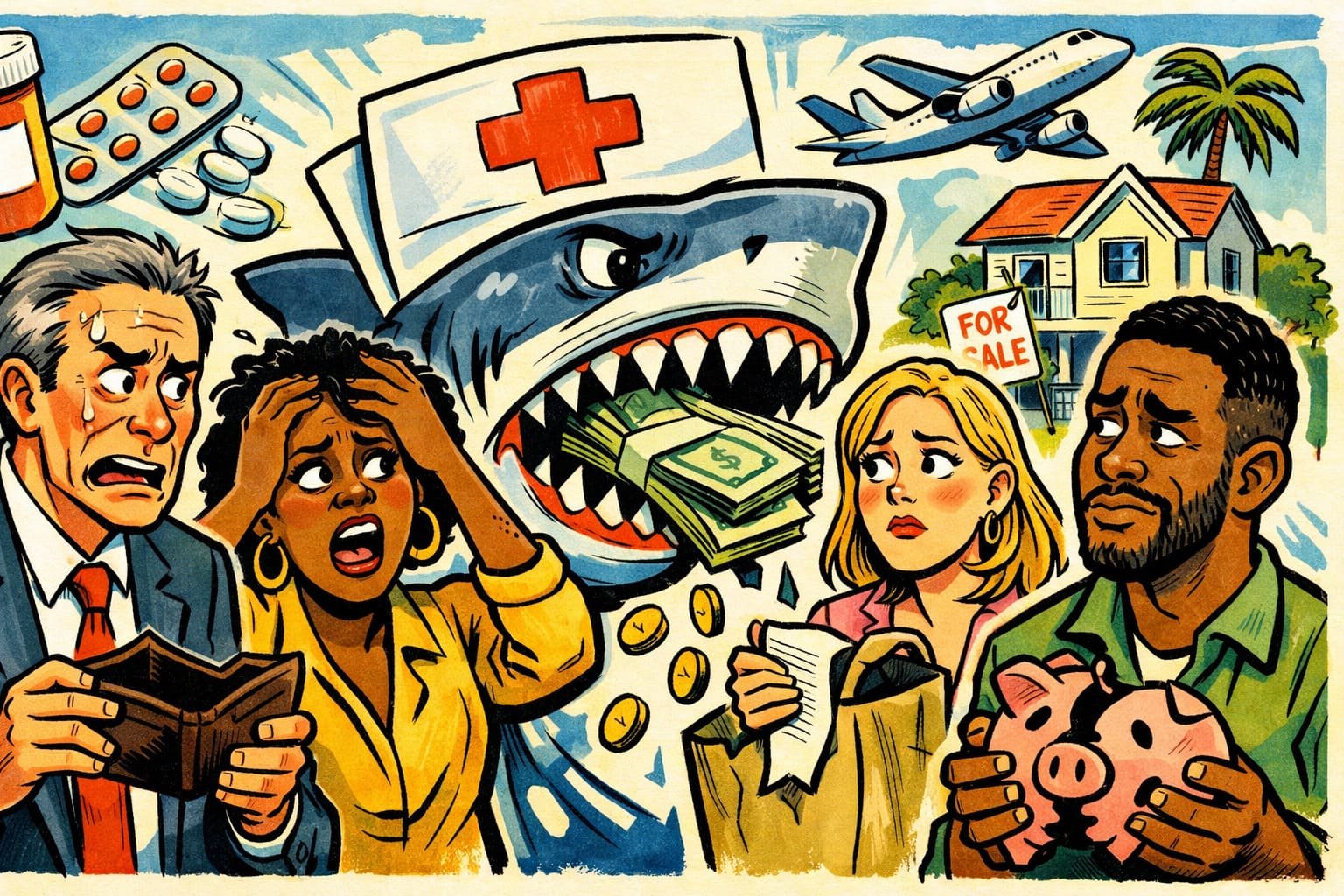
Health spending has a way of making every society feel virtuous right until the invoice begins crowding out everything else. Few public priorities carry the same moral force. Voters will forgive many forms of waste before they forgive visible neglect in hospitals, clinics, emergency care, medicines, or elder support. That is why health budgets keep rising. People live longer, expect more, survive conditions that once killed them, and demand access to technologies that did not exist a generation ago. This is a civilizational success story wrapped around a fiscal ambush. The better medicine becomes, the harder it is for budgets to stay calm.
The pressure comes from several fronts. Aging populations need more care. Chronic disease requires long management, not one dramatic intervention. New treatments arrive with breathtaking promise and breathtaking price. Medical labor is scarce. Citizens expect shorter waits, newer tools, kinder systems, and broader coverage all at once. Politicians rarely win by saying no to health, so costs drift upward even in states already carrying debt, pension pressure, and sluggish growth. The result is a familiar dilemma. Health spending rises not because governments are foolish, but because saying yes to care is easier than saying which other promises must now shrink.
The United States shows one extreme, with world class medicine, astonishing innovation, and a financing structure that often feels too expensive, too fragmented, and too administratively hungry. The country spends vast sums and still leaves many families feeling exposed to cost, complexity, or insurance anxiety. That combination is instructive because it kills a comforting myth. High spending alone does not guarantee public confidence. Money can be swallowed by pricing power, administrative sprawl, and misaligned incentives. A health system can be technologically dazzling and fiscally exhausting at the same time. That is not a paradox. It is what happens when scale grows without coherent design.
Britain’s National Health Service reveals a different strain. A universal model with deep public loyalty can still buckle under waiting lists, staffing pressure, infrastructure fatigue, and rising demand. Citizens defend the principle and complain about the lived experience. Again, the lesson is not ideological simplicity. Public systems can be equitable and overstretched. Private systems can be innovative and punishing. Mixed systems can distribute strengths and confusions together. Health finance does not reward tribal certainty. It punishes laziness. The real issue is how to align access, cost control, workforce supply, prevention, and patient outcomes without treating any one of those as decorative.
A middle aged man managing diabetes, hypertension, and a back injury embodies the modern cost curve better than any spreadsheet. He may never experience a dramatic one time crisis. Instead he moves through years of appointments, tests, prescriptions, monitoring, lifestyle advice, specialist visits, and episodes of preventable deterioration when daily life gets messy. Multiply that reality across millions of citizens and health budgets begin to swell in a quieter, more relentless way than wartime spending ever could. The expensive patient is often not the rare outlier. It is the ordinary person living longer inside a body that needs constant negotiation.
Technology complicates the politics further. New drugs, diagnostics, imaging, robotic procedures, and personalized treatments generate real hope. They also create a painful question every health minister eventually faces. Just because medicine can do something, must the public system fund it for all, immediately, and at any price? Citizens understandably hate this question because it sounds cruel. Yet avoiding it only hides cruelty elsewhere. When one intervention absorbs disproportionate resources, something else waits. That is the brutal truth of health economics. Every yes carries a shadow. Trade offs do not disappear because the subject is emotionally charged. They simply move offstage.
Prevention offers the most repeated and most misunderstood answer. Yes, healthier societies often save downstream cost. Yes, public health, primary care, early screening, nutrition, cleaner environments, and mental health support matter enormously. Yet prevention is not a magic wand that makes all future budgets easy. Some prevention extends life, which is wonderful and can still increase lifetime care needs. The honest argument for prevention is not that it abolishes cost. It is that it improves life, delays severe illness, raises productivity, and often reduces avoidable suffering. Those are strong enough reasons without pretending every preventive action becomes an immediate fiscal jackpot.
Countries such as Thailand have shown that broad health coverage can expand with discipline, innovation, and political commitment. Rwanda’s health gains also demonstrate what coordinated systems and focused priorities can achieve even with constrained resources. These examples matter because they remind wealthier states that health spending is not only about how much goes in. It is also about how well systems are organized. Primary care strength, procurement quality, workforce design, digital records, payment incentives, and community trust all shape value. A disorganized rich system can waste more money than a focused poorer one. Wealth helps, but design decides a lot.
The ugliest trade off is the one leaders avoid naming. As health consumes more public money, other priorities begin to thin. Education reform slows. Infrastructure repair waits. Housing shortages linger. Defense arguments sharpen. Tax pressure rises. Younger generations start asking whether they are financing an ever larger medical and retirement state while struggling to build their own stability. That question is politically dangerous because it sounds like a fight between compassion and selfishness. It is really a fight between competing solidarities. A healthy society has to care for the old and the sick without turning the future into a permanently deferred expense.
A serious response starts with stubborn realism. Pay for primary care well enough that people do not arrive at hospitals too late. Use data to identify waste that adds paperwork rather than health. Negotiate prices aggressively where market power has become abusive. Invest in workforce pipelines so staffing gaps do not become permanent inflation engines. Integrate mental and physical care better. Build systems around patients with chronic conditions instead of forcing them through administrative obstacle courses designed for a different century. Above all, tell the public the truth. More health spending may be necessary. That still does not mean every form of spending deserves defense.
Health is where a society reveals whether it sees citizens as burdens, consumers, neighbors, or some uneasy blend of all three. That is why these debates cut so deep. No one wants to be the politician who seems stingy with suffering. No one wants to be the voter who admits limits when illness enters the family. Yet mature systems do not hide from the trade off. They design for it. They prioritize care that genuinely improves life and dignity. They accept that rationing exists whether it is visible in budgets, queues, prices, or geography. The honest question is not whether rationing happens, but whether it happens fairly.
In the polished corridors of modern medicine, under bright light and expensive hope, every society eventually meets the same quiet reckoning. The miracles keep coming, and so do the bills. A nation can respond with denial, letting costs rise until everything else grows thinner in the background. Or it can face the harder task of deciding what care means, what fairness requires, and what kind of future public money is still meant to build outside the hospital walls. Health spending soars because life matters. Trade offs bite because everything else does too. The countries that endure will be the ones brave enough to hold both truths at once.
