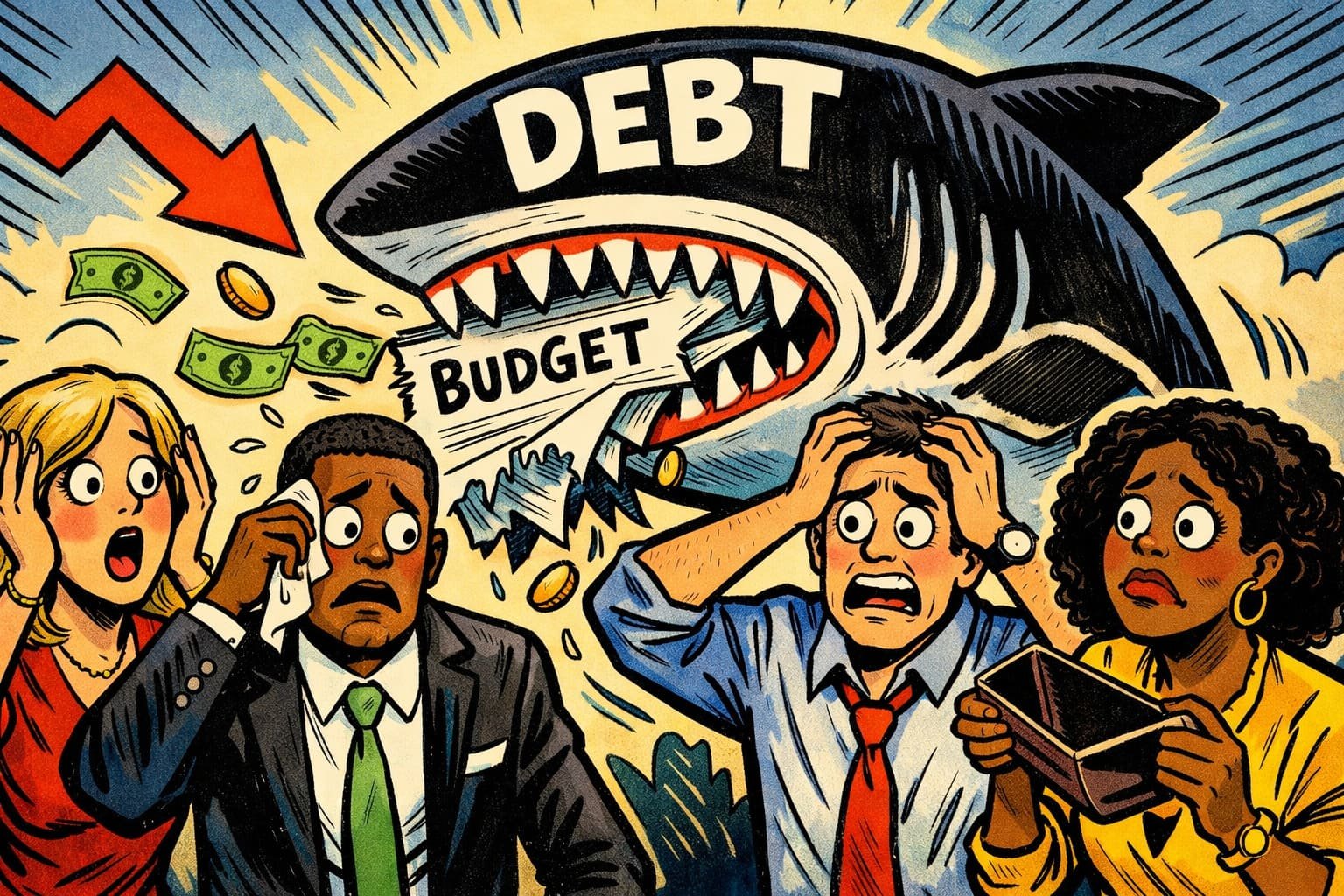
There is something quietly sinister about a budget that looks calm on paper while panic spreads underneath it. The lights are on, the speeches are polished, the minister smiles, and then interest costs begin chewing through the room like termites inside expensive wood. That is the real drama of modern public finance. Debt interest is not flashy. It does not cut ribbons, heal patients, build roads, or win elections. It just arrives, invoices in hand, and asks to be paid before everyone else. Across the world, institutions from the IMF to the ECB have warned that elevated public debt and rising debt service costs are turning fiscal management into a harsher sport.
What makes the issue so gripping is how ordinary it first appears. A government borrows in a crisis. Citizens clap because the money helps keep jobs alive, subsidies flowing, and public services standing. Then rates rise, old bonds mature, and the cheap era disappears like a magician who has already emptied the register. Suddenly the budget is not about ambition. It is about triage. That is the moment when debt interest bites. It does not always explode in one spectacular headline. Sometimes it behaves like a tight shoe. The pain starts small, then quietly rearranges the way an entire country walks.
A finance ministry under interest pressure becomes strangely sentimental about things it once treated as temporary. A bridge repair gets delayed. A hospital wing waits another year. Teacher hiring freezes without the drama of a formal speech. Nothing looks apocalyptic in isolation, which is partly why the danger is missed. Public money begins working backwards. Instead of funding tomorrow, it pays for yesterday. That reversal matters more than many headline deficit figures because it tells a brutal story about state capacity. A government can survive political embarrassment for years. It cannot prosper when its future gets mortgaged to service its past.
That tension explains why debt service is more than an accounting problem. It is a moral test disguised as a spreadsheet. Every pound, euro, shilling, or dollar sent to creditors is a pound, euro, shilling, or dollar not sent toward classrooms, care systems, flood defenses, transport networks, or industrial renewal. The trade-off is not theoretical. The IMF has stressed that expansive fiscal policy can push up term premiums and raise borrowing costs, while the ECB has warned that rising debt service costs can strain fiscal positions and test investor confidence.
The United Kingdom offered a famous modern cautionary tale when the 2022 mini-budget collided with market trust. What looked to some politicians like a daring growth gamble was interpreted by investors as a credibility rupture. Gilt yields surged, pension funds using liability-driven strategies came under pressure, and the Bank of England stepped in because market dysfunction had become a financial stability risk. That episode mattered not only because it was dramatic, but because it showed how quickly a country can move from theory to consequence when fiscal arithmetic and political theatre stop speaking the same language.
The cruel part is that interest payments do not care whether the original borrowing was noble or foolish. Debt raised during a pandemic, war, banking shock, or energy crisis still has to be refinanced in the world that arrives later. That later world is often colder. A minister may tell the public that borrowing “saved the economy,” and perhaps it did. Yet when the bill matures in a higher-rate environment, the applause fades and the bond market becomes the adult in the room. It does not argue on television. It just reprices the risk and hands the government a more expensive future.
This is where ordinary households understand public finance better than many campaign slogans do. Families know that a manageable mortgage can turn oppressive when rates climb. Governments face the same truth, only on a scale large enough to bend infrastructure plans, pension promises, and investment strategy. If debt service swallows fiscal space, even sensible ideas start arriving dressed as luxuries. Green investment becomes “later.” Housing reform becomes “when conditions improve.” Digital modernization becomes “subject to review.” Before long, a country begins mistaking constrained imagination for prudence.
There is also a political seduction hidden inside interest burdens. Leaders under pressure to meet higher debt-service costs often reach for the easy villain. They blame civil servants, welfare recipients, migrants, foreign central banks, or hostile markets. Some of that rhetoric can be entertaining in a dark, late-night, popcorn sort of way. None of it changes the bond coupon. Debt interest is stubborn because it punishes denial. It turns grandstanding into a budget line. It makes ideology kneel before cash flow. That is why the politics around it can feel so bitter. Arithmetic has terrible bedside manners.
A sharper response starts with honesty about priorities. Borrowing is not evil. In fact, refusing to borrow during a genuine emergency can be its own form of negligence. The problem begins when temporary debt habits become permanent governing habits. Good debt can finance productivity, resilience, and growth. Bad debt papers over routine spending with borrowed time. The distinction matters because markets do not merely ask how much a state owes. They ask what the money built, whether growth can support it, and whether the political system can make hard choices before panic does it on its behalf.
Countries that handle the pressure best usually do three unglamorous things well. They build credible medium-term fiscal plans. They protect productive investment instead of treating it as the first sacrificial lamb. They communicate trade-offs before markets do it for them. None of this feels cinematic, which is precisely the point. Stability is usually boring until it vanishes. IMF work on fiscal guardrails makes the same argument in plainer language: stronger frameworks matter when debt is high and spending pressures are rising.
The deeper lesson is almost philosophical. Debt interest exposes whether a nation has been governing for applause or for endurance. It asks whether leaders spent borrowed money to buy time, or to use time wisely. It reveals whether growth strategy was real or just good lighting. And when interest costs start gasping through the budget, citizens discover something uncomfortable: the state can look enormous and still be less free than it seems. A government drowning in servicing costs may speak like a giant while budgeting like a hostage.
At that point the story stops being about spreadsheets and starts becoming about character. In quiet offices, under fluorescent lights that make coffee taste older than it is, the budget writers learn the oldest rule in economics: money promised twice is money promised badly. A state can outrun embarrassment for a season, but it cannot outrun compounding forever. The real question is not whether debt interest bites. It does. The question is whether the country will keep feeding the thing that is eating its choices, or finally decide that tomorrow deserves first claim on the budget.
