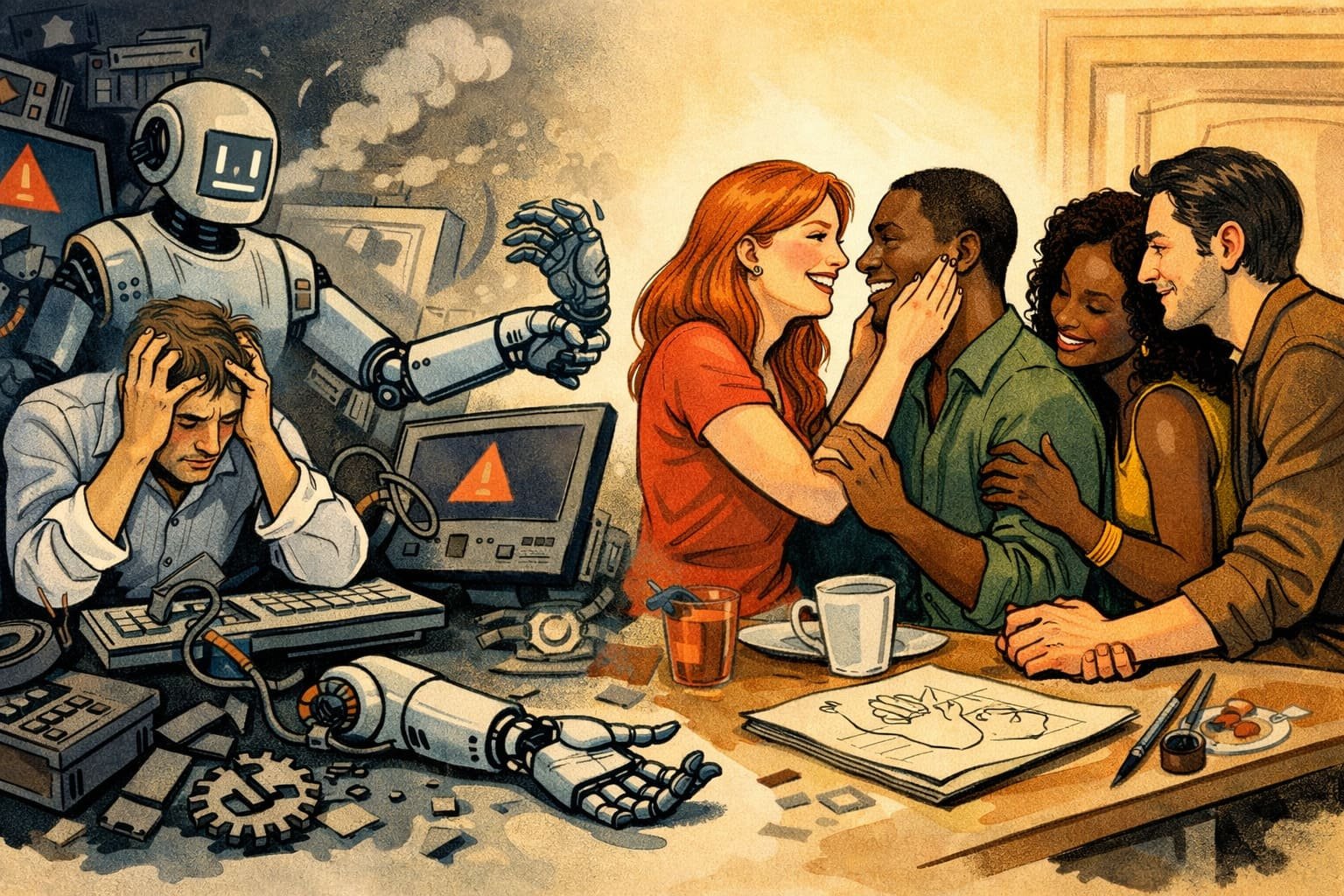
A hospital corridor glowed with the soft fatigue of midnight. A nurse adjusted a blanket with one hand while a tablet blinked with warnings in the other. The machine had the data. The nurse had the tone, the pause, the way to say nothing and still calm a frightened patient. In that small collision, the future looked less like conquest and more like correction.
The Warmth Machines Cannot Fake
For years, the world behaved as though speed was the highest form of intelligence. Automation promised cleaner workflows, sharper outputs, fewer errors, and more scale. It delivered plenty of that. It also delivered a colder atmosphere in places that used to feel alive. The more software took over routine tasks, the more people began noticing what had gone missing.
That missing thing was not efficiency. It was touch. Not just literal touch, though that mattered too. It was the human signal hidden in eye contact, timing, memory, and restraint. Machines can process. They cannot fully comfort. They can optimize. They cannot genuinely notice when someone is one breath away from breaking.
The modern backlash against over-automation is not nostalgia. It is a demand for something older and harder to fake. People are rediscovering that trust often arrives through imperfection, not polish.
The Cold Praise Of Perfection
Technology culture spent a long time worshipping smoothness. Seamless apps. Frictionless checkout. Invisible systems. Predictive everything. The idea sounded noble. It also created a strange emotional vacancy.
A customer service team at a fintech company once replaced nearly every interaction with automated workflows. Complaints dropped. Response time improved. Then retention started leaking in subtle ways. Customers were not angry. They were detached. The company had removed friction, but it had also removed the sensation that anyone was actually listening.
That is the trap of machine magic. At first, it feels impressive. Then it starts to feel weightless. The problem is not that the system works. The problem is that nothing in it seems to care. A human voice can survive a mistake if it carries sincerity. A perfect bot response can still feel insulting if it arrives with no pulse.
Designers, leaders, and founders are beginning to understand this. The most valuable experience is not always the cleanest one. Sometimes the premium product is the one that remembers your name, hesitates before answering, or sounds like it has seen a hard day and stayed kind anyway.
Where Human Presence Wins
There are places where machines will always struggle, no matter how advanced they become. Crisis. Grief. Confusion. Moral judgment. Those are not edge cases. They are the moments that define institutions.
A school counselor named Amara once met a student who had stopped speaking in class. An automated attendance system had marked the absences. The dashboard had done its job. The counselor noticed the silence behind the data. A gentle conversation uncovered a family crisis. The intervention was not technologically elegant. It was human. It worked because it carried concern, not just information.
Business leaders often talk about customer experience as if it were a performance metric. That framing misses the point. Experience is emotional memory. People may forget the interface. They rarely forget how they were treated when something went wrong.
That is why human touch is coming back in medicine, education, hospitality, luxury retail, design, and even software support. The most advanced organizations are not those that eliminate people. They are the ones that use technology to protect the moments where people matter most.
The Return Of Craft
Something else is happening alongside the return of touch. Craft is becoming desirable again. Handmade products. Human-written notes. Tailored service. Live conversation. Slow decision-making. Brands once embarrassed by “manual” processes are now leaning into them as a source of distinction. The logic is simple. When everything becomes automated, the handmade begins to feel rare, then valuable, then luxurious.
A ceramics brand run by a founder named Selwyn built its reputation on slight irregularities. No two cups were identical. The edges held fingerprints of the process. Customers loved them because the objects seemed to carry evidence of time and attention. The product was not just functional. It felt witnessed.
That same craving is appearing in digital spaces too. Users are increasingly drawn to experiences that feel edited by humans rather than assembled by systems alone. A newsletter with a sharp voice can outperform a polished feed. A support call with an honest person can outperform a flawless script. Craft has become a form of resistance against the beige sameness of machine-generated life.
The irony is hard to miss. Technology made mass production easier. That very abundance made personal presence more precious.
Machines Lost The Mask
For a while, the machine age wore a mask of inevitability. Faster. Cheaper. Smarter. More scalable. Hard to argue with. Harder still to resist. But magic fades when every problem gets answered with the same mechanical confidence.
People are now noticing the emotional tax of total automation. The robot voice that never quite understands urgency. The recommendation engine that knows habits but not intent. The smart system that saves time while draining atmosphere. Useful, yes. Beloved, rarely.
A restaurant owner named Dorian experimented with fully digital ordering. The system ran beautifully until repeat guests stopped lingering. Then he reintroduced a short human greeting at the door. It took seconds. Revenue recovered, but something less measurable changed too. The room regained a sense of being hosted rather than processed.
That is the new competitive edge. Not anti-technology. Not anti-automation. Just a refusal to let efficiency swallow atmosphere. The best organizations are learning to place machines in service of human dignity, not the other way around.
The Pulse At The Center
A quiet office sits after closing time. One monitor remains open, showing dashboards, logs, and alerts. Next to it lies a handwritten note from a manager to a departing employee. The note is creased, ordinary, almost unimpressive. It matters more than the dashboard ever could.
This is where the story seems to be going. Machines will keep getting better at logic, repetition, prediction, and scale. People will keep being needed for care, judgment, and meaning. The glamour of automation will not vanish overnight, but its spell is weakening. Magic that cannot comfort eventually starts to feel like trickery.
The future may not belong to humans because they are faster. It may belong to humans because they are still capable of warmth under pressure, still able to notice what numbers miss, still able to make another person feel less alone for a moment that cannot be measured. And that may be the most durable advantage left.
