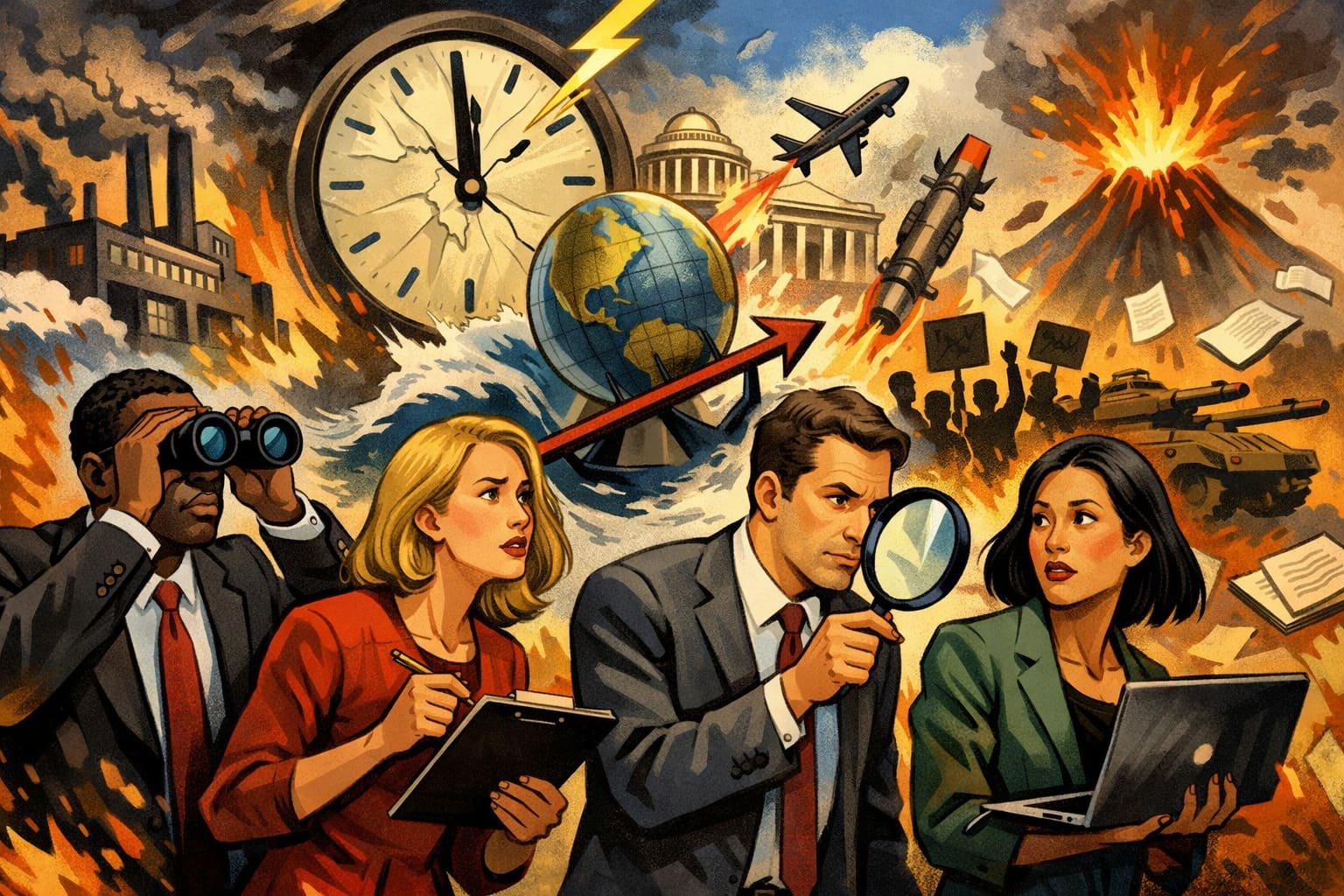
The warning signs were everywhere, yet almost nobody noticed them. A new government policy quietly appeared on a regulatory website. Fuel prices climbed steadily week after week. Customers began asking different questions. Emerging technology attracted little attention outside specialist circles. Environmental standards tightened without making national headlines. Individually, each change looked insignificant. Together, they formed the early blueprint of an entirely different marketplace. The companies that would dominate tomorrow were not waiting for disruption to arrive. They had already started preparing while everyone else remained comfortably focused on yesterday’s success.
Business leaders often believe competitors represent their greatest threat. In reality, markets are transformed just as frequently by forces no competitor can control. Political decisions reshape entire industries overnight. Economic conditions alter consumer behavior. Social values influence purchasing choices. Technological breakthroughs redefine customer expectations. Environmental concerns create new responsibilities. Legal reforms change the rules of competition. These external forces operate continuously whether organizations choose to acknowledge them or not. Wise leaders study the environment with the same discipline they devote to financial performance because opportunity often arrives disguised as external change.
The PESTEL framework provides a structured way of understanding this constantly shifting landscape. Political, Economic, Social, Technological, Environmental, and Legal factors encourage organizations to look beyond daily operations and examine the broader forces shaping long-term success. The framework does not predict the future with certainty. Instead, it strengthens strategic awareness. Leaders become less surprised because they regularly ask how external developments might influence customers, suppliers, employees, competitors, and future investments before disruption becomes unavoidable.
Chief executive Natalie experienced the value of this approach while leading a regional packaging manufacturer. Sales remained strong, and operational performance consistently exceeded expectations. During a strategic planning session, her leadership team completed a detailed PESTEL review. They noticed increasing environmental regulations, growing consumer demand for sustainable products, and rapid advances in recyclable packaging technology. None of these changes had significantly affected current revenue. Natalie invested early in environmentally responsible materials and modern production capabilities. Two years later, when stricter regulations arrived, competitors rushed to adapt while her business was already positioned as an industry leader.
Many successful organizations demonstrate the importance of anticipating external change rather than reacting to it. Unilever has consistently incorporated sustainability, evolving consumer expectations, and regulatory developments into its long-term business strategy. Likewise, Microsoft has repeatedly adapted to technological and regulatory shifts by reshaping its business model instead of defending outdated approaches. Their success illustrates a timeless principle. Businesses that continuously scan the external environment make better strategic decisions because they prepare before change becomes unavoidable.
PESTEL analysis also strengthens leadership thinking beyond crisis management. Instead of viewing external events as isolated disruptions, executives begin recognizing patterns connecting seemingly unrelated developments. Rising energy costs influence manufacturing decisions. Demographic shifts reshape workforce planning. Advances in artificial intelligence create new customer expectations. Environmental concerns affect supply chain investments. Strategic clarity emerges because leaders stop reacting to individual events and start understanding the larger forces driving them. Perspective becomes one of the organization’s most valuable competitive advantages.
Many businesses fail not because they ignore change completely, but because they respond too slowly after the evidence becomes impossible to deny. Waiting for certainty often means arriving after competitors have already established stronger market positions. Exceptional organizations cultivate curiosity instead of complacency. They encourage leaders at every level to monitor emerging trends, question comfortable assumptions, and discuss external developments before immediate action appears necessary. Preparedness becomes part of organizational culture rather than an occasional planning exercise.
Tomorrow’s business landscape is already beginning to take shape in government offices, research laboratories, universities, financial markets, and changing consumer conversations across the world. The strongest organizations will not be those reacting fastest after disruption strikes. They will be the ones that recognized the signals while others dismissed them as unimportant background noise. PESTEL analysis is more than a strategic framework. It is a habit of seeing tomorrow before it becomes today’s crisis. Ask yourself one important question: if the next major disruption began quietly this morning, would your organization recognize it before your competitors did?
