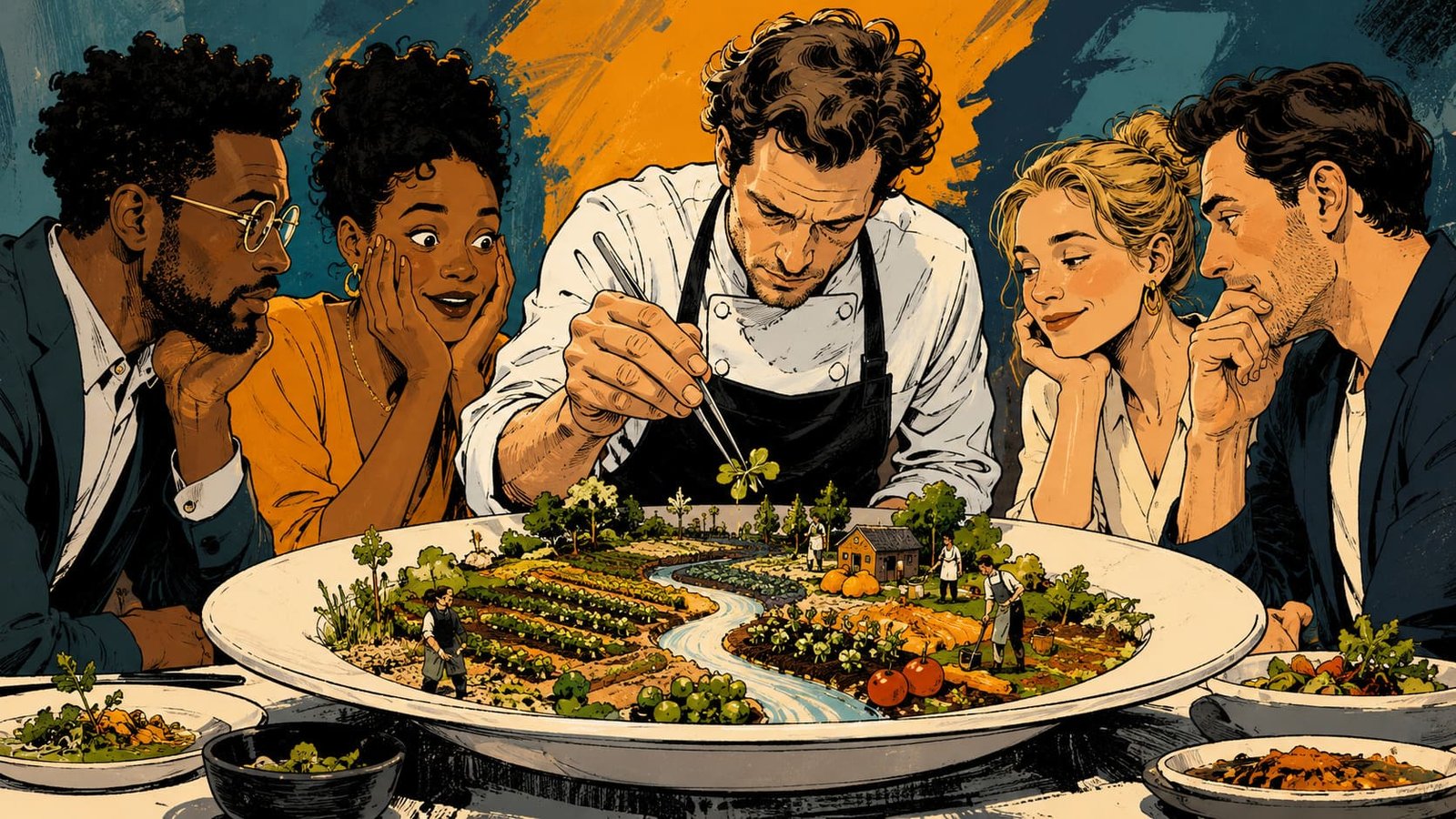
Steam rises softly from simmering sauces in Chef’s Table while knives strike wooden cutting boards with the rhythm of private ritual. Morning light spills across empty dining rooms before guests arrive, touching polished glasses and folded linen like a blessing reserved for people who still believe craftsmanship matters. The series moves slowly, almost reverently, because it understands food as something far larger than consumption. A meal becomes memory architecture. A plate becomes autobiography. Behind every celebrated chef sits a human being wrestling with loneliness, perfectionism, inheritance, exile, ambition, and the terrifying desire to create something unforgettable before time quietly closes the kitchen doors forever.
The genius of Chef’s Table lies in its refusal to treat cooking as celebrity performance alone. Most food television chases spectacle, speed, and manufactured drama. This series studies obsession instead. Real obsession. The kind that ruins relationships, rearranges sleep, sharpens identity, and leaves fingerprints on the soul. Chefs wake before sunrise searching for ingredients with the seriousness of philosophers hunting truth. A single herb matters. Texture matters. Silence inside the dining room matters. Watching these creators work feels strangely similar to observing composers or painters constructing emotional worlds from fragile materials destined to disappear minutes after completion.
Massimo Bottura emerges as one of the series’ most unforgettable figures because he understands cuisine as cultural storytelling. His restaurant, Osteria Francescana, does not merely serve food. It reconstructs memory through flavor. Burnt lemon tart becomes a narrative about imperfection. Parmesan transforms into philosophy. Bottura speaks with the intensity of someone trying to rescue emotional history from modern acceleration. That impulse resonates deeply beyond kitchens. Countless creatives today fear the same thing: a world becoming faster while losing texture, patience, and depth simultaneously.
A pastry chef named Mireille once worked overnight shifts in a small bakery outside Montréal. While commuters slept, she laminated dough beneath fluorescent lights while jazz crackled quietly through an old speaker dusted with flour. Customers later praised the croissants casually during rushed morning routines without realizing someone had sacrificed sleep, relationships, and financial stability trying to make butter and wheat feel transcendent for strangers. Chef’s Table captures that hidden emotional economy beautifully. Great craftsmanship often looks effortless because audiences rarely witness the private cost attached to mastery.
The cinematography deserves enormous recognition because it transforms food into emotional landscape. Olive oil glistens like liquid gold beneath soft lighting. Smoke curls upward from open flames with near-spiritual intimacy. Every dish feels tactile enough to touch through the screen. Yet beneath the beauty sits something more melancholic. Perfection itself becomes addictive. Many chefs chase impossible standards because ordinary excellence no longer satisfies them emotionally. The series quietly asks whether greatness always requires a degree of suffering modern culture romanticizes too casually.
Dominique Crenn’s episodes reveal this tension powerfully. Dominique Crenn approaches cuisine with poetic vulnerability, treating dishes like fragments of memory translated into edible form. Her work challenges the rigid masculinity historically dominating elite culinary culture. Kitchens have long resembled military hierarchies more than artistic sanctuaries. Brutal pressure, emotional suppression, ego warfare. Chef’s Table exposes both the beauty and toxicity inside those environments without flattening either side into cliché. Creativity thrives there. Damage does too.
One hospitality consultant named Rashid once advised a luxury restaurant group in Dubai where investors demanded constant innovation because social media audiences grew bored rapidly. Chefs redesigned menus obsessively to maintain relevance online. “People stopped cooking for taste,” he admitted over cardamom tea after midnight. “They started cooking for photographs.” That observation hangs quietly over Chef’s Table. Modern culture increasingly rewards visibility faster than substance. Yet the series resists that emptiness fiercely. It lingers on process, slowness, and emotional intention in ways that feel almost rebellious against algorithm-driven attention spans.
The stories throughout the series reveal recurring psychological patterns. Childhood hardship becomes creative fuel. Exile sharpens perspective. Rejection intensifies discipline. Many chefs transform personal wounds into sensory experiences for strangers. That emotional alchemy gives the show unusual philosophical depth. Cooking becomes a way of reclaiming narrative control over pain, memory, and identity. One chef recreates family recipes lost through migration. Another reinvents regional cuisine dismissed historically as unsophisticated. Behind every celebrated plate sits an argument about belonging.
There is also a subtle critique of modern consumer culture embedded throughout the series. Fast food logic dominates enormous portions of global society now. Convenience replaces ritual. Quantity overshadows attentiveness. Chef’s Table moves deliberately against that current. It invites viewers to slow down emotionally and notice detail again. A bowl of broth becomes an ecosystem of labor, geography, weather, history, and human care. That perspective feels almost radical today because acceleration has conditioned people to consume experiences without fully inhabiting them.
One sushi master in Tokyo describes spending decades perfecting rice texture with the quiet seriousness of a monk refining prayer. Another chef forages through forests before dawn searching for ingredients carrying the taste of specific landscapes. These moments elevate the series beyond culinary entertainment entirely. Chef’s Table becomes a meditation on devotion itself. What does it mean to dedicate a life completely to craft in an age rewarding distraction constantly? The question lingers because many viewers secretly hunger for that level of meaning within their own fragmented routines.
Toward the end, dining rooms glow softly beneath candlelight while exhausted chefs stand silently in kitchens after service, surrounded by empty plates and fading aromas. Guests leave carrying memories they may never fully understand. Somewhere inside those quiet moments, the series reveals its deepest truth. Great art does not merely impress people. It rearranges their emotional relationship with ordinary life. Chef’s Table understands that the world grows spiritually poorer whenever craftsmanship becomes secondary to speed and spectacle. In kitchens across continents, human beings still wake before dawn trying to turn hunger into beauty, loneliness into communion, and fleeting moments into something almost eternal. The final realization settles gently but refuses to disappear: sometimes the most profound revolutions begin with someone caring about details the rest of the world stopped noticing.
Editorial Disclaimer: Whether a TV Show is rooted in fiction or inspired by real events, the actions, decisions, and behaviors portrayed within are not intended to be encouraged, replicated, or endorsed in real-world settings. This review exists solely to analyze the storytelling, characters, themes, and business dynamics presented in the TV Show for educational, analytical, and entertainment purposes. Any ethical or unethical conduct depicted in the TV Show does not reflect the views, values, or endorsements of ESYRITE.
