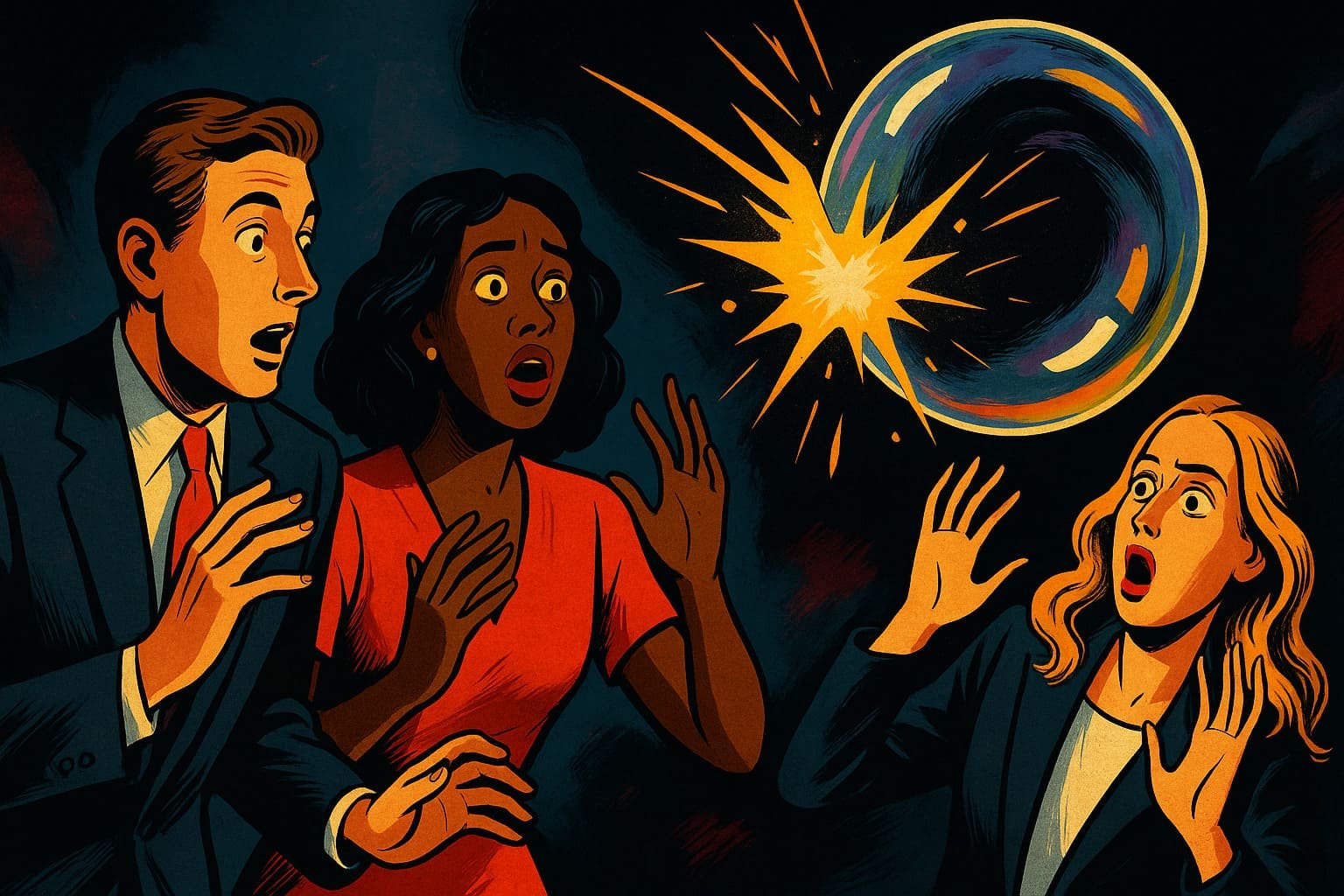
Spotlights circle a packed digital arena. The roar of virtual crowds echoes as brands line up, each flashing neon promises brighter than the last. Banners glitter with words like “Game-Changer,” “Unmissable,” and “Revolutionary,” baiting the crowd with every scroll and swipe. Each marketer becomes a ringmaster, cracking a whip made of viral videos, influencer partnerships, and fear of missing out. In this marketplace, attention is currency, and everyone’s wallet is open, whether they know it or not.
Somewhere backstage, a tech founder wipes sweat from his brow. His app hit a million downloads in a week, but the dashboard shows users fleeing just as fast. A team debates which TikTok meme might stop the bleeding. No one mentions meaning, only momentum. The room smells like burnt coffee and burnt out dreams—a kind of modern colosseum where gladiators wear hoodies and the only weapon is an endless thirst for hype.
On the street, a teenager spins her phone in her hand, scrolling through a dozen “must-have” products. She laughs, shares, and forgets, always searching for the next thing that will make her feel something new. The city hums with this restless energy, every conversation orbiting the latest viral moment. In offices above, executives high-five over spiking metrics, but outside, the hype feels strangely hollow.
Inside a dark studio, a creative director studies focus group footage. He watches eyes light up at the launch of a new sneaker, then flicker away when the next headline appears. The cycle repeats. Nobody seems to ask where all this attention is headed, or if anyone will notice when the lights finally go out.
In a corner café, a freelance writer—her laptop dusted with crumbs—sips cold brew and drafts yet another “ultimate guide to viral growth.” She sighs, knowing the story isn’t really about growth at all. It’s about the hunger for something real beneath all the noise.
Quick Notes
- The Bubble Builds Fast, but Pops Faster: Attention-driven growth is easy to spark but impossible to sustain, leading brands to chase short-term spikes instead of building substance.
- The Hype Trap Consumes Even the Best: From unicorn startups to legacy brands, nobody is immune to the seduction of hype and the pain when audiences inevitably turn away.
- Real Value Outlasts Viral Noise: The companies that survive are those that deliver meaning, connection, and trust—not just the next trending hashtag.
- Pop Culture Fuels the Cycle: Brands that win the attention game know how to ride waves of celebrity drama and meme culture, but these tricks rarely build lasting relationships.
- Survival Demands Reinvention: When the bubble bursts, brands must rediscover their core, cut the empty buzz, and rebuild on human experience rather than borrowed excitement.
Viral Velocity: The Art of Making Noise
The modern marketer’s dream starts with a spark—an irresistible product drop, a memeable slogan, a story that travels faster than rumor in a high school hallway. Every platform is a stage, and every audience an algorithm to outsmart. Brands compete not for loyalty, but for that split-second when you pause, gasp, and share with a friend. Hype becomes a virus, moving from Instagram stories to group chats, infecting everyone with the fear of missing out.
Growth experts like Riley Chung, a product launch consultant, recall the adrenaline of “momentum at any cost.” Riley once engineered a campaign for an energy drink that exploded overnight. For a week, the city’s billboards glowed red and blue. Then, as quickly as the numbers soared, they fell off a cliff. “It was like winning the lottery, then losing the ticket,” she jokes, remembering how excitement morphed into anxiety when sales plateaued.
Pop culture offers endless metaphors for this ride. Think of the GameStop meme stock craze, or the rise of the ice bucket challenge—viral surges powered by pure spectacle and collective thrill. Brands are eager to surf these waves, but most never learn to swim when the tide pulls back. What begins as a celebration quickly feels like a scramble to stay afloat.
Real stories surface everywhere. At a sneaker company, a junior marketing manager named DeShawn remembers the high of seeing their new drop sell out in minutes. The next morning, he watched social media turn on them, accusing the brand of “hype over substance.” Within days, resale prices tanked, and the glow of victory faded into frustration.
The formula is seductive: tease, launch, watch metrics spike, repeat. But the price is always the same. What goes up on borrowed attention must come down, leaving teams scrambling for the next fix.
Chasing Shadows: When Attention Becomes Addiction
Every marketer knows the high of a campaign that takes off. Yet what few admit is the emptiness when it’s over. The industry craves dopamine, whether from retweets or sales charts, and teams get hooked on the rush of instant validation. The search for more never ends, and each win feels a little less satisfying than the last.
Marketers become gamblers in a digital casino, pulling levers for likes and praying for shares. Brands like Pelota, a sportswear startup, saw wild growth from a viral dance challenge. For a month, the founders basked in headlines and investor calls. Then, the craze fizzled, and user engagement vanished. CEO Maya Wells confided, “The hype felt like a sugar rush. When it ended, we had nothing left to feed people.”
The cycle repeats across industries. One week, everyone is obsessed with a new app; the next, it’s forgotten. Teams pour resources into chasing the latest trend, convinced this time will be different. Instead, audiences grow immune, needing ever more outrageous stunts to feel the same excitement.
Pop culture rewards short attention spans. TikTok creators churn out daily trends, each more outlandish than the last, while brands scramble to keep up. In the noise, authentic voices struggle to be heard. A digital strategist at a streaming service confesses, “We stopped thinking about the user’s journey. All we wanted was to go viral.”
The addiction to hype isn’t just about marketing—it’s a mirror for society’s hunger for the next big thing. The cost is attention itself, stretched thin and worn out until nothing feels new anymore.
The Celebrity Engine: Fame, FOMO, and Flashbacks
Hype feeds on celebrity, and celebrity feeds on hype. When a famous face holds your product, millions tune in, swipe up, and believe. But borrowed fame is fragile, and loyalty built on influence dissolves with the next scandal or viral flop. Brands that once stood for something get lost in the stampede to be seen with the right people at the right time.
Fashion house Bellaforte learned the lesson in public. Their collaboration with a controversial pop star generated massive press and crashed their website. Weeks later, a backlash hit social media, and loyal customers abandoned ship, feeling betrayed by what seemed like an empty cash grab. The marketing chief, Karina, reflected, “We won the battle for attention, but lost the war for hearts.”
FOMO (fear of missing out) drives the cycle. Limited drops, countdowns, and “only for our followers” deals create a feeding frenzy, but rarely lasting love. Customers rush to buy, post, and flex for likes, only to move on when the next shiny thing appears. Brands burn out trying to keep up, their stories drowned out by louder, faster competition.
Case studies abound. A streaming platform went all-in on a viral show, pushing celebrity tweets and surprise trailers. Ratings spiked, but after the buzz faded, subscribers churned away. “We learned the hard way that attention doesn’t mean commitment,” admits a producer who watched budgets balloon and hopes deflate.
The chase for fame offers a shortcut, but the road is littered with brands that forgot to build something deeper. In the world of hype, today’s headline is tomorrow’s punchline.
Meaning Matters: When the Glitter Fades
The attention bubble always bursts. When it does, the survivors are not the flashiest brands, but the ones that built real relationships. Substance outlasts spectacle. After every viral campaign, a reckoning follows, forcing teams to ask what they actually delivered. Did they build trust, or just traffic? Did they solve a problem, or just sell a dream?
Direct-to-consumer brand Fennel & Fig provides a model. After a rocky launch powered by influencer hype, their early buzz faded into silence. The founders pivoted, focusing on customer stories, slow-burn loyalty programs, and thoughtful design. Over time, their community grew, not because of noise, but because of care and connection. “Growth is about making people feel seen, not just sold to,” says co-founder Jay Patel.
Academic frameworks back this up. Lasting value comes from empathy, transparency, and delivering on promises. Brands that listen, adapt, and own their mistakes stand apart in the crowd. The hype cycle may grab headlines, but customer retention tells the real story.
In practice, this looks like honest product updates, helpful content, and community-driven campaigns. It means knowing that not every post needs to go viral, and that true loyalty grows in quiet moments, not public spectacles. As consumers get savvier, they reward authenticity over artifice.
When the glitter settles, what’s left is substance. The brands that rise again are those that chose meaning over momentum, human stories over hollow stats.
The Rebuild: Lessons from a Burst Bubble
Every attention bubble leaves a mark. Brands that survive are forced to rediscover who they are, cut what doesn’t matter, and listen to the people behind the metrics. The hardest lessons are often the most valuable: growth is not a shortcut, but a journey that demands honesty and resilience.
Rebuilding starts with owning failure. Digital agency Ignite Labs went all-in on hype tactics for a major retail client. The launch was a blockbuster, but customer trust eroded quickly as promises went undelivered. After weeks of backlash, the agency’s team led by founder Devon King spent months repairing relationships. They replaced viral stunts with behind-the-scenes content and customer interviews. Devon says, “We stopped trying to look famous and started acting real.”
The process is never easy. Teams face layoffs, investors get nervous, and the pressure to chase the next big win never really disappears. Yet, brands that weather the storm emerge stronger, with fans who appreciate vulnerability and a willingness to change. Those who refuse to adapt vanish into the noise, replaced by hungrier, humbler players.
True growth happens when hype fades and attention finds its way to value. The brands left standing are those that remember why they started, who they serve, and what really matters when nobody’s watching.
The final lesson is simple, but not easy. Lasting success is earned, not hacked. It lives in the moments when brands choose courage over shortcuts, purpose over panic, and connection over clicks.
Bubble Burst: The Awakening Hour
Spotlights fade. The digital arena empties. A lone marketer stands amid scattered confetti, echoes of applause still ringing in her ears. She glances at an empty stage and wonders if the show mattered to anyone outside these walls. The adrenaline rush gives way to a hush, the kind that lingers when hype loses its magic.
Across town, a CEO leans over a rooftop balcony, phone buzzing with news of another “disruptive” competitor. He breathes in cold air, weighing headlines against the hope of building something that will last when trends turn. Far below, city lights flicker—brief bursts in a dark landscape, each one a reminder that real connection outshines spectacle.
A team gathers in a quiet office, laptops closed. They talk not of metrics or virality, but of what they wish someone had told them at the start: that hype comes cheap, but trust is priceless. Someone laughs about the chaos of last year’s campaign. Another confesses she almost quit from exhaustion. The room fills with a new kind of energy—the feeling of people rebuilding, step by step.
Even as the world races toward the next big thing, some choose to slow down. They listen, rebuild, and find strength in the silence after the circus leaves town. Outside, rain taps the window, soft and real. No metrics. No headlines. Only the quiet truth that tomorrow’s growth belongs to those who never stop caring.
You have a choice. You can chase the next spark, or build a fire that will outlast every storm.