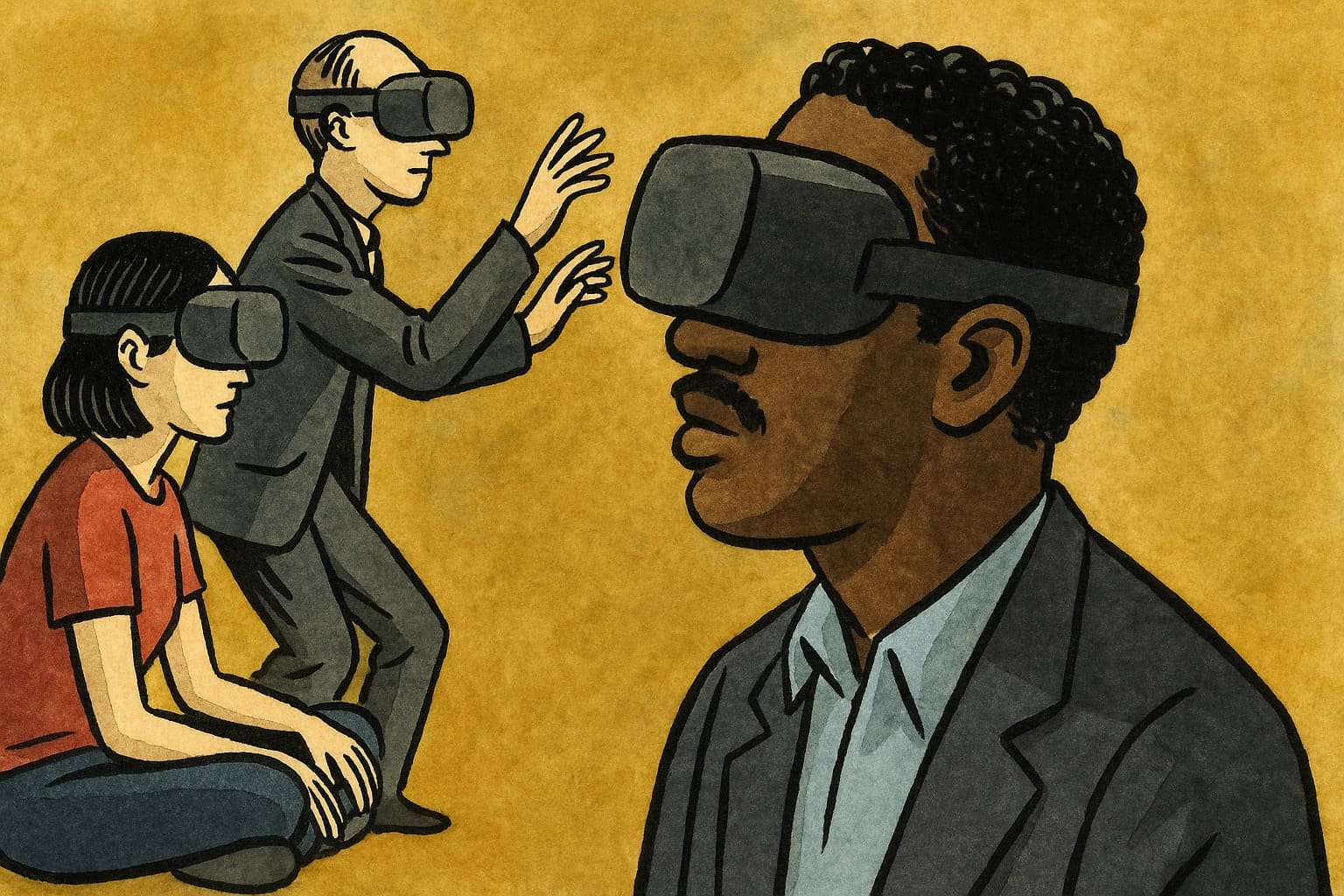
Dust drifts through an abandoned shopping mall where empty storefronts reflect forgotten ambitions, yet one corner pulses with life as visitors step into lightweight headsets instead of crowded queues. Their expressions change almost instantly. A child explores ancient Rome, an engineer inspects tomorrow’s factory, and a homebuyer walks through an apartment that has not been built. None of those experiences are illusions in the dismissive sense. They are practical demonstrations that virtual reality has quietly matured from novelty into infrastructure for learning, commerce, and decision making.
For years, critics dismissed virtual reality as another expensive gadget searching for a purpose. They were looking in the wrong direction. Every transformative technology begins by appearing unnecessary because society judges new tools using yesterday’s habits instead of tomorrow’s possibilities. Smartphones were once considered luxury devices. Cloud computing faced skepticism before becoming ordinary business infrastructure. Virtual reality now occupies a similar turning point, steadily shifting from entertainment toward solving practical problems that physical environments struggle to address efficiently.
Major organizations have already recognized this transition. Siemens uses immersive environments to help engineers visualize industrial systems before installation, reducing costly design errors that are difficult to detect on traditional screens. Automotive manufacturers such as BMW employ virtual simulations to improve production planning and workplace ergonomics long before factories begin operating. Priya, director of an architecture practice, watched hesitant clients approve ambitious designs only after virtually walking through every corridor and window. Confidence replaced uncertainty because people experienced ideas instead of imagining them.
Education offers perhaps the clearest evidence that virtual reality extends far beyond gaming. Students exploring complex scientific concepts often retain knowledge more effectively when abstract theories become interactive experiences rather than static diagrams. Medical trainees practice delicate procedures repeatedly before entering operating theatres, building confidence without exposing patients to unnecessary risk. Museums also create immersive historical journeys that allow visitors to appreciate forgotten civilizations with remarkable depth. Learning becomes participation instead of observation, and curiosity grows naturally through experience rather than instruction alone.
Business strategy also changes when distance becomes less important than presence. Global teams increasingly collaborate around shared virtual prototypes, shortening development cycles while reducing travel expenses and environmental impact. Retailers experiment with immersive showrooms where customers examine products before making purchases, blending convenience with confidence. Entertainment companies continue expanding virtual concerts and interactive storytelling that place audiences inside performances instead of merely watching them. Each application reinforces a simple truth. Value grows whenever technology removes friction from human understanding rather than adding complexity.
Snow settles across a silent mountain ridge where explorers pause before choosing separate paths through unfamiliar terrain. Innovation often feels exactly like that moment, balanced between hesitation and possibility. Virtual reality is no passing attraction waiting for another trend to replace it. It represents a new layer of human experience where imagination, collaboration, and practical problem solving increasingly meet. Real advantage will belong to those willing to step forward before familiar ground quietly becomes yesterday’s destination.
