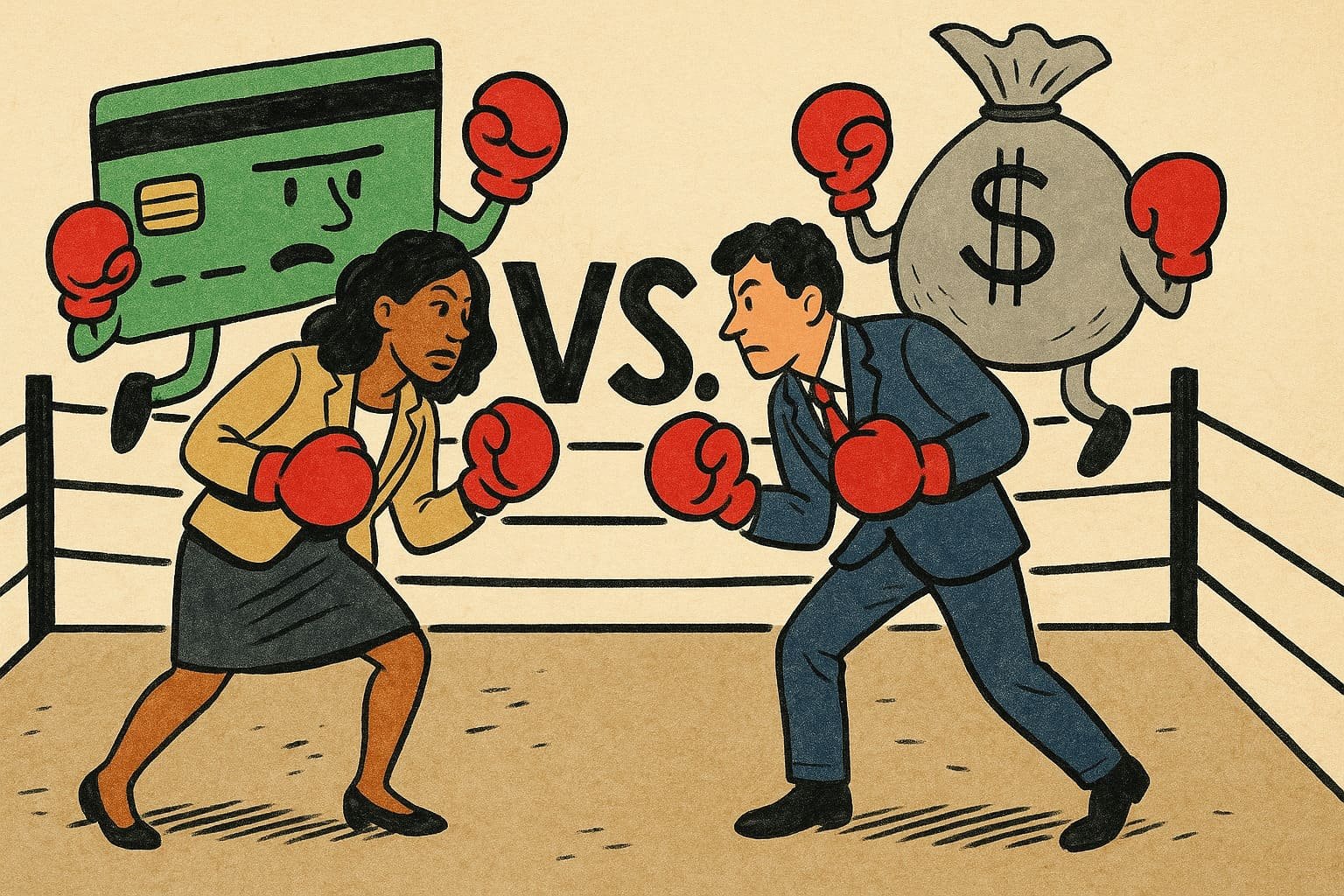
In a world where cash determines power, access to funding is no longer just a nice-to-have; it’s the very fuel of your business survival story. You’re hustling hard, growing faster than your cash flow, and suddenly you’re at a fork in the financial road. One sign reads “Credit Line.” The other, “Capital Loan.” Choose wrong, and you’re stuck with overhead that strangles you. Choose right, and you’re free to scale, pivot, and dominate.
This isn’t just about borrowing. It’s about strategy. Cash lines offer flexibility, while capital loans promise foundation. But which one truly wins when the pressure’s on, and you’re down to your last financial lifeline? This guide will break that down through five deeply human, insanely useful, and mind-expanding lenses.
Quick Loans
- Credit Lines Thrive on Agility: Perfect for businesses that need short bursts of cash to ride out seasonality, cover gaps, or seize rapid opportunities without getting chained to a massive loan.
- Capital Loans Build Legacy: Ideal for long-term investments like real estate, infrastructure, or high-capital ventures with a clear ROI and slower burn rate.
- Cash Flow Culture Determines the Fit: A business living off daily liquidity may drown in a term loan’s rigid payment schedule. A capital-intensive company can get hamstrung by the unpredictability of revolving credit.
- Risk Profiles Tell the Truth: Your tolerance for risk, market predictability, and revenue maturity are better predictors of the right choice than industry norms.
- The Best Choice Isn’t Always Either: Smart entrepreneurs often blend both using credit lines for agility and capital loans for architecture, knowing each tool solves a different kind of financial puzzle.
Flexible Firepower: When Credit Lines Are Your Secret Weapon
The lifeblood of small businesses often isn’t massive capital; it’s liquidity. When the printer breaks on a Thursday and payroll is due on Friday, it’s not the grand loan approval you need. It’s a quick draw from a financial holster. A credit line gives that edge: rapid, reliable, revolving access to funds that dance with your needs instead of dictating them.
Think of a boutique creative agency that runs campaigns with irregular client payments. For them, predictability is a fantasy. Their credit line becomes a breathing lung, expanding when project costs spike and contracting once clients finally pay. It allows them to manage cash timing rather than cash size.
Real-world proof? A freelance platform founder in Austin used a credit line to cover surprise server costs during a product launch. That lifeline helped him scale without waiting for angel funding. This wasn’t a business with capital-heavy needs. It was a nimble ship that needed wind at the right moment.
The beauty of a credit line lies in its asymmetrical power: you only use what you need, but it’s always there. Like an umbrella you don’t appreciate until it pours. It empowers quick pivots, like launching a last-minute holiday ad blitz or buying a competitor’s abandoned ad space at a discount.
Still, agility has its price. Interest rates can be higher, and the temptation to overuse it is real. It’s a tool best wielded by disciplined spenders who track ROI obsessively. Without that control, it morphs from a safety net into a debt trap faster than most founders realize.
Capital Loans: The Architecture of Ambition
Let’s be blunt: sometimes, you don’t need a bridge; you need a fortress. When your dreams come with blueprints, timelines, and ROI forecasts stretching three years ahead, capital loans rise as your best bet. They’re structured, fixed, and often substantial. They’re not built for flexibility; they’re designed for scale.
A Nairobi-based agritech startup recently used a capital loan to build cold storage warehouses. It wasn’t a decision made lightly. But with seasonal harvest cycles and high spoilage costs, long-term savings from infrastructure justified the upfront risk. Credit lines simply couldn’t fund such deep infrastructure.
What makes capital loans formidable is their psychological shift. They force a business to commit, forecast, and plan around tangible assets. You become not just a founder but a builder; laying down bricks that won’t vanish when the next invoice is delayed.
But here’s where people mess up: taking out a capital loan to fix operational problems better suited to credit lines. Using a sledgehammer to kill a fly not only misses the point; it cracks the foundation. Term loans are for structural bets, not payroll patches.
That said, the right capital loan can transform a business. From opening a second location to investing in proprietary tech, it’s a statement that you’re betting on long-term value, not just short-term survival. The debt is heavier, but so is the payoff; if it works.
Cash Flow Dictates the Champion
Your bank account doesn’t care about theory. It cares about rhythm. Credit lines shine in unpredictable cash flow environments, while capital loans need consistency like plants need sunlight. This is the real litmus test not size, not industry, not even growth rate.
Picture a DTC skincare brand operating on influencer cycles. Sales spike after shout-outs but slump in between. They lean hard into credit lines to stock inventory during dry spells. Repayment aligns with cash surges. That business would buckle under a rigid capital loan with monthly repayment deadlines.
Meanwhile, a logistics firm with contracts tied to government supply chains operates with clockwork precision. They secure a capital loan to buy trucks, calculate ROI per delivery, and repay like it’s gospel. The steady rhythm of contracts suits the structure of long-term loans.
Cash flow compatibility isn’t glamorous, but it’s everything. Mismatched financing is like putting a racehorse on a leash or a tortoise on a treadmill. The results are messy, and the blame lands on the borrower who misjudged their operational cadence.
The hard truth? Many founders lie to themselves about their revenue rhythm. They borrow based on hope rather than historical data. That’s the highway to financial ruin. Know your cycle, and let it guide the credit decision not the other way around.
Risk Appetite: Are You a Gambler or a Gardener?
Every financial decision is also a mirror. Credit lines and capital loans reflect how much volatility you can emotionally and operationally handle. This isn’t just accounting; it’s psychology. What kind of entrepreneur are you?
Risk-embracing founders often gravitate toward credit lines. They value speed, freedom, and the ability to strike when opportunity knocks. A fashion entrepreneur in Milan once financed a pop-up store in Tokyo using a line of credit. She sold out in a week and paid off the debt instantly. High risk, high reward.
On the flip side, cautious visionaries prefer capital loans. They’re gardeners, not gamblers. They plant slowly, water steadily, and bet on growth they can measure. A sustainable packaging company in Berlin used a term loan to build a biodegradable material plant. The timeline was years, not months, but it paid off.
There’s no moral high ground here. Both paths work if aligned with your DNA. But mismatch leads to panic. Risk-takers shackled to long-term loans feel suffocated. Planners stuck with revolving credit feel exposed.
Your business isn’t just a balance sheet. It’s a reflection of your personality under stress. Choose funding that supports your temperament. The loan that wins isn’t the one with the best terms. It’s the one that fits your entrepreneurial psychology.
The Hybrid Hustle: Why the Best Businesses Use Both
This isn’t a boxing match. It’s a toolbox. You don’t choose between a hammer and a screwdriver. You use both depending on the job. The smartest founders know this. They balance capital loans for heavy lifting and credit lines for agility.
Take the example of a scaling co-working startup in Lagos. They used a capital loan to lease prime real estate, renovate the space, and build proprietary booking software. But once launched, they relied on a credit line to manage fluctuating operating costs, like utilities and seasonal staff. That duality powered consistent growth without losing momentum.
Even household names do this. Amazon started by using credit lines to bridge their early inventory costs. Later, they shifted to capital funding for warehouse expansion. The blend was intentional. Credit lines bought time; loans bought territory.
Your financial strategy should be dynamic, not dogmatic. Relying on one model forever is a sign of stagnation. The best businesses evolve their financing as they evolve their operations.
Here’s the secret sauce: timing. Use credit lines when you need speed. Use capital loans when you need scale. Marry both only when your financial discipline can handle the complexity. Otherwise, you risk managing two fires with one extinguisher.
The Real Winner Is the One That Aligns with You
This isn’t a war between products. It’s a revelation about purpose. Credit lines and capital loans are financial philosophies wrapped in contracts. Each holds power, each has pitfalls. But only one will fit your moment, your mindset, and your mission.
When entrepreneurs ask, “Which one should I choose?” they’re often asking the wrong question. The real ask should be, “Which one honors how my business breathes, grows, and adapts?” Don’t pick based on trends. Pick based on truth.
So ask yourself: Are you building a business that needs freedom or foundation? Agility or architecture? Fight or fortify?
And when you know the answer, don’t just borrow money. Borrow smart.
Your future deserves more than funding. It deserves financial fluency.