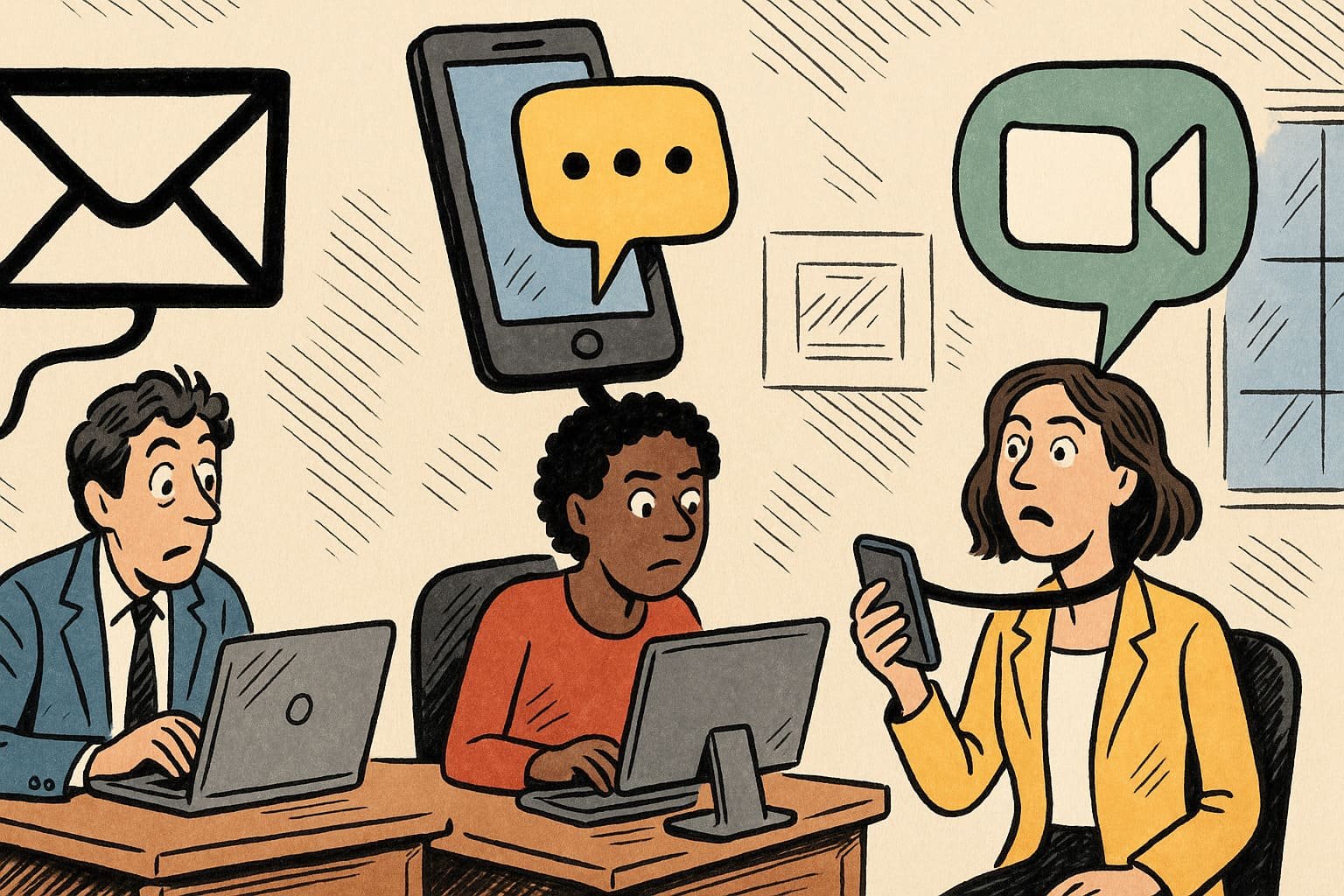
A decade ago, offices buzzed with ringing phones, face-to-face meetings, and impromptu watercooler chats. Now? Slack notifications, Zoom invites, and Google Docs edits have taken their place, creating a new breed of professionals: workflow warriors. These are the remote-first, tool-savvy communicators orchestrating operations from coffee shops, home offices, and airport lounges. Communication is no longer about proximity; it’s about precision. And those who wield the right tools with finesse are rewriting the rules of engagement in today’s workplace battlefield.
This isn’t just a shift in logistics; it’s a revolution in mindset. The tools we choose now define how we think, share, and create. Email may have ruled the 2000s, but in this era, asynchronous threads, live boards, and workflow integrations are the real dealmakers. Businesses that cling to traditional modes of communication are finding themselves outpaced by agile teams riding the tech wave. What used to be a company newsletter is now a vibrant Notion dashboard; yesterday’s weekly meeting is today’s shared Trello board.
Why does this matter? Because communication is the oxygen of any organization. When it flows, creativity explodes. When it clogs, everything suffocates. Digital communication tools aren’t just changing how we talk; they’re transforming how we think, decide, and execute. The ripple effect spans productivity, culture, decision-making, and even employee well-being.
Consider this: companies that mastered asynchronous tools pre-pandemic scaled gracefully under pressure. Others? They gasped, scrambled, and watched as tech-savvy competitors danced around them. In this new game, mastery of digital communication is not a bonus skill; it’s survival. The good news? Anyone can become a workflow warrior with the right mindset and map.
Quick Notes
- Digital communication tools are not optional accessories; they are the beating heart of modern productivity and culture.
- Mastering asynchronous communication empowers autonomy, speeds execution, and builds inclusive workplaces across time zones.
- Tools alone don’t solve communication chaos; systems, habits, and digital etiquette shape success.
- Workflow warriors who blend empathy with technology create the most effective, human-centered organizations.
- Communication in the digital age is more about clarity and intentionality than ever before; noise is the enemy, signal is gold.
Asynchronous Power Plays: Communication on Your Time, Not Just Real Time
Remote work did not invent asynchronous communication, but it certainly turned it into a power move. Instead of relying on real-time responses, professionals now lean into tools like Loom, Slack threads, and shared docs to collaborate across time zones. It’s not about being always-on; it’s about being always-clear. This shift removes urgency from the mundane and saves urgency for what truly matters. Smart teams know that clarity lives in well-crafted updates, not 9 a.m. standups.
Asynchronous tools foster autonomy and trust. Employees don’t need to wait for permission when expectations are documented and visible. It reduces bottlenecks and empowers proactive problem-solving. Consider GitLab’s success with an entirely remote, async-first culture; their handbook is public for a reason. It’s not just transparency; it’s trust at scale. Async tools build resilience, especially when synchronous meetings are hard to align.
The danger lies in overloading communication channels. Without thoughtful curation, Slack becomes a landfill of half-baked messages and Google Docs multiply like rabbits. The solution is intentional architecture; what goes where, how often, and why. Every tool needs a purpose, a rhythm, and boundaries. Without discipline, tools breed noise faster than they enable signal.
Real companies are drawing lines. Shopify declared a war on meetings, cutting thousands of recurring invites in favor of async status updates. It wasn’t rebellion; it was relief. It freed teams from performance meetings and returned them to performance itself. Communication became proactive, not reactive. The lesson? Async is more than a format. It’s a philosophy.
If you want your team to think deeply and act decisively, ditch the dopamine loop of instant replies. Instead, build a culture that celebrates well-articulated thoughts over rapid-fire chatter. Let silence be productive. Let waiting become thinking. Let communication breathe.
Tool Overload vs. Strategic Stacks: Crafting Your Communication Arsenal
With so many tools vying for attention, it’s easy to fall into the trap of tech clutter. One team swears by Basecamp, another lives in Monday.com, and a third uses WhatsApp like it’s a project manager. The result? Digital chaos masked as collaboration. Workflow warriors know that fewer, smarter tools always trump the shiny app of the week.
Choosing tools is a strategic decision, not a shopping spree. Great communication stacks are designed around how your team thinks and operates. Are you a fast-moving creative squad? Trello and Miro might suit you. Are you a cross-functional global team? Try Notion, Slack, and Zoom in tandem. Cohesion matters more than variety. Integration beats novelty.
Over-communication is a symptom of poor tool hygiene. When nobody knows where to look, people repeat themselves. When files live in ten locations, nothing feels real. The fix? Declare a single source of truth. Assign each tool a domain and enforce clarity. Think of tools as rooms in a house: don’t eat in the bathroom, don’t sleep in the garage. Purpose creates peace.
At Canva, teams operate within a tight stack of Slack, Confluence, and Figma. Each tool serves a role, and the roles are enforced through onboarding and habits. The payoff? Fewer meetings, faster iterations, and a culture of transparency. The tools aren’t special; the discipline is. Digital excellence is often just the refusal to let things get messy.
The takeaway? Don’t hoard tools like Pokémon cards. Build a lean stack that mirrors your workflow, respects your time, and scales with clarity. One purpose-built ecosystem can outpace five disconnected apps.
Humanizing the Machine: Empathy in Digital Communication
Digital tools connect faster, but they risk dehumanizing interactions. A well-meaning message can land like a grenade if stripped of tone, context, or care. Emojis help, but they’re not enough. Workflow warriors understand that communication isn’t just transactional; it’s emotional. Even in a sea of pixels, people crave empathy.
Language becomes our body language. The difference between “Can you finish this?” and “Would love your help wrapping this up today – let me know if you’re swamped” is monumental. One feels like a demand; the other feels like support. Digital tact isn’t soft; it’s strategic. Kindness scales influence. Precision reduces conflict.
Remote-first companies like Buffer and Zapier have thrived because they prioritize tone and emotional intelligence in writing. They coach employees on message framing, conflict navigation, and psychological safety; all through Slack. It’s not fluff. It’s fuel. When people feel seen, they show up.
Don’t just send a message; send a moment of connection. Use voice notes to add nuance. Use gifs to share joy. Use silence to respect boundaries. When communication feels human, collaboration feels real. Tools are only as good as the soul we pour into them.
Workflow warriors don’t hide behind tech; they channel emotion through it. Empathy is their multiplier. In a world racing toward automation, nothing stands out more than being unmistakably, unapologetically human.
Workflow Rituals: Building Culture Through Communication Habits
Culture is not what your website says; it’s what your calendar shows. If every day is a scramble of last-minute huddles and unread messages, no mission statement can fix that. Digital communication tools shape culture through repetition. Habits become rituals. Rituals become identity.
Every team has a rhythm; the question is whether it’s accidental or intentional. Daily huddles, weekly wins, monthly retros: these aren’t just ceremonies; they are cultural glue. And the best teams infuse these rituals with soul. They shout out wins in Slack. They celebrate birthdays on Zoom. They document learnings in Notion, not just tasks.
Rituals create predictability in an unpredictable world. They make teams feel safe, connected, and seen. At Duolingo, designers share one new idea every Monday in a shared Miro board. It’s not just brainstorming; it’s bonding. Rituals don’t slow you down. They make speed sustainable.
When leaders disappear into their inboxes and execs ghost Slack threads, the signal is clear: communication isn’t valued. The opposite is true when leaders use tools visibly and thoughtfully. They narrate decisions. They ask questions. They respond quickly. Visibility becomes leadership.
Want better culture? Build better habits. Start with one ritual this week: a daily check-in, a Friday appreciation post, a shared doc of lessons learned. Watch as culture moves from posters on the wall to pixels with purpose.
The Future Is Fluid: Why Communication Mastery Is the New Superpower
As AI writes emails, bots schedule meetings, and avatars attend calls, human communication will evolve; again. But the core truth remains: clarity wins. Tools will come and go, but the ability to make others feel understood will never be obsolete. The best communicators won’t just survive this shift. They will lead it.
Communication is not a soft skill; it’s a strategy. It determines how fast you move, how well you lead, and how deeply you inspire. Whether you’re building a startup, managing a global team, or freelancing from Bali, your success rides on how well you express thought and intention. Tools can amplify. But they can’t replace.
The future belongs to those who blend intellect with empathy, signal with story, speed with substance. Communication mastery is a cocktail of listening, structuring, feeling, and delivering. Every tool you touch is an instrument. Every message, a performance.
Look to leaders like Stewart Butterfield (Slack) or Melanie Perkins (Canva). They didn’t just build tools. They evangelized cultures of thoughtful, digital-first communication. Their brands became symbols of how modern work could feel not just how it could function.
So here’s the final note: if you want to lead in a world ruled by pixels, become fluent in the language of clarity, compassion, and cadence. Speak less, mean more. Choose tools like instruments, not crutches. And above all, never forget: behind every message, there is a mind. Behind every tool, a soul.
Are you communicating at the speed of tech or the depth of trust?
Why scroll… When you can rocket into Adventure?
Ready to ditch the boring side of Life? Blast off with ESYRITE, a Premier Management Journal & Professional Services Haus—where every click is an adventure and every experience is enchanting. The ESYRITE Journal fuels your curiosity to another dimension. Need life upgrades? ESYRITE Services are basically superpowers in disguise. Crave epic sagas? ESYRITE Stories are so wild, your grandkids will meme them. Want star power? ESYRITE Promoted turns your brand cosmic among the stars. Cruise the galaxy with the ESYRITE Store —a treasure chest for intergalactic dreamers. Dare to enter ESYRITE.COM and step into a universe like no other. Ready to blast off?
