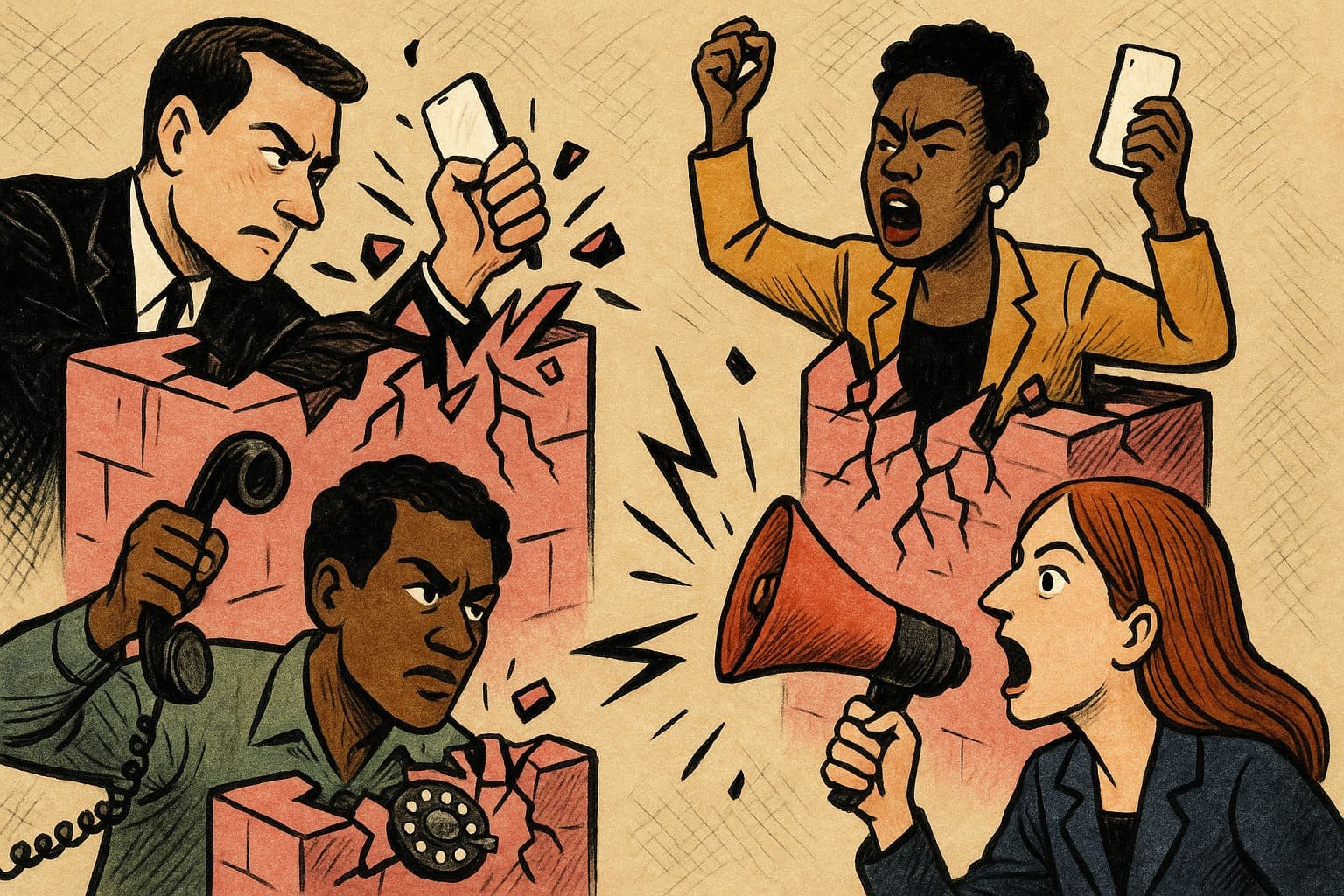
We live in an era where sending a message is easier than ever, yet being understood has never felt harder. Scroll through your inbox, ping someone on Slack, yell into the void of social media; you’re talking constantly, but are you really connecting? Communication isn’t just an exchange of words. It’s a battleground of assumptions, biases, emotions, and agendas. And the truth is, most of what you think you know about communication is outdated, shallow, and often dead wrong. Revolutionary communication theories are not just academic relics or slide-deck fillers; they’re the weapons of mass connection that can ignite revolutions, rescue brands, and save relationships.
In this piece, we uncover groundbreaking frameworks, human stories, and mind-bending insights that demolish conventional wisdom. From the theory of shattered expectations to power-laced silence and algorithmic influence, we’re diving into the future and the forgotten. These aren’t tweaks; they’re tectonic shifts. And once you see them, there’s no going back.
Quick Notes
- The Iceberg Theory of Misunderstanding: Most communication failures aren’t about the words we say but the meanings lurking beneath them. Misunderstandings explode not from what is said, but what is silently assumed.
- Power in the Pause: Silence isn’t empty. It’s a powerful signal that can build trust, create space, or destabilize entire conversations. Learn how smart leaders weaponize the pause.
- Expectation Theory: People don’t respond to your message. They react to how your message aligns with their invisible scripts. Shatter expectations wisely, and you’ll own the room.
- Narrative Hacking: Your audience isn’t waiting for data; they’re craving meaning. Shifting your message from facts to felt experiences builds unstoppable momentum.
- Algorithmic Communication: In an age of smart machines and dopamine-driven scrolling, your message competes not with people but platforms. Learn to win the attention war by speaking in signals, not noise.
The Iceberg Talks Back: Unmasking the Hidden Layer of Every Message
Every sentence you speak is like an iceberg; what’s visible is a fraction of what exists. Most of our conversations fail not because of poor grammar, but because we never uncover the submerged assumptions behind our words. You say “I need help,” but your team hears, “You’re not capable.” They say “I’ll try,” and you hear commitment when they meant maybe. This gap between surface and subtext is where trust is lost or won. The key to unlocking this riddle lies in understanding the unseen mental models every person brings into the conversation.
Take it from Satya Nadella, Microsoft’s CEO, who transformed a toxic internal culture by pushing emotional intelligence as a leadership tool. Instead of promoting louder voices, he encouraged vulnerability and curiosity, recognizing that miscommunication was often about what wasn’t said. His internal “Growth Mindset” doctrine wasn’t a training program; it was a blueprint to dismantle fear-based communication. Nadella’s team started listening for the meaning beneath the message. Results didn’t just improve; they exploded.
Human interactions are full of default scripts we rarely question. When someone says “I’m fine,” it could mean they are disappointed, exhausted, or livid. Cracking these scripts requires emotional calibration, something you won’t find in basic communication guides. Effective communicators don’t respond to words; they respond to the full emotional payload hiding behind the words. If you can’t interpret what someone means when they aren’t being direct, you’re losing battles you can’t even see.
Think of communication as emotional archeology. You’re digging past sarcasm, politeness, and defensiveness to get to the artifact: true intention. That requires trust, psychological safety, and relentless curiosity. When leaders build cultures that value curiosity over certainty, every meeting becomes a breakthrough. Most managers expect compliance. Visionary leaders decode meaning.
If you only ever focus on what’s being said, you’ll forever be a tourist in someone else’s story. Revolutionizing communication starts with challenging the myth of clarity. Words are shadows. To lead, coach, or inspire, you need to illuminate what’s hiding underneath.
The Silent Weapon: How Strategic Pauses Speak Louder Than Words
Silence is often misjudged as awkward or empty. In truth, it’s one of the most strategic communication tools you can wield. A well-timed pause doesn’t just give space; it asserts control, reshapes perception, and turns noise into gravity. Smart communicators don’t fear silence; they use it as punctuation for power. It demands attention, radiates confidence, and invites deeper thought.
Steve Jobs was a master of this. During Apple keynotes, he famously let silence linger before revealing major announcements. That pause wasn’t dead air. It was designed suspense, creating a gravitational pull around his words. The audience leaned in. And in those few seconds, he went from presenter to prophet. Jobs didn’t just deliver updates; he orchestrated energy.
In corporate boardrooms, the power of silence can shift dynamics instantly. When a senior executive pauses after being challenged, it signals composure, not uncertainty. In negotiation, silence can push the other side to fill the void with concessions. Pauses slow the pace, inviting people to think, reassess, and sometimes confess. Every great communicator knows: what you don’t say is as powerful as what you do.
Silence can also invite vulnerability. Brené Brown’s research into leadership and courage shows that open-ended pauses allow people to step into honest reflection. Instead of chasing immediate responses, the best leaders let silence draw out deeper truth. In high-emotion moments, especially conflict, silence acts like a shock absorber. It helps process emotion before reaction.
If you constantly fill every space with chatter, you’re missing the most potent part of the message. Silence recalibrates power. Use it to give your ideas weight, your team space, and your narrative rhythm. The future of communication isn’t faster. It’s more intentional.
The Expectation Bomb: Exploding the Myth of Predictable Messaging
When you say something, people don’t hear it in isolation. They measure it against what they expected you to say. That discrepancy is the real message. Expectation Theory, rooted in the work of Judee Burgoon, explains how people experience surprise, suspicion, or trust depending on how your message aligns with their mental expectations. Disrupt the script, and you disrupt the brain.
Take Barack Obama’s presidential campaigns. His speeches regularly shattered expectations not through radical content but radical tone. Instead of sounding like a politician, he sounded like a reflective neighbor. That disarmament, that breach of expectation, opened minds that would have stayed closed. Obama didn’t just deliver messages. He orchestrated emotional dissonance that reshaped beliefs.
The workplace is no different. Managers who offer praise unexpectedly build more loyalty than those who follow performance reviews. Entrepreneurs who preemptively admit product flaws disarm skeptical customers. A predictable message, no matter how polished, becomes invisible. But a thoughtful rupture in the pattern makes people stop scrolling and start listening.
Revolutionary communicators don’t just transmit data; they create friction. And that friction, when managed with care, becomes momentum. When your words land in a way people didn’t see coming, they get curious. Curiosity is the entry point to influence. Predictable voices fade. Disruptive ones echo.
Most communication training is obsessed with clarity and consistency. But real influence lives in thoughtful surprise. The brain remembers contrast, not consistency. Say the thing they never expected as long as it rings true.
The Story Virus: How Narrative Hijacks Logic and Wins Minds
Facts tell. Stories sell. And if you’re not embedding your message inside a narrative, you’re leaving influence on the table. Cognitive science shows that humans are narrative creatures. We don’t think in bullet points. We think in stories, metaphors, and journeys. Story isn’t decoration. It’s the operating system of the brain.
Elon Musk doesn’t sell cars. He sells a story about saving Earth. Patagonia doesn’t push jackets. They push a story of rebellion against consumerism. These narratives hook emotions, trigger identity, and create loyalty. People don’t follow leaders. They follow stories leaders represent. Data without narrative is inert. Narrative without data is magic.
Dropbox exploded early growth through a simple explainer video. But it wasn’t the animation that worked. It was the story: a frustrated user trying to organize files and discovering an elegant solution. That short video did more for growth than pages of documentation. Why? Because people saw themselves in it.
Effective communication injects people into the story. Instead of telling them what to think, it invites them to feel something. Feelings change minds faster than arguments. If your pitch, campaign, or vision isn’t rooted in story, you’re not competing. You’re background noise.
To create narrative magic, use simple structures. The hero has a goal, faces a challenge, gets help, and changes. Then position your audience as the hero not you. The moment they see themselves in the arc, you win. Every great movement began with a story.
Bots, Biases, and the Battle for Attention: Navigating the Algorithmic Jungle
You’re not just communicating to people anymore. You’re communicating through platforms that decide who hears what. Social feeds, inbox filters, search rankings; they all alter your message before a human ever sees it. Welcome to algorithmic communication, where success isn’t just about clarity. It’s about visibility.
Consider how TikTok elevates certain sounds, phrases, or formats because of engagement algorithms. Creators now design content not just for audiences but for the algorithm’s preferences. And it’s not just social media. Email marketers spend hours crafting subject lines that dodge spam filters and boost open rates. Every message you send is now in a fight with thousands of others. The battleground? Attention.
Even dating apps are algorithmic communication tools. Your bio, photos, and first messages are optimized not just for humans but the AI matching system. What does this mean? If you’re not shaping your message with platform logic in mind, you’re invisible. Influence today requires not just emotional intelligence but algorithmic literacy.
Look at how brands like Duolingo have weaponized TikTok by turning their mascot into a chaotic meme. They didn’t just communicate. They adapted to the new language of attention. Your message has to do the same. That means crafting messages that spark engagement, signal relevance, and trigger shares.
But here’s the paradox. To hack the system, you must stay human. The most algorithmically successful content still has one thing: heart. Authenticity cuts through the noise. You don’t have to trick people. You have to touch them. And that starts by understanding not just the content of your message, but the machinery it’s riding on.
The New Gospel of Connection
If you’ve been taught that communication is about being clear, correct, and concise, you’ve been sold a lie. The world doesn’t need more polished messages. It needs more powerful ones. The real revolution lies in rejecting predictable scripts, leaning into human messiness, and wielding your message like a scalpel, not a megaphone. Words are not just tools. They’re portals.
Every groundbreaking communicator you admire, from Jobs to Oprah, Musk to Maya Angelou, cracked the code not by copying rules but by shattering them. They made silence holy. They used narrative as a weapon. They understood that people don’t buy logic. They buy transformation. And they hacked not just messages but minds.
The future of communication isn’t about more noise. It’s about rare signals. Signals that resonate, surprise, delight, provoke, and invite. The revolution isn’t coming. It’s already happening. And if you want to lead, you better stop talking and start connecting.
So ask yourself: Are you still speaking just to be heard or to be remembered?
