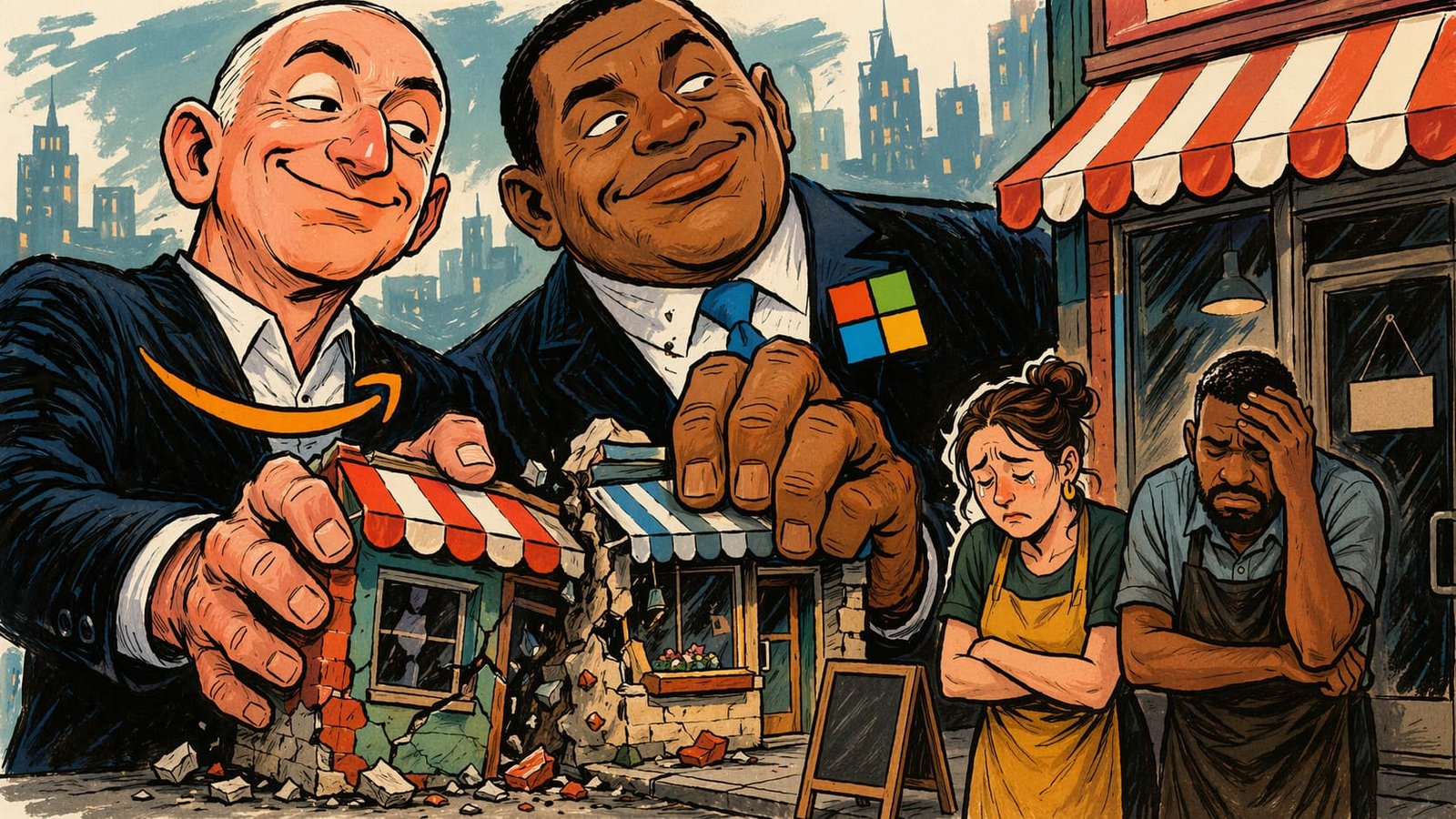
Blue light spilled across a deserted storefront where dusty display shelves still carried price tags nobody bothered removing. Across town, delivery vans slipped through traffic with mechanical precision, arriving before hesitation could become a canceled purchase. An old kind of retail was fading in plain sight. That transformation was never simply about online shopping. It became a ruthless contest over convenience, data, logistics, and attention, leaving countless entrepreneurs wondering whether passion alone still carried enough weight against platforms engineered to predict desire before customers consciously recognized it.
Retail once rewarded location, inventory, and recognizable signage. Digital commerce quietly rewrote those rules. Amazon changed expectations around speed, while Shopify lowered barriers for independent merchants to build online stores without enormous technical budgets. Winning no longer depended on occupying busy streets. Success increasingly belonged to businesses capable of creating memorable customer experiences beyond simple transactions. Consumers stopped asking where products came from. They started asking why one brand deserved trust when thousands appeared only a single click away.
An aging neighborhood bookstore reveals an unexpected truth about modern commerce. Customers returned every weekend, not because prices beat online marketplaces, but because the owner remembered birthdays, recommended forgotten authors, and hosted lively discussions over fresh coffee. That emotional connection became a competitive advantage algorithms struggled to imitate. Sofia discovered the same lesson after launching an artisan skincare company. Rather than chasing endless discounts, she filled every shipment with handwritten notes and thoughtful care instructions. Loyal buyers became enthusiastic storytellers, quietly outperforming expensive advertising campaigns.
Technology deserves admiration, but blind admiration creates dangerous strategy. Toys “R” Us underestimated digital transformation while Amazon treated logistics as a product rather than an operational necessity. Those contrasting choices reshaped an entire industry. Meanwhile, Allbirds entered crowded footwear markets without matching larger competitors on scale. Instead, sustainability, simple design, and transparent storytelling created emotional differentiation that resonated with customers seeking values alongside quality. Retail increasingly rewards businesses that stand for something meaningful because products alone rarely remain unique for very long.
Curiously, bustling street food markets continue attracting crowds despite global restaurant chains operating nearby. People gather for conversation, atmosphere, unexpected discoveries, and shared memories rather than efficiency alone. Commerce has always contained a deeply human layer hidden beneath financial transactions. Ethan ignored that reality while obsessing over cheaper advertising campaigns for his electronics store. Maya embraced community workshops, customer education, and responsive after-sales support. Her revenue grew through relationships. His margins disappeared into endless price competition that nobody truly wins.
Night settled across glowing warehouses where robotic arms sorted packages with astonishing speed, yet another independent retailer locked a modest shop carrying far more than inventory. Shelves can hold stories, identities, neighborhoods, and trust accumulated over countless conversations impossible to automate completely. Ecommerce giants will continue reshaping global retail because convenience rarely retreats once established. Real victory belongs to entrepreneurs who stop competing on price and start becoming unforgettable long before customers reach the checkout button.
