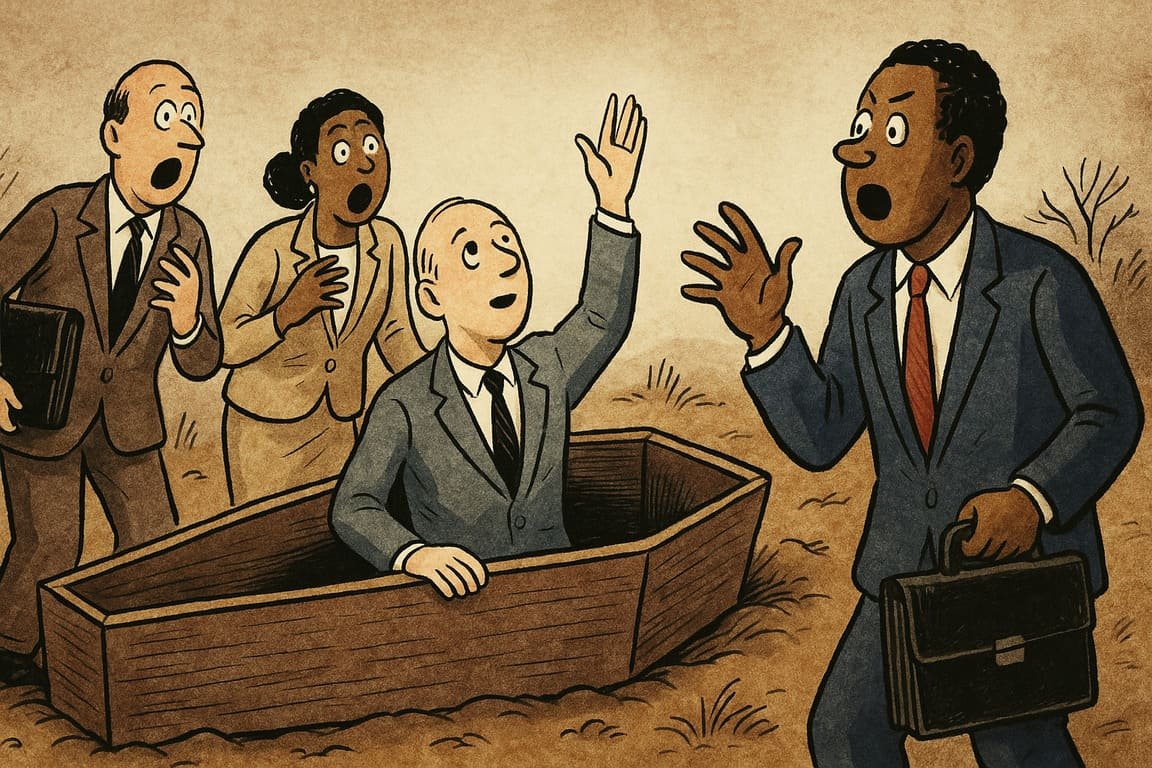
Somewhere, in a city dimmed by faded ambition, the last lights of a failing business blink in a dust-laced office. The paint peels. The carpet is threadbare. An old clock ticks loud enough to fill the emptiness, while a single manager sifts through piles of unpaid bills, haunted by the ghost of better years. But the world outside doesn’t mourn—success moves on without apology. Yet, behind these worn-out doors, a pulse flickers. This isn’t just a story of endings. It’s the silent prelude to resurrection, the moment before a legend is rewritten. Business Lazarus is not a miracle, but a phenomenon that begins right at the edge of defeat.
Most companies don’t get a second act. The default setting for failure is oblivion. Yet, every now and then, a brand climbs from its own ashes—changed, battle-scarred, but alive in ways competitors can’t predict. This is more than luck. It’s a masterclass in humility, insight, and strategic reinvention. It takes leadership with the nerve to look failure in the eye, accept hard truths, and turn research into redemption.
If you’ve ever wondered why some brands rebound after disaster, it’s because they traded denial for data. Blockbuster, once a giant, ignored streaming and vanished. But Marvel, teetering on bankruptcy in the nineties, rewrote its destiny by selling character rights and investing in film. Now, superheroes rule the box office. The turning point wasn’t bravado—it was research. The executives listened to fans, measured cultural appetite, and took bets on stories the world wasn’t expecting. This kind of humility—knowing when to listen, when to pivot, and when to bet everything on a new narrative—separates survivors from statistics.
You don’t need to run a corporation to face these crossroads. Every startup, every side hustle, every corner shop owner knows what it’s like to feel the ground drop away. You recognize the signs: layoffs, closures, the quiet panic before payroll. But inside every crisis is a data trail. The businesses that bounce back are those who map it. Consider LEGO—after nearly collapsing from over-expansion, leaders sought insight from kids, parents, and educators. They cut complexity, refocused on their core, and opened new worlds of play through partnerships and digital platforms. The “turnaround” wasn’t magic. It was research made actionable, a thousand small experiments, and the humility to kill what didn’t work.
Turnarounds also depend on honest confrontation with legacy. Sometimes, what’s killing you is your own history. At Nokia, the refusal to let go of mobile dominance blinded the company to the smartphone revolution. Compare this to Nintendo, which has survived over a century by morphing from playing cards to video games to global entertainment icons. When their Wii U console flopped, the company doubled down on innovation, blending new tech with old-school storytelling. Their bounce-back, crowned by the Nintendo Switch, was powered by real research into player habits and cultural trends.
Mini-case studies reveal this pattern again and again. When American Airlines faced bankruptcy, it invested in operational data, customer feedback, and new technology. The result? A leaner, more focused airline that quickly reclaimed profitability. In South Korea, Samsung reinvented itself not once, but multiple times—shifting from textiles to electronics, then becoming a global phone powerhouse. Each transformation followed years of research, rapid prototyping, and a willingness to break what was already working in order to survive the next disruption.
Resurrection stories are messy. Turnarounds rarely follow a script. Some brands, like Apple, needed a visionary’s return—Steve Jobs with his sharp sense for what people wanted before they did. Others, like IBM, spent decades evolving from hardware to services, guided by relentless listening, learning, and pivoting. Their leadership teams became students of change, not just architects of stability.
Failure always brings pain. Workers are laid off. Communities are wounded. Reputation takes a beating. But in the ashes, new seeds often germinate. Research uncovers what matters most to customers, employees, and markets. This is where businesses find their second life—not by doubling down on old mistakes, but by rewriting their DNA. Take the story of Burberry, which reversed its decline by embracing both heritage and high-tech, becoming a digital fashion leader while honouring its past. The research wasn’t just market analysis—it was anthropological, cultural, and deeply human.
Not every attempt succeeds. But every attempt leaves a map for others. In Italy, the Olivetti company’s stumbles in the computer age inspired future generations to blend design, social responsibility, and technology. In the US, the once-mighty Polaroid brand collapsed but later became a retro-cool niche for creators, its story repurposed by entrepreneurs who saw value in nostalgia and tactile experience.
Turnarounds teach a final, stubborn truth: the willingness to learn from failure is more valuable than any temporary win. Business Lazarus moments are forged in humility, research, and the courage to move before the crowd. They are not about erasing history, but embracing it—and then writing a future so bold it makes the past look small.
A storefront lights up on a street that was once written off as lost. Fresh paint, new faces, a buzz of customers eager to see what’s changed. Inside, a founder straightens a product display, hands still trembling from months of doubt. Outside, rain washes the pavement clean, and with it, the memory of failure grows faint. Resilience isn’t just survival—it’s rebirth, shaped by every scar, every lesson, every sleepless night spent dreaming up a comeback.
You’re not defined by your last disaster. Will you wait for a miracle, or become your own resurrection?
