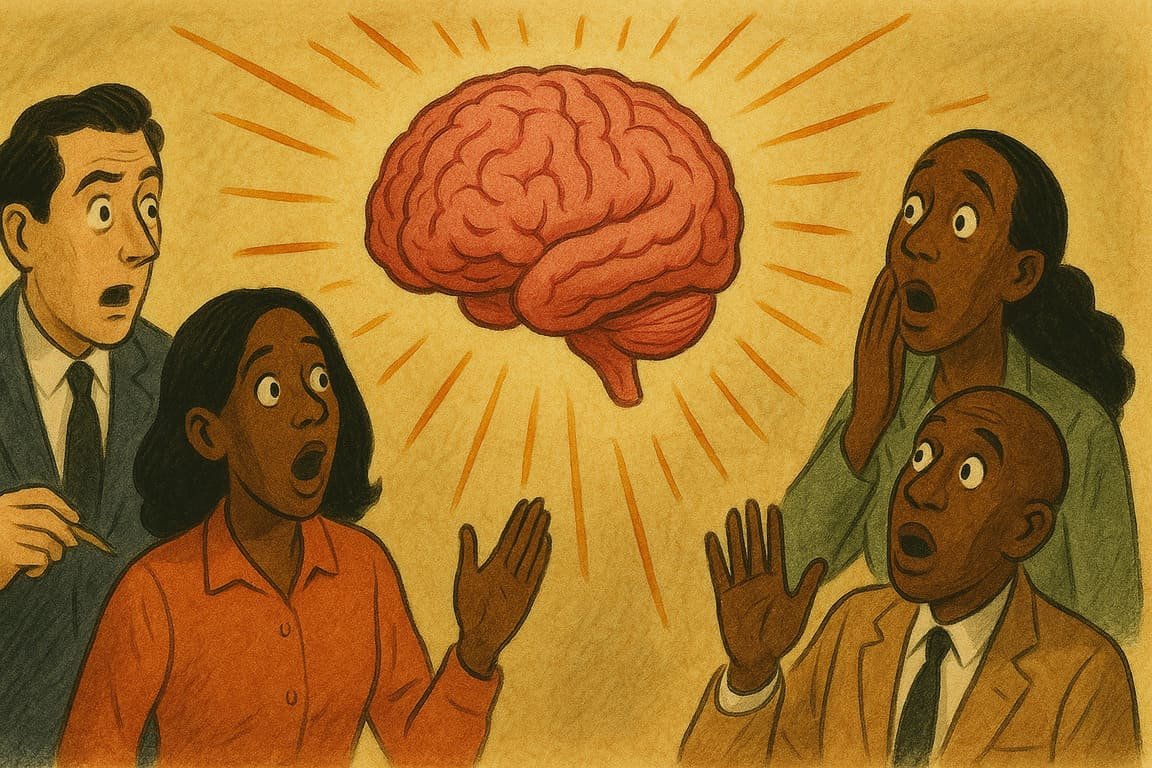
Rain drums on the glass roof of an old university library where rows of scientists, students, and insomniac thinkers huddle over open journals and tangled wires. A silent symphony unfolds: electrical pulses ripple through EEG caps, computer screens flicker with strange graphs, and a hush hangs in the air, heavy with the promise of revelation. Across the room, a neurologist named Dr. Vega watches a real-time brain scan that pulses with rainbow colors. The image glows brighter, marking the very instant an idea forms in her patient’s mind. To an outsider, it’s high-tech magic, but to Vega, it’s the beginning of a revolution that could change how humanity understands thought, memory, and even the very notion of self.
The new world of brain research is nothing like the dry textbook diagrams that haunted high school science classes. It’s alive, electric, and unpredictable. From Tokyo’s neon-lit research towers to Nairobi’s bustling medical campuses, discoveries are making headlines not just for their shock value, but for their ability to overturn beliefs held sacred for generations. The myths of brain “left versus right,” or the notion that intelligence is fixed, are now relics, replaced by wild findings that make even the experts question reality. This revolution is not creeping in quietly—it’s barging in with headlines, controversies, and challenges that touch every corner of life and business.
You might wonder why these discoveries matter beyond science fairs and university halls. In truth, they have already started to reshape how you live, work, and even love. The recognition that the brain’s wiring remains flexible well into adulthood has given millions permission to reinvent themselves. One café manager in Mumbai, who had given up on learning new skills at forty, found herself mastering digital marketing after following a series of brain-training exercises recommended by a local neuroscientist. Her coffee shop thrived in a market that others said was saturated. The new science of neuroplasticity isn’t just theory—it’s a map for second chances.
You’ve heard claims about multitasking, attention spans, and the dangers of screen time, but brain research is now exposing more nuanced truths. Experiments tracking eye movements and neural responses have shown that the mind cannot actually multitask—rather, it toggles rapidly, with hidden costs each time you switch. A London ad agency found that when staff were trained to batch tasks and block distractions, productivity jumped. Their CEO, Maya Singh, now swears by “deep work” blocks and credits the practice for tripling both profit and team happiness. The real shock: you’re not lazy or forgetful, you’re simply playing by a set of neurological rules you never knew existed.
Dreams are another frontier where mind-blowing research is turning heads. What once seemed like private hallucinations are now viewed as essential parts of problem-solving and emotional regulation. In South Korea, startup founder Jihoon Kim tells of a breakthrough product design that came to him during a vivid dream. When he started sharing dream journals at his company, others reported similar bursts of creativity. The company soon adopted “dream sessions” as a formal part of their innovation process, blurring the line between science and the surreal.
Mental health is perhaps the most urgent beneficiary of this revolution. Recent breakthroughs have unmasked the deep connections between gut health, sleep quality, and mental resilience. It’s now clear that habits as simple as walking in nature or keeping a gratitude journal can trigger positive chemical changes in the brain. Nia, a public school teacher in Chicago, struggled with burnout until her principal introduced mindfulness breaks and creative reflection exercises. The turnaround wasn’t just psychological—her energy and teaching scores improved, and her students flourished in ways the district hadn’t seen before.
Old fears about aging and memory loss have been upended by evidence that the brain can regenerate new cells through learning and exercise. Retirement homes in Cape Town now offer daily dance classes and language clubs, inspired by research showing these activities can dramatically slow cognitive decline. Residents who once felt faded and invisible now trade stories in Spanish or glide across the dance floor with laughter, living proof that the brain’s best years are not always behind us.
The ethical challenges emerging from brain research are as wild as the discoveries themselves. The promise of brain-machine interfaces—devices that can translate thoughts into action—has already produced real-life miracles for paralyzed patients. Yet questions around privacy, consent, and manipulation now shadow every step forward. A university debate in Lagos recently erupted over whether “neural marketing” could one day make advertisements irresistible by targeting subconscious desires. The verdict is still out, but the conversation has changed forever.
This revolution is breaking down the ancient wall between science and art. Musicians, writers, and designers are teaming up with neuroscientists to decode how inspiration strikes and why some works move people to tears. The team behind a global pop hit revealed that they mapped the song’s tempo and harmony to mimic brainwaves associated with joy. Their song went viral, not just because it was catchy, but because it played the human mind like an instrument.
Workplaces everywhere are quietly evolving because of these findings. Major tech firms in California are restructuring offices to include “focus pods” and green spaces, while start-ups in Lagos and São Paulo are integrating brain science into leadership training. Teams that once fought for open-plan offices now demand quiet zones and regular breaks, using brain research as both shield and sword in the battle for better work.
Parents are rethinking how they raise children in light of new evidence. Instead of punishing mistakes, they’re rewarding curiosity and grit—qualities now linked to higher cognitive performance. One single father in New York, inspired by brain research podcasts, built “failure parties” into his family routine, where each mistake was celebrated as a chance to grow. His daughter, once shy and withdrawn, now leads her science club with bold ideas and fearless questions.
As rain finally stops, Dr. Vega steps onto the quiet street, city lights reflecting in a hundred tiny puddles. The air feels changed, charged with the invisible signals of a thousand new questions. Behind her, the library glows—a lighthouse for minds bold enough to ask, “What next?” She knows the real revolution is just beginning, and that the next mind-bending discovery could come from anyone, anywhere, at any moment. The path to transformation starts not with answers, but with wonder.
You are the next puzzle waiting to be solved—are you ready to unlock your mind’s hidden power?
