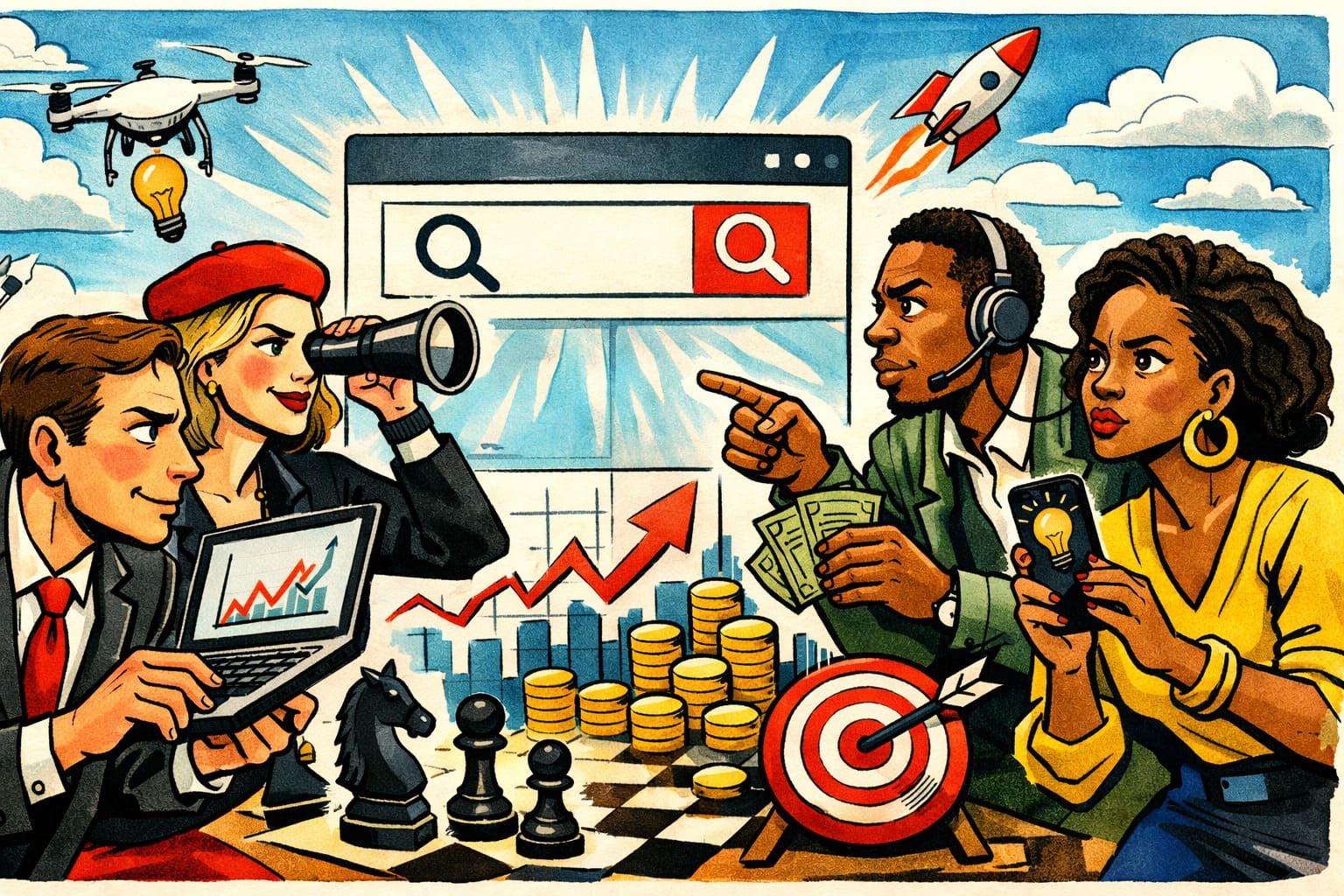
Paper maps once folded neatly into glove compartments, yet today a single search box has become the first crossroads for almost every buying decision. Invisible contests begin before breakfast, long before customers recognize they are making choices. One company appears. Another vanishes without a trace. That quiet struggle rarely feels dramatic, but fortunes are shaped inside those forgotten moments. Search has evolved from a discovery tool into a battlefield where attention changes hands, trust forms instantly, and commercial influence quietly migrates toward whoever answers first.
Many organizations still think competition begins when products appear side by side. Modern markets disagree. Rivalry starts the instant curiosity becomes a search query. Airbnb understood this early by publishing destination guides, travel inspiration, and practical advice that attracted visitors before accommodation entered the conversation. Canva followed a similar path by helping people learn design principles instead of merely promoting software. Both brands expanded influence because they entered customers’ thinking before purchase decisions demanded immediate action.
Rohan led marketing for a growing logistics company that kept losing prospects despite offering stronger pricing and faster delivery. Sales teams blamed aggressive competitors until customer interviews exposed a different reality. Buyers had already shortlisted familiar brands after researching industry questions online weeks earlier. Rohan shifted investment toward educational resources explaining shipping challenges, customs processes, and operational planning. Prospects began arriving informed, confident, and surprisingly loyal because trust had formed well before anyone requested a quotation.
Behavioral scientists often describe attention as limited, yet businesses frequently treat it as unlimited. Search reveals the opposite. Every click carries an opportunity cost because selecting one answer usually means ignoring dozens of alternatives. IBM has strengthened its authority by consistently publishing research and technical insights that help professionals solve meaningful problems. Readers return because familiarity reduces uncertainty. Familiarity encourages confidence. Confidence quietly reshapes competitive landscapes without dramatic announcements or expensive promotional spectacles.
A regional home renovation company experienced shrinking inquiries while larger national firms dominated search visibility. Leadership resisted another advertising campaign and instead documented real renovation journeys from planning through completion, including unexpected setbacks customers genuinely worried about. Homeowners appreciated practical honesty more than polished promises. Conversations shifted from pricing toward expertise. Within months, referrals increased alongside organic discovery because useful knowledge spread naturally through neighborhoods, family conversations, and local online communities.
Harbors remain calm only because unseen currents constantly reshape every arriving tide. Markets behave much the same way. Search battles rarely produce cheering crowds or headline-grabbing victories, yet they steadily redistribute influence toward organizations willing to earn attention before demanding transactions. Winning that contest depends less on shouting louder than answering better. Before measuring another campaign by impressions alone, ask one lasting question: when curiosity knocks on your industry’s digital door, whose voice welcomes people first?
