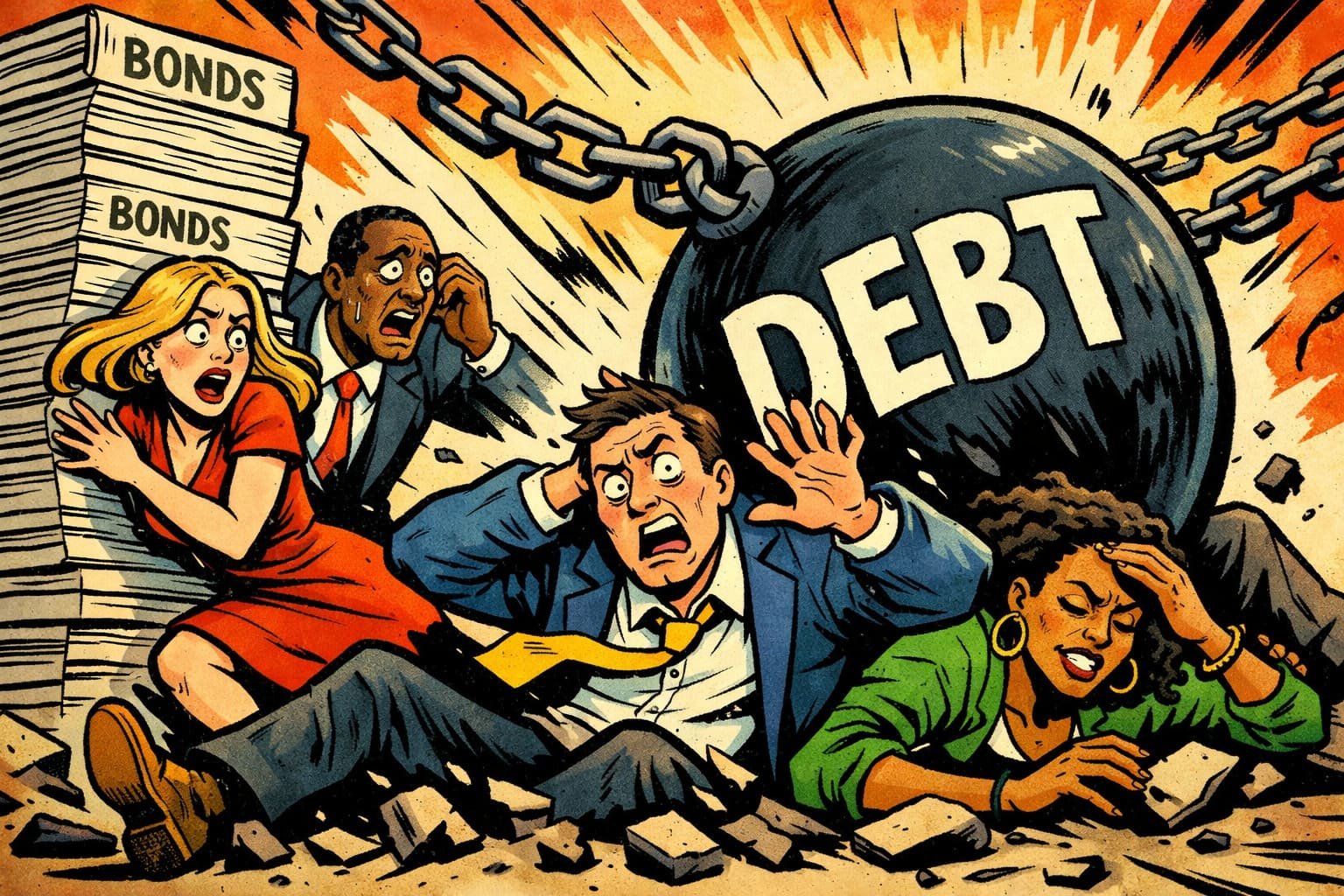
Rain tapped against mirrored windows while investment bankers stared at spreadsheets glowing long after midnight. Another company had arrived seeking fresh debt, not because business was collapsing, but because survival increasingly depended on refinancing before borrowing became even more expensive. Every signature carried extra weight. Debt markets have entered a harsher era where raising money is still possible, yet every dollar demands greater discipline, stronger credibility, and far more painful tradeoffs than executives grew accustomed to during years of cheap capital.
Corporate borrowing once felt almost effortless. Central banks kept interest rates unusually low for extended periods, encouraging businesses to finance acquisitions, expand factories, repurchase shares, and pursue ambitious growth strategies with inexpensive debt. That financial environment shaped an entire generation of executives. Today, those assumptions have fractured. Companies must refinance obligations at significantly higher costs, forcing finance teams to rethink investment priorities, accounting forecasts, and capital structures instead of simply extending yesterday’s financial playbook into tomorrow’s economy.
Look at companies across commercial real estate, telecommunications, and private equity portfolios where refinancing schedules have become strategic events rather than routine administrative exercises. A manufacturing executive named Rafael learned this lesson after preparing plans for a new production facility. Customer demand remained healthy and suppliers stood ready, yet lenders insisted on stricter covenants and higher borrowing costs before approving financing. Expansion never disappeared. Its economics simply changed. Decisions that once depended on optimism now required mathematical precision and relentless financial discipline.
Financial theory often celebrates leverage because borrowed money can amplify returns when investments generate dependable cash flows. That principle remains true, although timing now matters more than ever. Borrowing during periods of abundant liquidity rewarded bold expansion. Borrowing during tighter monetary conditions rewards resilience instead. Strong accounting practices suddenly become competitive advantages because lenders examine cash generation, debt maturity profiles, working capital management, and interest coverage with remarkable intensity. Balance sheets have become stories about trust as much as profitability.
An unusual pattern has emerged across global credit markets. Companies with durable earnings continue attracting investors despite higher financing costs, while weaker businesses discover that capital has become selective rather than scarce. Netflix, for example, transformed investor confidence by proving recurring subscription revenue could support substantial financial commitments over time. Confidence matters. Markets increasingly reward predictable execution instead of ambitious promises, reminding executives that credibility compounds much like interest, slowly until one day everyone notices.
Streetlights reflected across wet pavement as another earnings season approached, carrying familiar questions wrapped inside unfamiliar financial conditions. Executives no longer ask only whether they can borrow. They ask whether future cash flows deserve today’s borrowing costs, and that subtle shift may reshape corporate strategy for years ahead. Debt has not become the enemy of growth. It has become a sharper examiner of judgment, rewarding leaders who understand that capital always remembers decisions long after headlines have faded.
