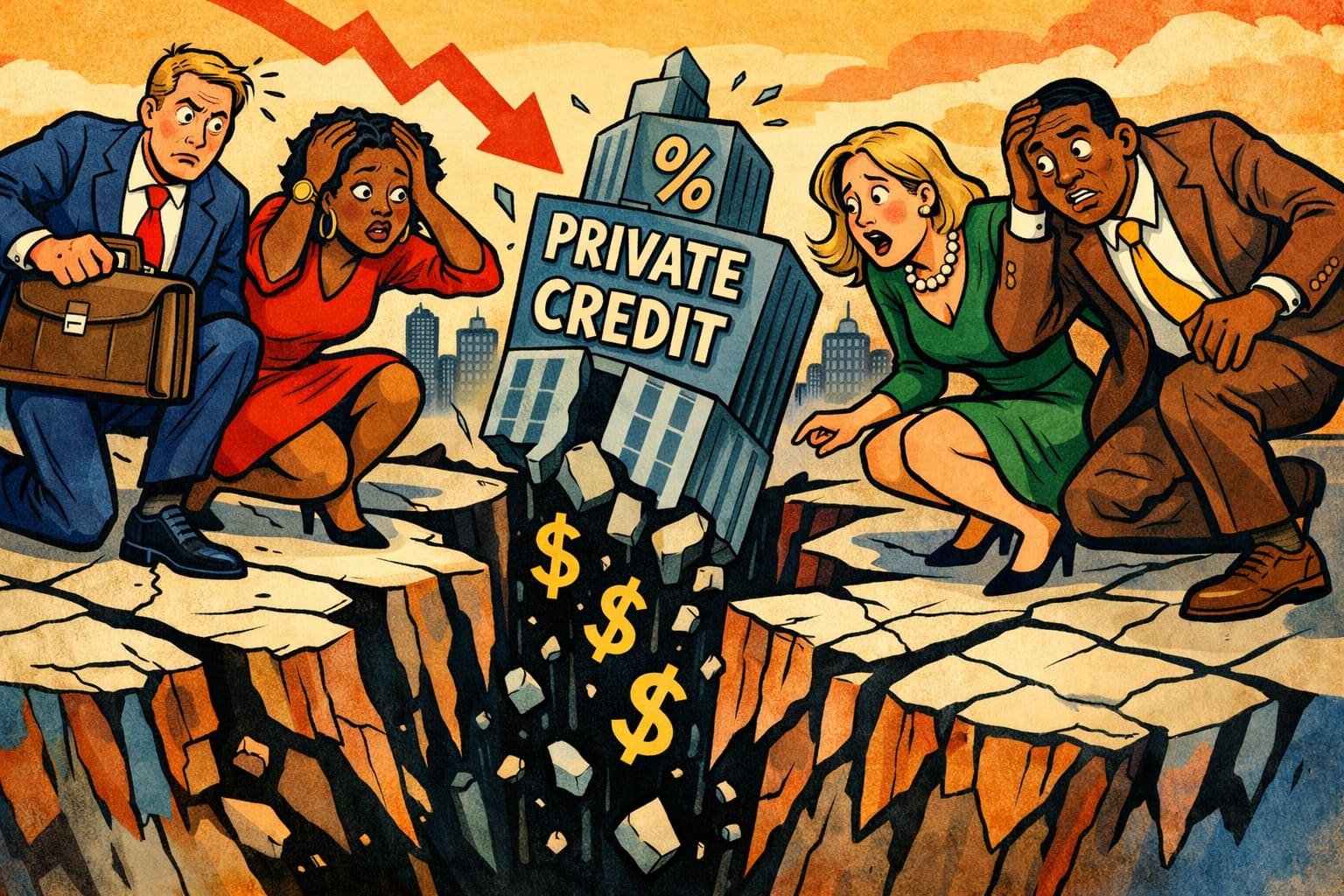
Steel doors closed without fanfare as another private lending committee gathered around polished tables, speaking in calm voices while billions quietly changed direction. Outside, headlines still celebrated an era where private credit seemed almost immune to ordinary market storms. Confidence had become part of the product. Yet every financial system eventually discovers that liquidity and certainty are distant cousins, and confusing one for the other can become surprisingly expensive when economic pressure refuses to blink.
Private credit flourished because traditional banks pulled back after stricter regulations reshaped commercial lending. Direct lenders stepped into that opening, financing middle-market businesses, acquisitions, infrastructure projects, and expanding companies seeking speed rather than bureaucracy. Firms such as Ares Management and Blue Owl built enormous lending platforms by promising flexibility where conventional institutions often hesitated. Investors welcomed attractive yields. Borrowers welcomed faster decisions. Success appeared effortless until higher borrowing costs began testing repayment assumptions that once looked comfortably conservative.
Daniel owned a regional manufacturing company supplying precision components to medical equipment producers. Expansion demanded fresh capital, yet bank financing arrived wrapped in delays and restrictive conditions. A private credit fund approved funding within weeks, allowing production to continue without interruption. Relief quickly turned into discipline as financing costs climbed alongside interest rates. Strong customer demand preserved the business, while weaker competitors struggled under heavier repayment burdens, reminding everyone that generous capital never eliminates financial arithmetic.
Much of private credit operates outside public exchanges, creating opportunities alongside important blind spots. Investors often appreciate stable valuations because assets are not repriced every trading day like public bonds. Stability feels reassuring. Still, unchanged prices do not always mean unchanged risk. During periods of economic stress, borrowers can face declining earnings while portfolio values appear remarkably calm. Economist Hyman Minsky argued that prolonged stability often encourages greater risk taking, making hidden vulnerabilities difficult to recognize before conditions deteriorate.
A logistics entrepreneur named Sofia learned that lesson after acquiring a distribution company using private financing. Warehouses stayed busy, deliveries remained punctual, and quarterly reports looked respectable. Then several major customers delayed orders simultaneously, squeezing cash flow without warning. Her lender remained supportive, negotiating revised repayment terms instead of forcing immediate restructuring. That flexibility illustrated one of private credit’s greatest strengths. At the same time, it reminded investors that patient negotiations can postpone visible losses without eliminating underlying financial pressure.
Dust hangs longest after an old building begins to settle rather than collapse. Careful observers notice shifting foundations before dramatic headlines ever appear, while impatient spectators mistake quiet movement for permanent safety. Private credit remains an important source of business financing because many companies genuinely need alternatives beyond traditional banking. Yet mature markets reward clear transparency as much as generous returns. Ask yourself whether reassuring numbers reveal genuine strength, or simply postpone difficult conversations waiting patiently around the next corner.
