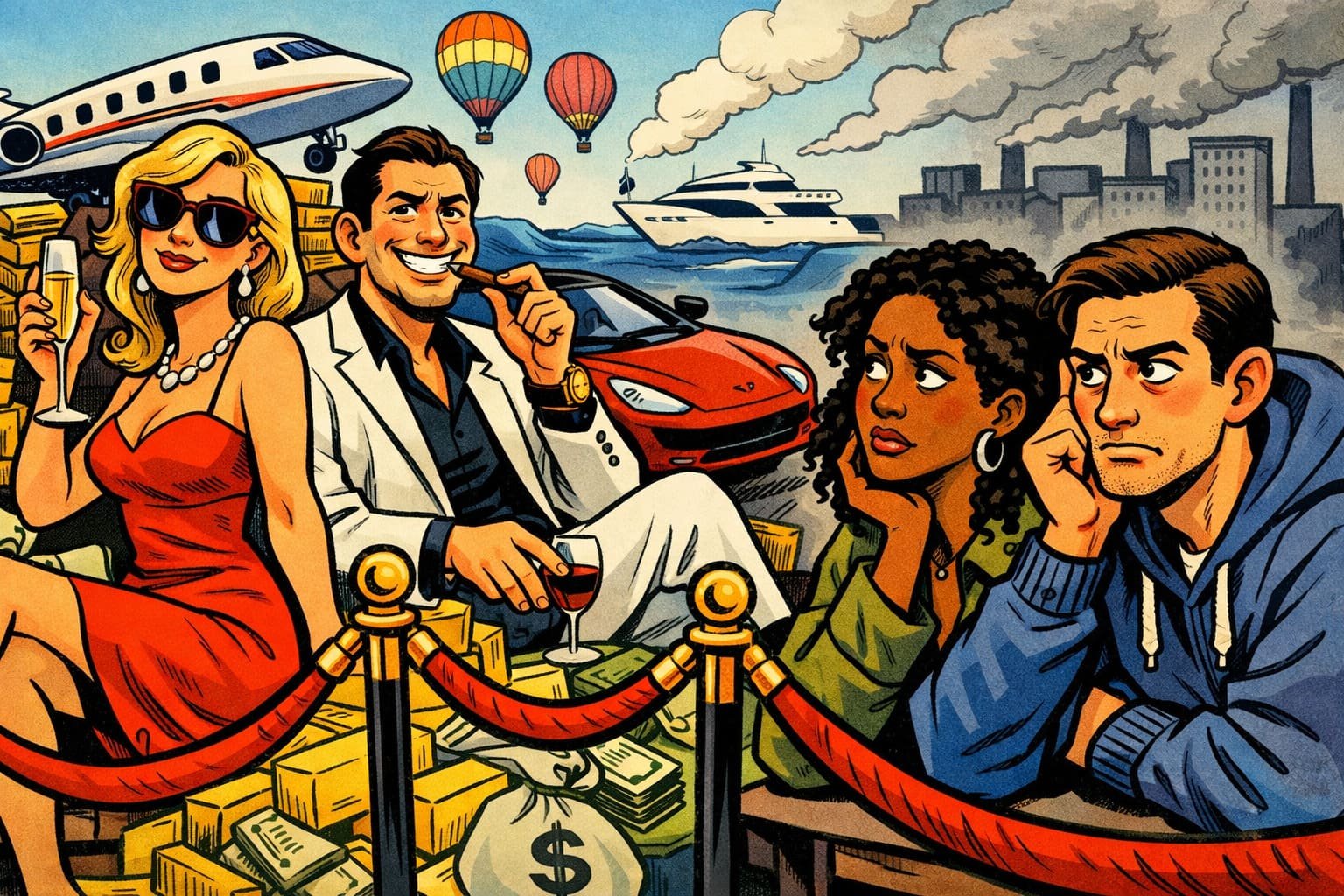
Crystal chandeliers shimmer above a boutique where attendants straighten handbags already aligned with impossible precision. Outside, another shopper quietly compares grocery prices on a cracked phone screen before placing one item back on the shelf. Both scenes belong to the same economy. Both are happening at once. That strange coexistence has become one of modern capitalism’s defining signatures. While everyday spending bends under pressure, luxury often continues marching forward, exposing an uncomfortable truth about how wealth shapes demand.
Traditional economics assumes consumers respond similarly when uncertainty rises. Reality tells a different story. High-income households generally own appreciating assets, diversified investments, and businesses that cushion financial shocks. Their purchasing power remains remarkably resilient during periods that force middle-income families into difficult trade-offs. Luxury demand therefore behaves differently from mass-market demand because its customers are buying with accumulated wealth rather than relying solely on monthly income. That distinction changes almost every assumption businesses make about market cycles.
Companies such as Hermès and Ferrari illustrate this pattern with remarkable consistency. Rather than chasing higher sales volumes, both have built businesses around scarcity, pricing discipline, and extraordinary brand loyalty. Waiting lists often strengthen desirability instead of frustrating buyers. Investors admire this model because strong pricing power protects profitability even when broader consumer markets weaken. Luxury companies therefore demonstrate a lesson extending beyond fashion. Businesses serving financially resilient customers often experience greater stability than those competing primarily on affordability.
Nadia managed a neighborhood clothing store that had faithfully served local families for years. Sales weakened as shoppers delayed replacing perfectly wearable jackets and carefully stretched every household budget. Across town, a jeweler welcomed clients discussing custom pieces without negotiating prices. Neither business lacked talented staff or thoughtful service. Their customers simply occupied different financial realities, proving that economic slowdowns rarely distribute discomfort evenly across society or across industries.
Accounting statements reveal why unequal demand deserves careful attention from executives and policymakers alike. Businesses targeting affluent customers often preserve healthy margins through premium pricing, while companies serving broad populations face rising costs alongside increasingly cautious consumers. That divergence influences hiring, investment decisions, and long-term capital allocation across entire industries. Economists frequently focus on aggregate consumption, yet averages can conceal widening differences in purchasing power that reshape competitive landscapes long before headline growth figures acknowledge them.
Velvet curtains close gently over another successful evening gala while a crowded discount supermarket prepares for tomorrow’s early rush. Neither picture tells the whole story alone. Prosperity has become increasingly uneven, allowing abundance and restraint to occupy neighboring streets without ever truly meeting. Markets reward businesses that recognize this divide before competitors do, but societies face a larger challenge that balance sheets cannot solve. Wealth can sustain luxury through almost any storm, yet lasting economic strength depends on far more people sharing the confidence to spend without fear.
