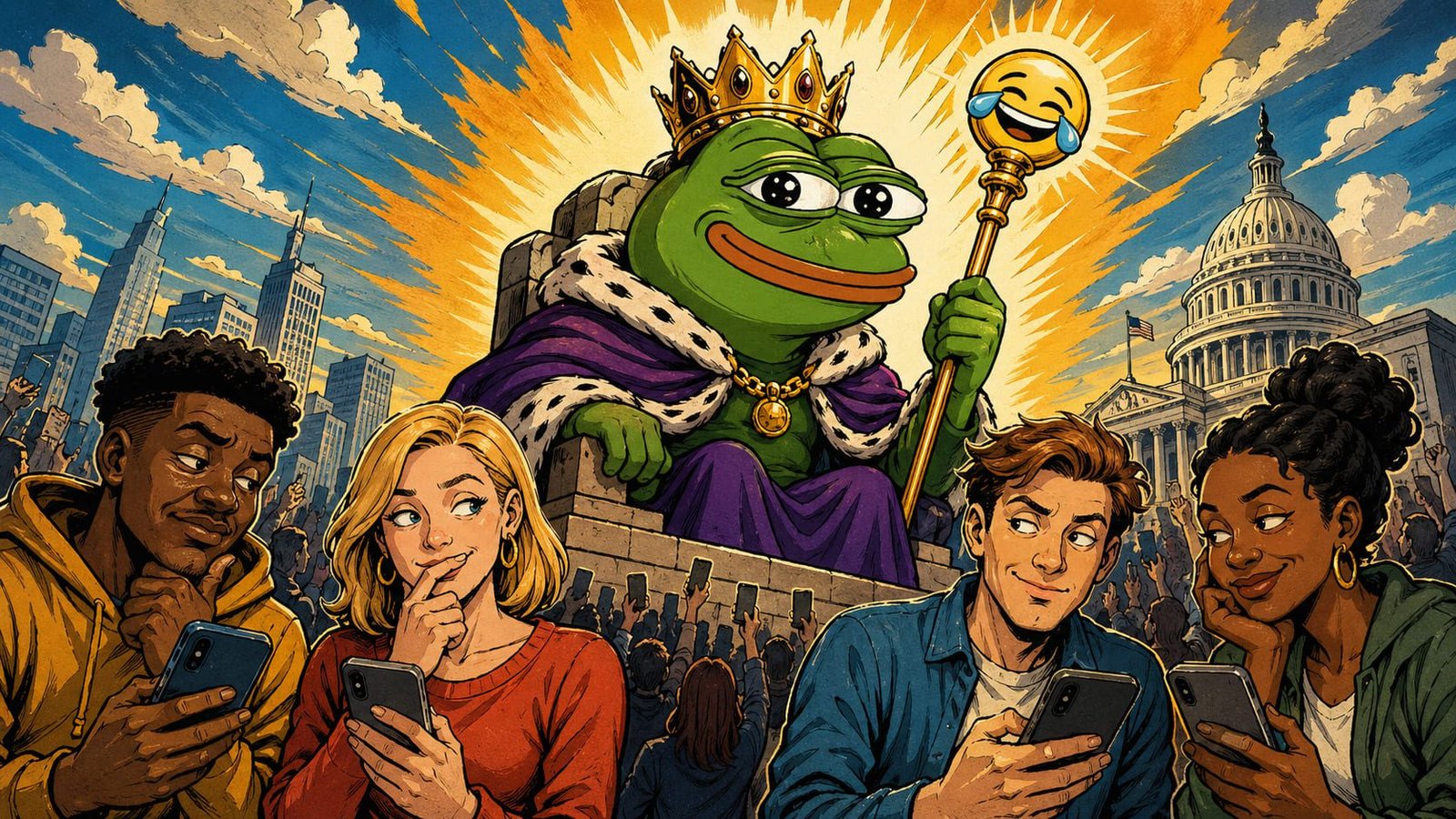
A flickering screen glows in a dim apartment where laughter erupts not from a conversation, but from a looping image of a distracted boyfriend. No context, no explanation, just a shared recognition that lands faster than language. Somewhere else, a campaign strategist refreshes a dashboard and notices something unsettling. A joke is outperforming a policy. A punchline is spreading faster than a speech. The room does not panic, not yet. It hums with the quiet realization that something has shifted beneath the surface. Culture no longer moves through argument. It moves through compression, distortion, and humor sharpened into a weapon.
A meme does not ask for permission. It slips past defenses. It bypasses logic and lands directly in instinct. That is its quiet advantage. During the rise of Dogecoin, what began as a joke featuring a Shiba Inu turned into a financial phenomenon, propelled not by spreadsheets but by shared amusement. When Elon Musk tweeted about it, markets reacted as if humor had suddenly become monetary policy. It felt absurd, yet it revealed a deeper truth. People do not always follow facts. They follow feelings that feel like belonging.
You can see this pattern repeat in smaller, more intimate spaces. A marketing manager named Aisha once watched her carefully crafted campaign collapse while a low-effort meme posted by an intern tripled engagement overnight. The meme was not smarter. It was not more informative. It simply felt more alive. It spoke the language people were already using in private chats and late-night scrolling sessions. That moment forced a quiet admission. Influence had moved away from authority and toward relatability.
Memes compress complexity into something portable. That compression is power. A political message that takes ten minutes to explain can be reduced to a single image with a caption that travels across continents in seconds. During election cycles, entire narratives have been shaped by viral formats that reward simplicity over nuance. A joke about a candidate’s personality can linger longer than any policy breakdown. It feels harmless, but it quietly rewrites perception. Over time, repetition becomes belief.
There is a deeper tension underneath all this. Humor once softened reality. Now it often replaces it. A product designer named Mateo noticed it while testing a new app feature. Users responded more to playful, meme-like prompts than to clear instructions. They laughed, they engaged, but they also misunderstood the product. Engagement rose, clarity fell. The team celebrated the metrics while ignoring the confusion. It was easier to chase laughter than to build understanding.
The business world has adapted quickly. Brands now speak in memes because attention demands it. Wendy’s built an entire online persona around sharp, meme-driven humor, turning fast food into a form of entertainment. It worked because it aligned with how people already communicate. Yet there is a cost. When every brand becomes fluent in irony, sincerity starts to feel suspicious. The line between genuine expression and calculated relatability blurs until it almost disappears.
Memes also create a strange kind of collective authorship. No single person owns them, yet everyone contributes. A college student named Njeri once posted a simple image during a campus strike, capturing frustration with a line that felt both funny and painfully accurate. Within days, it had spread far beyond the university, becoming a symbol for a broader movement. She watched as strangers reshaped it, added new layers, and carried it into conversations she would never enter. The meme no longer belonged to her. It belonged to the moment.
What makes this shift unsettling is not the humor itself, but the speed at which it reshapes reality. Memes do not argue. They assert. They repeat until they feel true. Over time, they build a shared language that defines what is acceptable, what is laughable, and what is dismissed. A culture built on memes becomes highly responsive, but also highly reactive. It rewards what spreads, not necessarily what matters.
Somewhere in a quiet office, a strategist studies a feed that never stops moving. Each image, each caption, each joke carries a small piece of influence. None of it feels heavy on its own. Together, they form a current that pulls perception in subtle directions. The strategist closes the laptop, aware that the rules have changed in ways that cannot be easily reversed. Reality is no longer negotiated through slow debate. It is shaped in fragments that travel faster than thought.
And so the question lingers in the air, unresolved and a little uncomfortable. When humor becomes the fastest way to move ideas, what happens to the ideas that cannot be reduced to a joke? The answer does not arrive neatly. It sits there, waiting, as the next meme begins its quiet journey across the world.
You scroll, you laugh, you share, and somewhere in that effortless motion, you help decide what becomes real.
