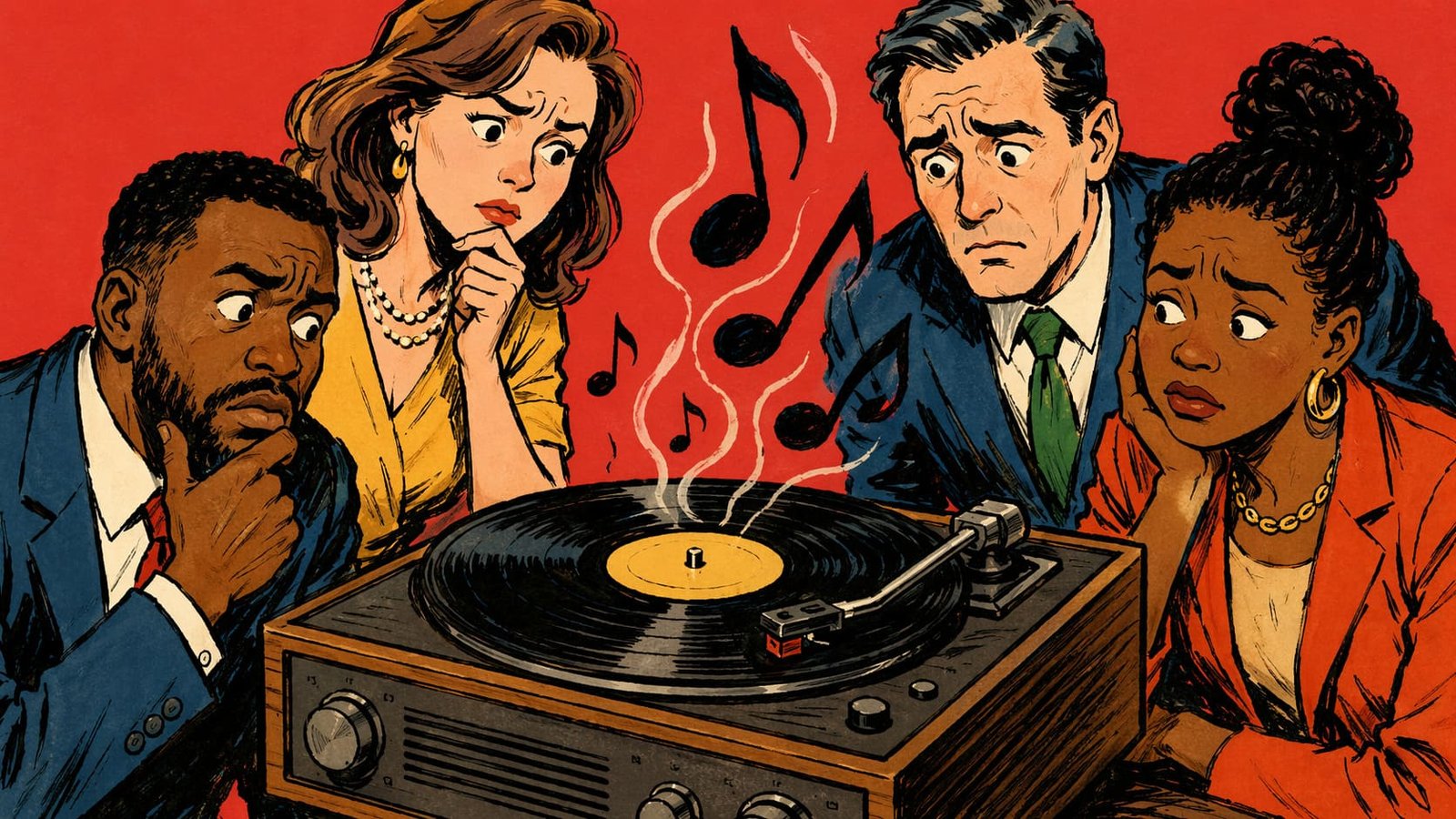
The song is lighter than it should be. It floats through the air with an easy rhythm, catchy enough to repeat, simple enough to memorize after one listen. People hum along without thinking too much about it. The melody feels safe, almost nostalgic, like something already familiar. On the surface, it is just another hit. Beneath it, something quieter moves, something that has nothing to do with charts and everything to do with the mood of the moment.
Music has always been more than entertainment. It acts like an early signal, picking up shifts in emotion before they appear in headlines or data. When uncertainty begins to creep into everyday life, it rarely announces itself directly. It shows up in tone, in preference, in the kinds of stories people want to hear. Pop music, with its reach and immediacy, becomes one of the first places where those changes take shape.
Ethan, a music producer in Los Angeles, noticed the pattern while working on a series of releases that all seemed to lean in the same direction. Artists who once pushed for bold, experimental sounds began requesting something softer, more familiar. Choruses simplified. Lyrics turned inward. “They want something people can hold onto,” he said, adjusting levels in a studio that smelled faintly of stale coffee and late nights. “When everything else feels unstable, the music has to feel certain.”
The shift is not always obvious at first. It does not arrive as a dramatic change. It feels like a subtle adjustment, a move toward comfort rather than challenge. Historically, periods of economic uncertainty have often been accompanied by a return to familiar sounds, themes that emphasize resilience, nostalgia, or escape. The music does not explain the change. It reflects it, quietly, before most people realize anything has shifted.
Artists themselves often sense this before audiences can articulate it. Taylor Swift, known for adapting her sound across different eras, has repeatedly tapped into prevailing emotional currents, shifting from polished pop to more introspective storytelling when the cultural mood called for it. The transitions feel personal, yet they resonate broadly because they align with something already forming beneath the surface.
A radio programmer in London, Marcus, described how listener preferences began to shift during a period of economic uncertainty. Songs with slower tempos and reflective lyrics started gaining traction, even when they were not heavily promoted. “People weren’t asking for excitement,” he said, flipping through playlists that told their own quiet story. “They were asking for something that felt steady.” The data confirmed what the atmosphere already suggested.
There is also a psychological layer that connects music to economic sentiment. When people feel secure, they are more open to novelty, to risk, to sounds that challenge expectations. When uncertainty rises, preferences narrow. Familiarity becomes comforting. A marketing analyst in New York, Priya, noticed this while studying consumer behavior across industries. The same patterns appeared in music, fashion, and even food choices. “People don’t just spend differently,” she explained, tapping her pen against a notebook filled with observations. “They feel differently, and that feeling shapes everything.”
Pop culture amplifies these signals, turning individual preferences into collective trends. Viral platforms accelerate the spread of certain sounds, often favoring those that evoke immediate emotional connection. A content creator in Nairobi, Kevin, built a following by curating playlists that matched shifting moods. During periods of uncertainty, his most popular selections leaned toward simplicity and repetition. “People want songs they can sit with,” he said, scrolling through comments that echoed the same sentiment in different words. “Not songs that ask too much from them.”
The relationship between music and the economy is not direct, but it is revealing. Music does not predict downturns in a technical sense. It reflects the emotional conditions that often precede them. A financial consultant in Chicago, Laura, began paying closer attention to cultural signals after noticing how often they aligned with broader economic trends. “By the time the numbers change,” she said, closing a report that felt dense with data, “the feeling has already been there for a while.”
There are moments when music pushes against this pattern, offering energy and optimism even during uncertain times. Yet even those moments carry a certain tone, a sense of trying to lift something heavier than usual. The contrast itself becomes part of the signal. A festival organizer in Berlin, Jonas, described how audience reactions shifted subtly during a recent event. High-energy performances were still appreciated, but quieter sets drew deeper engagement. “It wasn’t about volume,” he said, watching the crowd settle into a slower rhythm. “It was about connection.”
The scene moves to a late-night drive where a song plays softly through the speakers. The road stretches ahead, empty and quiet, the city lights fading into the distance. The melody feels familiar, even if it is new. It does not demand attention. It offers something steadier, something that sits alongside the moment rather than trying to transform it.
And beneath that gentle repetition, a realization begins to take shape. Music does not need to announce change to reveal it. It carries the mood of a time in ways that numbers cannot fully capture. It reflects what people feel before they find the language to explain it.
So the question lingers, almost like a note that refuses to fade: when the songs around you begin to sound softer, simpler, more certain, what might they already be telling you about the world that has not yet said it out loud?
