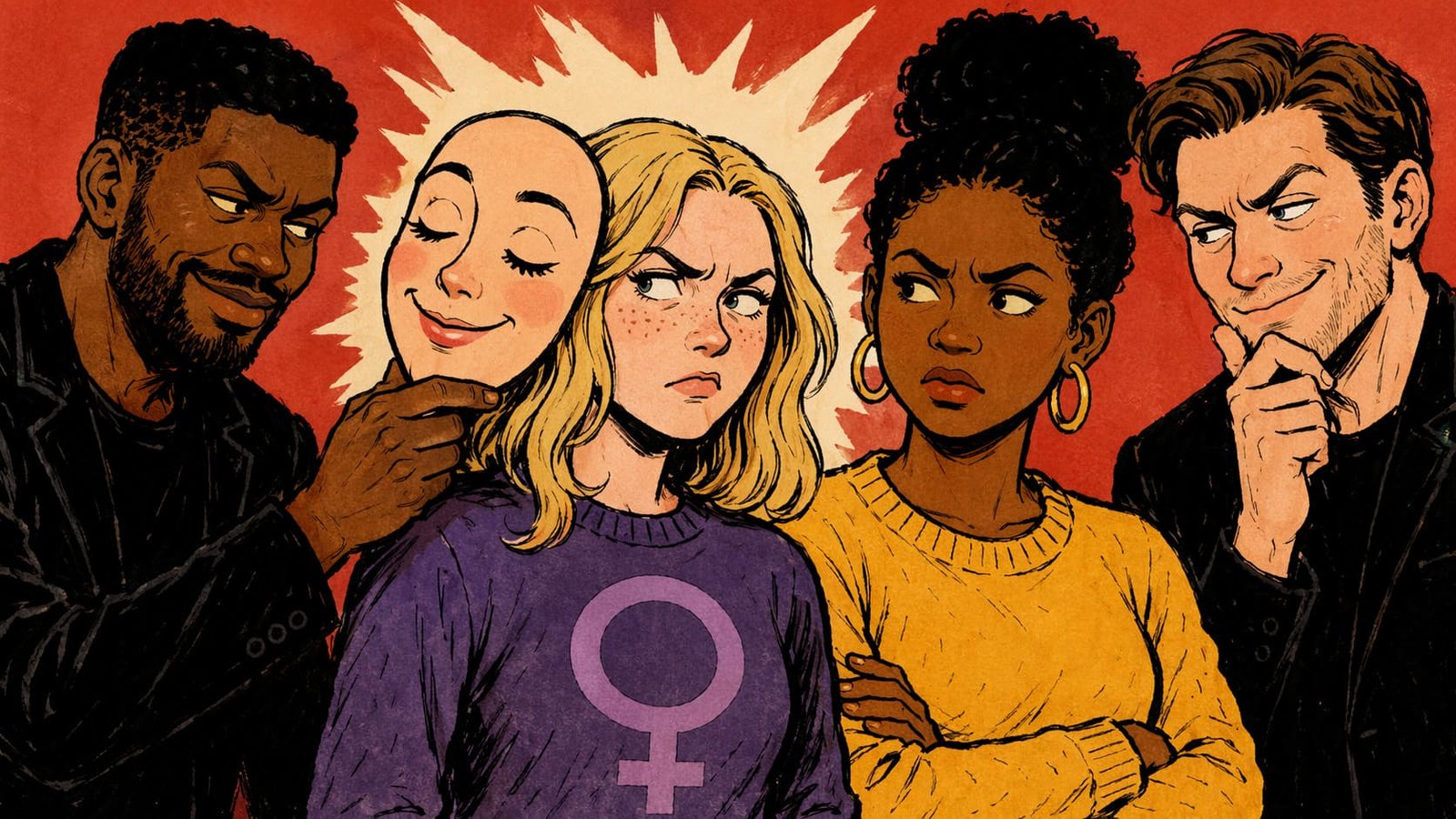
The stage is set before the words even arrive. A panel glows under studio lights, voices measured, language sharp enough to signal conviction without revealing too much. Applause comes at predictable moments. Outside, clips circulate instantly, stripped of context, sharpened into fragments that travel faster than thought. The message feels clear at first. Strength, independence, equality. Yet somewhere beneath that clarity, a quieter tension hums, one that does not fit neatly into slogans.
The language of empowerment has expanded far beyond its original boundaries. What began as a movement rooted in justice and opportunity now moves through markets, media, and personal branding. The words remain powerful, but their application has grown more complex. Empowerment can uplift. It can also be used selectively, shaped to serve interests that are not always aligned with its original purpose. The shift is subtle, often invisible, yet it changes how the message lands.
Nadia, a communications strategist in Toronto, noticed this shift while working on a campaign centered on female leadership. The messaging emphasized strength and independence, yet internally, decisions were made without input from the very voices the campaign claimed to represent. During one meeting, she paused, looking around a room filled with confident language and quiet contradictions. “We’re speaking for them,” she said carefully, choosing each word with intention, “but we’re not listening to them.” The room fell silent, not because the statement was surprising, but because it was difficult to challenge.
The tension lies in how easily empowerment can be turned into performance. When language becomes a tool for positioning rather than transformation, it begins to lose its grounding. A message designed to create space can instead reinforce hierarchy, depending on how it is used. The audience senses this, even if they cannot always articulate it. The result is a growing skepticism, a feeling that something important is being repackaged rather than advanced.
Public figures have played a visible role in shaping this narrative. Leaders like Sheryl Sandberg brought conversations about women in leadership into mainstream discourse, encouraging ambition and visibility. The impact was significant. Yet critics have pointed out that such frameworks can sometimes overlook structural barriers, focusing on individual action while leaving systemic issues intact. The conversation expands, but not always evenly.
A startup founder in Lagos, Amaka, experienced this complexity firsthand. Her company gained attention for promoting female entrepreneurship, attracting partnerships that aligned with the message. Behind the scenes, she struggled to secure funding from investors who praised her vision publicly but hesitated privately. During a pitch meeting, one investor complimented her confidence before questioning her ability to scale. Later, reflecting on the interaction, she said, “They support the idea of empowerment, as long as it doesn’t disrupt their expectations.” Her words captured a contradiction that many recognize but rarely name.
The cultural conversation has also become more fragmented. Different interpretations of empowerment coexist, sometimes reinforcing each other, sometimes clashing. Social platforms amplify these differences, rewarding strong positions over nuanced discussion. A content creator in London, Leila, built an audience around discussions of gender and power. As her platform grew, she noticed a shift in how her content was received. Posts that explored complexity received less engagement than those that presented clear, decisive takes. “Nuance doesn’t travel as far,” she said, scrolling through metrics that told a story she did not fully agree with. “Certainty does.”
There is a deeper emotional layer beneath this fragmentation. People are not only responding to ideas. They are responding to identity, to belonging, to the need to feel aligned with something larger than themselves. When empowerment becomes a label rather than a process, it can create divisions rather than bridges. A corporate manager in New York, Daniel, observed this during internal discussions about workplace equity. Conversations that began with shared goals quickly became polarized, each side defending its position rather than exploring common ground. “We stopped trying to understand each other,” he said, leaning back in his chair as the meeting dissolved into silence. “We started trying to win.”
The commercialization of empowerment adds another dimension. Brands adopt the language of feminism to connect with audiences, often blending genuine support with strategic positioning. Campaigns highlight strength and resilience, yet the underlying structures within those organizations may not always reflect the message. A marketing executive in Paris, Camille, described the tension during a product launch that leaned heavily on themes of independence. “We’re telling a story people want to believe,” she said, reviewing visuals that felt polished and compelling. “The question is whether we’re willing to live it.”
A professor in Nairobi, Dr. Amina Otieno, approached the conversation from a different angle. She emphasized the importance of returning to the foundational goals of equity and inclusion, encouraging students to engage critically with the messages they encounter. During a lecture, she paused and asked a question that lingered in the room long after class ended. “When a powerful idea becomes popular,” she said, her voice steady, “who decides how it is used?” The question did not seek an immediate answer. It invited reflection.
The scene shifts to a quiet library where a student scrolls through articles, each presenting a different perspective on the same issue. The information is abundant, yet clarity feels distant. Outside, conversations continue, shaped by headlines, posts, and personal experiences that intersect in complex ways. The student closes the laptop slowly, aware that understanding requires more than consumption.
And beneath the surface of these layered conversations, a realization begins to take shape. Empowerment is not static. It evolves, shaped by those who use it, those who challenge it, and those who live within its implications. When it becomes a tool rather than a principle, its meaning can shift in ways that are difficult to detect but important to recognize.
So the question settles quietly, carrying more weight than it first appears: when a movement’s language becomes widely adopted, how do you tell the difference between genuine progress and a performance that only looks like it?
