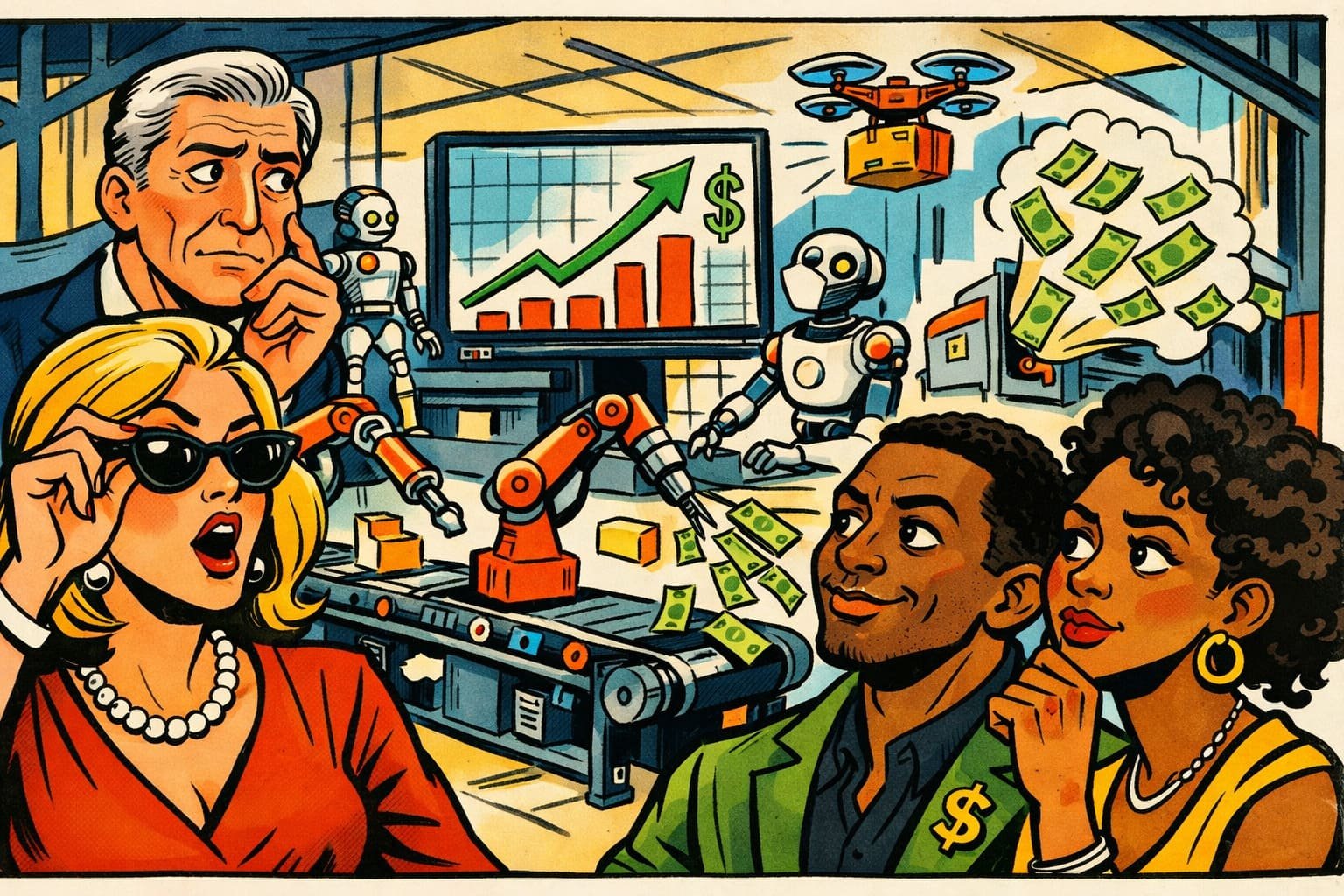
Factories used to smell like oil, metal fatigue, hot wiring, and human endurance. That sensory image still lives in the public imagination, which is partly why so many leaders misunderstand what manufacturing is becoming. The modern factory is no longer simply a place where physical things are made. Increasingly, it behaves like a thinking organism, part industrial engine, part software ecosystem, part predictive nervous system. That shift is not cosmetic. It changes how profit is created, how risk is managed, and how competitive advantage compounds. The old manufacturing empire was built on scale, repetition, and labor discipline. The new one is being built on responsiveness, visibility, machine intelligence, and smarter operational decision-making. Industrial power is becoming less about movement alone and more about interpretation.
One of the biggest shifts is predictive intelligence replacing reactive operational habits. Traditional manufacturing often tolerated breakdown culture. Equipment failed, teams scrambled, downtime expanded, and repair became a recurring emergency ritual. Smart systems disrupt that logic by making failure increasingly visible before it becomes expensive. A factory director named Corvessa once managed operations where machinery breakdowns were treated with the emotional inevitability of bad weather. Predictive monitoring changed that entirely. Maintenance shifted from reactive firefighting to disciplined anticipation. Downtime became less theatrical. Profitability improved not because machines became miraculous, but because uncertainty became less chaotic. Prevention rarely receives applause because it lacks drama. In manufacturing, quiet prevention often creates more financial value than heroic crisis response ever could.
Supply chain visibility has become another defining battlefield because recent disruptions taught painful lessons about confidence built on incomplete understanding. Manufacturing leaders discovered that supplier relationships can look stable right until they are not. Smart systems increasingly create operational transparency across sourcing, logistics, inventory flow, and bottleneck exposure. A consumer electronics operator named Elystran believed supplier resilience was strong because relationships felt historically reliable. Visibility technology exposed dangerous dependency patterns leadership had emotionally outsourced to assumption. The revelation was not pleasant. It was commercially useful. Modern manufacturing no longer competes purely through production capability. It competes through informational awareness across fragile interconnected systems. You cannot strategically protect what you cannot properly see, regardless of how experienced leadership believes itself to be.
Automation remains central, though simplistic “robots replace humans” narratives deserve skepticism. Smart automation is not merely labor subtraction. It is work redesign. Repetitive, precision-dependent, or physically punishing tasks often benefit enormously from automation while creating opportunities for human oversight, exception handling, and process improvement. A plant supervisor named Vaeloris initially resisted automation upgrades because he assumed morale would collapse and jobs would vanish indiscriminately. Reality proved more nuanced. Some repetitive work disappeared. Human roles evolved upward. Productivity improved. Anxiety softened once implementation acknowledged workforce dignity instead of treating people like operational inconveniences. Manufacturing transformations fail when leadership pursues technological vanity. They succeed when automation is integrated thoughtfully enough to improve systems without casually detonating trust.
Data has become industrial oxygen, though collecting information and using it intelligently remain two very different skills. Dashboards alone do not create profitability. Interpretation does. Smart manufacturing environments increasingly rely on real-time performance visibility, anomaly detection, throughput intelligence, and quality diagnostics that make operational inefficiencies harder to hide. A packaging executive named Mirevalen proudly described her organization as highly data-driven until closer inspection revealed beautiful reporting attached to weak decision discipline. Information existed everywhere. Meaningful action did not. That distinction matters. Manufacturing does not become intelligent because sensors are installed and charts appear. Intelligence emerges when organizations change behavior because insight becomes operationally unavoidable rather than merely aesthetically impressive.
Customization is reshaping manufacturing economics in unexpectedly powerful ways. Consumers increasingly expect flexibility once reserved for premium niches, and smart systems make adaptive production far more commercially viable than legacy operators assumed. A furniture entrepreneur named Soltheric spent years believing customization was a margin-destroying indulgence because his production model was built for rigid standardization. Smart production redesign changed the economics dramatically. Modular logic improved responsiveness while preserving efficiency. This is a deeper shift than many realize. The future factory is not simply faster. It is more adaptable. Manufacturers that treat flexibility and efficiency as mortal enemies may find themselves strategically stranded while more intelligent operators discover that well-designed systems can accommodate both without collapsing into operational chaos.
Cybersecurity now belongs inside manufacturing strategy whether traditional industrial leaders find that emotionally annoying or not. Connected systems create extraordinary efficiency while expanding vulnerability in equal measure. Smart factories are not merely physical environments anymore. They are digital ecosystems with exposure points that can disrupt operations, planning, and trust. A manufacturing executive named Tervessa dismissed cybersecurity as an IT housekeeping issue until a systems compromise disrupted production planning and exposed uncomfortable operational fragility. Recovery costs extended far beyond technical remediation. Industrial intelligence without digital resilience becomes sophisticated fragility. The factory floor and digital infrastructure are no longer separate strategic realities. Leadership teams that still behave as though cyber risk belongs in another department may be preserving organizational nostalgia rather than actual resilience.
Manufacturing’s future will not belong to the loudest factories, the shiniest automation budgets, or executives performing innovation for investor applause. It will belong to operators disciplined enough to combine machine intelligence with human judgment, efficiency with adaptability, and operational rigor with digital resilience. Some factories will continue surviving through institutional memory, heroic improvisation, and emotionally inherited habits. Survival is not the same thing as strategic relevance. The industrial winners of this era are building systems that think before they break, see before they panic, and adapt before competitors finish congratulating themselves on last decade’s efficiencies. Manufacturing is no longer merely about making products. Increasingly, it is about building decision systems intelligent enough to make profit less accidental.
