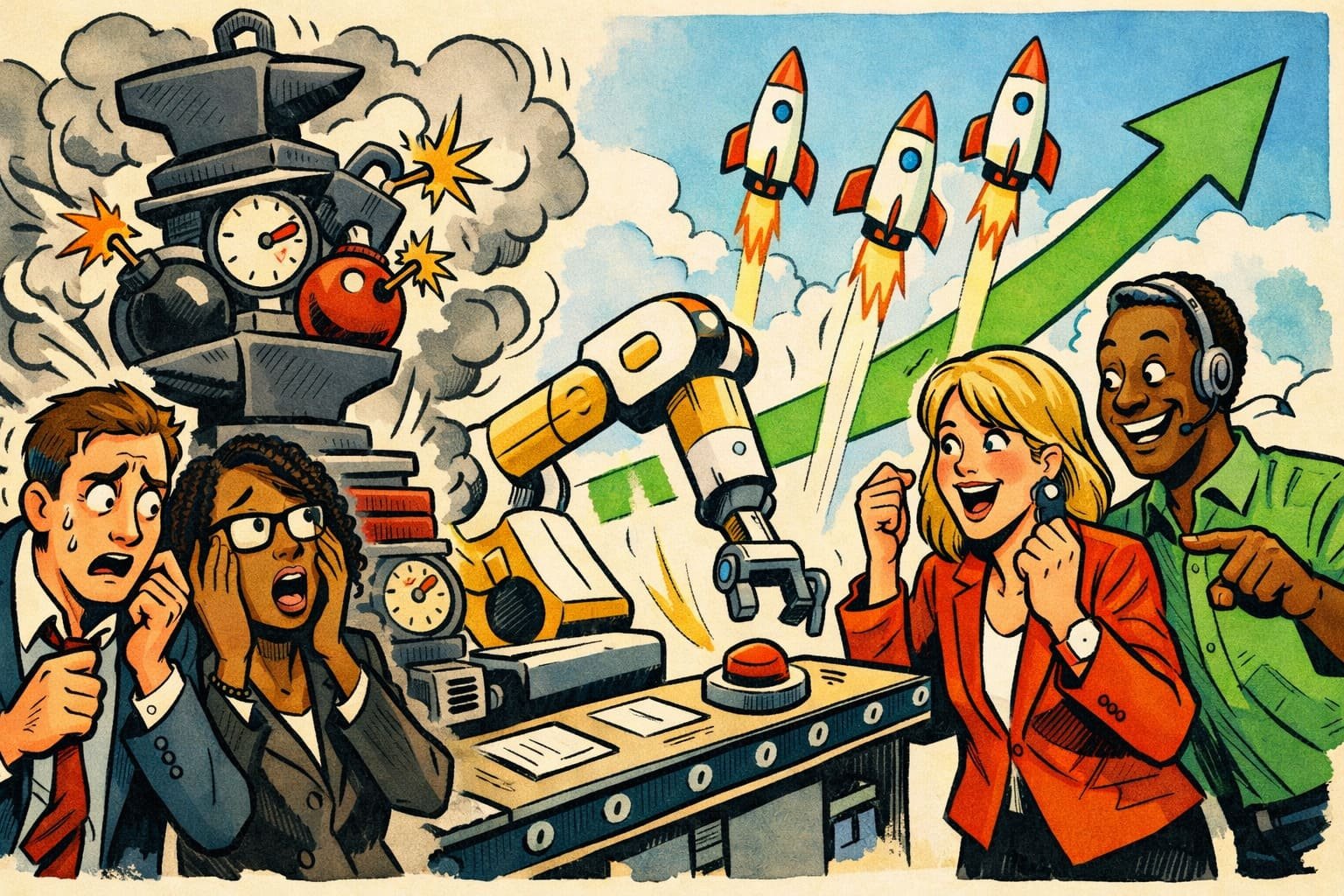
The warehouse sounded different that morning. Conveyor belts whispered instead of rattled. Screens glowed with quiet confidence while workers glanced at dashboards that seemed to know tomorrow before today had finished unfolding. Outside, delivery trucks stretched into the distance like impatient dominoes waiting to fall. Inside, something stranger was happening. Growth had arrived with breathtaking force, yet panic never followed. The companies everyone admired had discovered a secret that competitors often missed. They stopped asking people to absorb pressure and started teaching intelligent systems to carry the weight instead.
Fast growth is celebrated as the ultimate business dream, but experienced leaders know it can become a dangerous illusion. Every new customer creates fresh expectations. Every successful product launch introduces operational strain. Hiring accelerates. Communication slows. Small mistakes quietly multiply until they become expensive habits. Businesses rarely collapse because demand disappears. They struggle because success expands faster than the systems supporting it. The real challenge is not creating momentum. It is sustaining momentum without exhausting people, processes, or capital along the journey.
Many executives instinctively solve growth by hiring more employees. It feels logical. More orders should require more hands. Yet history repeatedly shows that scaling headcount before strengthening systems often creates larger problems than it solves. Meetings multiply. Decision making becomes slower. Errors spread between departments. Automation offers a different path. It removes repetitive work, standardizes critical processes, and allows talented employees to focus on decisions requiring creativity, empathy, and judgment rather than endless administrative repetition.
A logistics founder named Evelyn discovered this lesson after her regional distribution business unexpectedly doubled its client base. Celebration quickly turned into frustration. Customer emails piled up. Inventory updates lagged behind reality. Team leaders spent evenings correcting avoidable mistakes instead of planning expansion. During one exhausting week, a warehouse supervisor quietly remarked, “We’re working harder than ever, but somehow achieving less.” That sentence changed everything. Evelyn invested in workflow automation, real time inventory tracking, and intelligent scheduling. The business finally caught its breath because the systems had learned to absorb pressure before people reached breaking point.
The same pattern appears across global industry. Amazon transformed modern fulfillment by combining robotics, software, predictive analytics, and disciplined operational processes instead of relying solely on larger workforces. The lesson extends far beyond e-commerce. Automation succeeds when it complements human capability rather than competing against it. Organizations that balance technology with thoughtful leadership create resilient operations capable of adapting when demand suddenly shifts. Machines accelerate execution. People continue providing direction, innovation, and trust.
Automation also reshapes workplace psychology in ways financial reports rarely capture. Employees burdened by repetitive tasks often feel trapped inside routines that drain curiosity and motivation. Remove those repetitive burdens, and something unexpected happens. Teams begin asking better questions. Managers spend more time coaching instead of firefighting. Creative solutions emerge because attention is no longer consumed by preventable operational chaos. Technology therefore becomes more than an efficiency tool. It quietly restores human capacity for imagination, collaboration, and strategic thinking.
There is another uncomfortable truth hidden beneath explosive growth. Businesses often fear automation because they believe it replaces people. The opposite frequently proves more accurate. Weak systems replace opportunity. Strong systems protect it. Organizations capable of automating repetitive work usually create room for employees to develop higher-value skills, strengthen customer relationships, and solve increasingly sophisticated challenges. The future belongs neither to machines nor to people alone. It belongs to organizations wise enough to let each perform what they do best.
A founder eventually discovers that growth is not measured by the number of customers gained or products shipped. Those milestones matter, but they never tell the whole story. Real growth appears when an organization expands without sacrificing clarity, culture, or confidence. The loudest companies often mistake busyness for progress. The wisest businesses quietly build systems that grow stronger under pressure instead of breaking beneath it. Ask yourself one unsettling question: if demand doubled tomorrow, would your people celebrate the opportunity, or fear it?
