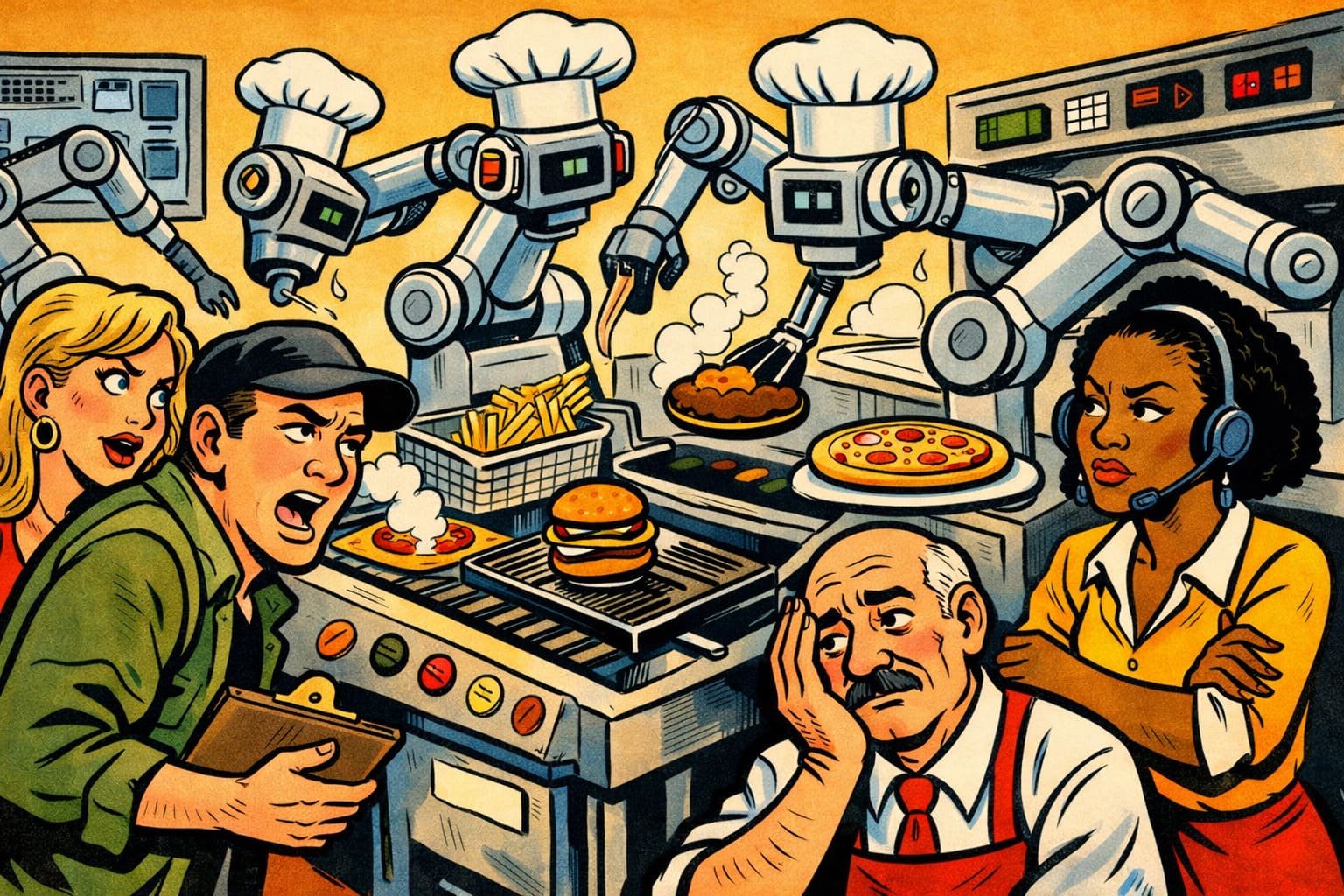
The lunch rush arrived with the force of a tidal wave. Fryers hissed, ovens roared, order screens flashed relentlessly, and conversations overlapped until they became one endless current of urgency. Customers expected every meal to taste exactly like the last one, regardless of who stood behind the counter. The kitchen never had the luxury of slowing down. Yet one restaurant chain seemed almost untouched by the pressure. The secret ingredient was not a famous recipe. It was an invisible system quietly orchestrating every movement before chaos had a chance to appear.
Food businesses rarely fail because people dislike their menus. They struggle because consistency becomes harder as success grows. One location serves exceptional meals while another disappoints loyal customers. Ingredients arrive late. Portions become unpredictable. Waste quietly drains profit. Managers spend more time solving yesterday’s problems than preparing for tomorrow’s opportunities. Growth exposes every weakness hidden inside kitchen operations. The larger the business becomes, the more valuable disciplined systems become. Scaling restaurants demands repeatability before creativity.
Many owners assume automation removes the human touch from hospitality. That belief misunderstands the purpose of modern technology. Automation is not replacing chefs, servers, or managers. It is removing repetitive tasks that distract talented people from delivering memorable customer experiences. Inventory systems reorder ingredients before shortages occur. Smart scheduling balances staffing needs with customer demand. Digital kitchen displays reduce communication errors between preparation stations. The goal is remarkably simple. Let people focus on hospitality while technology quietly manages routine complexity.
Restaurant owner Lucia discovered this reality after opening her fourth location. Every new branch generated stronger sales, yet operational headaches multiplied even faster. One evening she watched experienced cooks searching frantically for missing ingredients while handwritten order tickets piled dangerously high beside the grill. A line cook muttered, “We’re feeding customers with yesterday’s systems.” That sentence lingered. Lucia introduced automated inventory tracking, digital order management, and standardized preparation workflows. Within weeks, the kitchen felt calmer. Food quality improved because consistency replaced improvisation during the busiest hours.
Some of the world’s most successful restaurant organizations demonstrate this philosophy every day. McDonald’s has built remarkable global consistency by combining standardized operating procedures, carefully designed workflows, and technology supporting kitchen efficiency across thousands of locations. Customers return because expectations are reliably met. Behind every familiar meal stands a disciplined operating system refined through decades of continuous improvement rather than chance alone.
Automation also reshapes leadership inside food businesses. Managers spend less time counting inventory manually or correcting avoidable scheduling conflicts. They gain opportunities to coach staff, improve customer service, develop future leaders, and strengthen workplace culture. Those changes rarely appear in marketing campaigns, yet they influence profitability every single day. Technology creates breathing room. Strong leaders decide how that extra time transforms the business into something customers genuinely remember and recommend.
The future of hospitality belongs to businesses capable of blending efficiency with genuine warmth. Guests appreciate speed, but they return because someone remembered their preferences, solved a problem gracefully, or served a meal prepared with care. Automation cannot smile, comfort a disappointed customer, or create lasting loyalty through kindness. It creates the operational stability allowing employees to do those uniquely human things without being overwhelmed by avoidable distractions. Technology becomes most valuable when it quietly disappears behind exceptional service.
Long after the final customer leaves and the kitchen falls silent, tomorrow’s success is already taking shape. It lives inside the recipes carefully followed, the systems constantly refined, and the people who understand that excellence is never accidental. Great food businesses are built one reliable process at a time until consistency becomes part of their identity. The strongest restaurant empires never ask kitchens to survive chaos. They design operations where chaos struggles to survive at all. Ask yourself this: is your kitchen driven by passion alone, or by systems that allow passion to flourish every single day?
