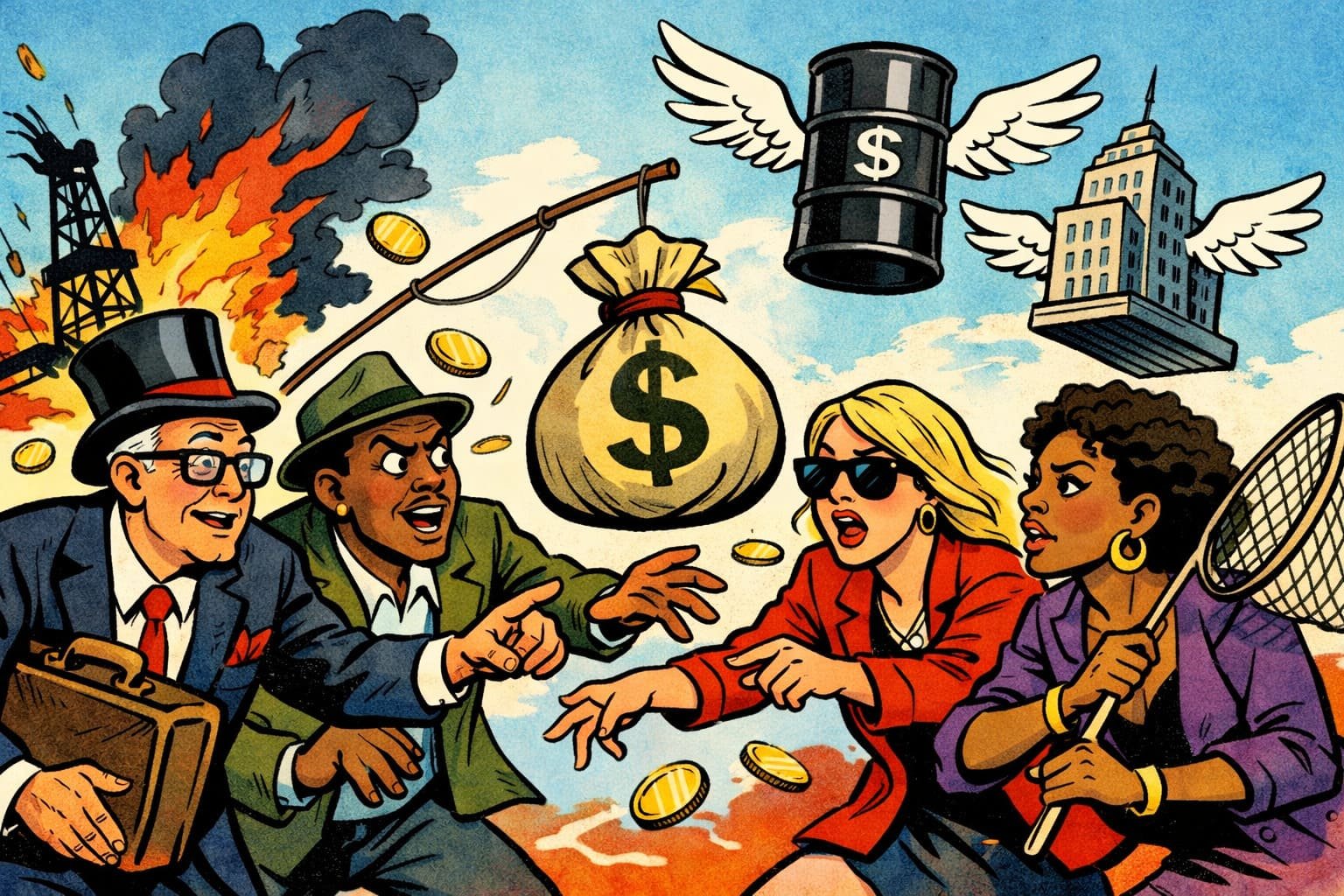
Windfall taxes arrive with a certain theatrical charm. Prices surge, profits swell in a sector that appears lucky rather than brilliant, and politicians spot what looks like free moral money. Why should oil producers, miners, utilities, or banks enjoy an unexpected bonanza while households struggle? The case almost writes itself. Tax the excess. Recycle the proceeds. Show the public that government still knows how to glare at power. In moments of stress, the idea feels irresistible. Yet windfall taxes are trickier than they look. What begins as righteous correction can slide into improvisation, opportunism, and long term damage if the design is sloppy.
The appeal is easy to understand. Windfall gains often do not arise from dazzling innovation or heroic management. They can flow from war, supply shocks, commodity spikes, regulatory quirks, currency movements, or sudden scarcity. A public already under strain sees such profits and concludes that luck has won the lottery in broad daylight. Taxing those gains can therefore feel less like punishment and more like basic order. The state presents itself as referee rather than predator. That political framing is powerful because it taps a deep instinct that not all profits deserve equal moral treatment, even if they are technically legal.
Europe revived this instinct during energy turmoil when governments sought revenue from extraordinary producer gains while households battled painful bills. The logic was hard to dismiss. If public policy had to cushion consumers, why should firms enjoying shock driven profits stand untouched? Some measures were narrowly crafted. Others were clumsy, rushed, or built more for headlines than durable investment logic. That difference matters. A well designed windfall tax can be temporary, targeted, and tied to a clearly abnormal profit base. A bad one becomes a signal that any success in the wrong political mood may be retroactively reclassified as excess.
Banks have also found themselves in the frame when rising rates boosted margins faster than public sympathy. Governments, smelling both revenue and applause, treated part of the gain as socially available. Again, the instinct is understandable. Citizens who feel squeezed by mortgage costs are not eager to applaud improved banking profits. Yet tax policy built on irritation can turn unstable fast. Investors start wondering whether the state is responding to a rare distortion or simply hunting cash where public anger already points. The difference determines whether a sector adjusts calmly or starts treating the jurisdiction as a place where political risk deserves a premium.
The core economic question is simple. What exactly counts as a windfall? That is harder than campaign speeches suggest. Commodity businesses are cyclical. A great year may follow years of pain. Capital intensive industries invest across long horizons, not a single season of abundance. Tax the peak without understanding the valley and the state may end up discouraging the very investment it will later beg for during shortage. A windfall tax is easiest to defend when gains are clearly detached from productive effort and when the tax leaves normal incentives intact. That requires precision, not vengeance in legislative form.
The United Kingdom’s energy profits levy captured this tension well. Many voters supported the move because the social case felt immediate. Critics warned that repeated tinkering with fiscal rules would undermine confidence. Both sides touched something true. In sectors where investment is lumpy and long term, predictability matters almost as much as the nominal tax level. Companies can survive higher tax if rules are stable. They struggle more with the suspicion that whenever profits rise, the government may improvise a new moral category and a new charge. States chasing revenue today can accidentally raise financing costs for tomorrow’s supply.
There is a political habit hiding behind the popularity of windfall taxes. Governments often prefer one off revenue raids to deeper reform because raids look courageous while structural work looks tedious. If a budget is under pressure, taxing an unpopular winner is easier than redesigning spending, fixing chronic loopholes, or confronting entitlement growth. Windfall taxes therefore become the fiscal equivalent of selling family silver to pay the electricity bill. The act may be defensible in a pinch. It becomes a problem when it substitutes for strategy. Temporary measures have a way of becoming recurring temptations in permanently stressed states.
A stronger framework would ask tougher questions before reaching for the cash. Is the gain clearly extraordinary and tied to external shock rather than superior execution? Is the tax temporary, rule based, and transparent? Will it recycle revenue toward citizens harmed by the same shock or simply disappear into general deficit fog? Does it preserve the investment needed for future supply? Can it be administered cleanly without endless dispute? Those questions do not kill the policy. They civilize it. Windfall taxation should be a scalpel used under bright light, not a cudgel swung whenever public anger and treasury need happen to align.
There is also a moral inconsistency worth noticing. Governments praise entrepreneurship in lean years and suddenly treat profitability as suspect in fat ones, especially when the profits belong to politically convenient villains. That does not mean windfall taxes are wrong. It means political language should be more honest. The target is not profit itself. It is exceptional gain under exceptional conditions where the public is already bearing large shock costs. When that distinction is blurred, societies begin to send a confused message. Success is welcome until it becomes visible. After that, applause depends on the treasury’s mood.
For citizens, the attraction remains clear. A windfall tax promises justice without asking ordinary people to sacrifice more. It sounds like revenue with no victim worth mourning. Yet every fiscal shortcut deserves suspicion. Easy money is often the most politically addictive kind. Once governments discover that selective raids come with applause, the threshold for declaring a windfall can soften. Sectors then spend more time planning around political weather than economic opportunity. That may satisfy a hungry budget for a season, but it rarely builds the kind of stable investment climate that resilient economies require.
The deeper issue is whether states are governing from principle or from fiscal desperation. Windfall taxes can absolutely fit inside principled tax policy. They can also reveal a government that has run out of cleaner ideas. When the levy is narrow, temporary, and visibly linked to shock relief, it can strengthen legitimacy. When it becomes a standing instinct to chase whoever looks momentarily rich, legitimacy weakens. The state starts to resemble a gambler scanning the room for the next pocket of chips rather than a referee maintaining credible rules for the game.
Under the polished language of public fairness, there is always a treasury hunting oxygen and a public hunting someone to blame. Windfall taxes sit at that intersection, morally satisfying and economically dangerous in just the right proportions to keep returning. Used well, they can restore balance during extraordinary shocks. Used badly, they become proof that governments love exceptional measures a little too much. The real test is whether a state can tell the difference between justice and appetite. When revenue pressure rises, many cannot, and markets learn to hear the difference faster than ministers do.
