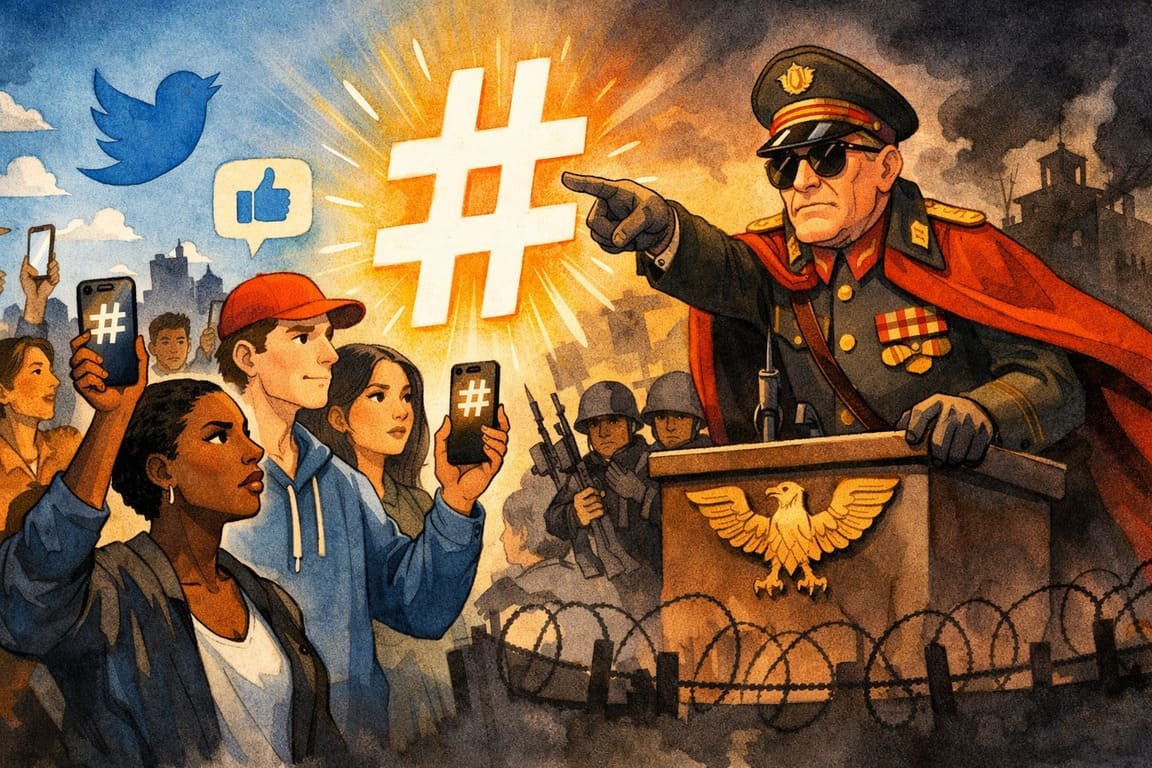
At night, a city square glows without streetlights. Faces tilt downward, illuminated by screens held close. Thumbs move fast. A slogan rises. A video spreads. Anger condenses into language sharp enough to fit inside a notification. From a distance, it looks like momentum. From inside, it feels like history accelerating. Yet beyond the frame, behind the noise, the machinery of power hums undisturbed. The roar sounds deafening, but the walls it strikes were built to absorb far worse.
Digital platforms promised something radical. Voice without permission. Reach without hierarchy. Anyone could speak, organize, expose. Movements no longer needed headquarters or printing presses. A single post could summon millions. That promise reshaped politics. Visibility became currency. Attention felt like leverage. For a moment, it seemed as if participation itself had become power.
Early victories fed the belief. Protests organized online forced resignations, cracked propaganda, and embarrassed regimes. Authoritarian leaders learned that controlling television was no longer enough. A phone camera could puncture narratives instantly. The lesson many drew was simple and intoxicating. If enough people shared, power would bend. Organization felt optional. Virality felt sufficient.
Power, however, rarely operates where noise is loudest. Laws are written in quiet rooms. Budgets move through processes designed to resist emotion. Institutions absorb pressure by waiting it out. Hashtags surge and vanish. Outrage cycles reset. Officials issue statements, promise reviews, and let attention drift elsewhere. Digital fury burns bright, then exhausts itself. Systems endure because endurance is their core design.
Authoritarian governments adapted faster than activists expected. Surveillance tools sharpened. Online spaces filled with distraction, denial, and manufactured confusion. Bots blurred consensus. Algorithms rewarded intensity over strategy. Platforms optimized for engagement rather than outcomes. Movements discovered that visibility does not automatically translate into structure. Sustained change still demands logistics, leadership, funding, and protection. None of these scale easily through likes.
There is also a quieter psychological trap. Expression begins to feel like action. Posting offers relief, a sense of contribution without exposure to risk. The brain registers participation even when material impact remains thin. This is not apathy. It is misdirection. People care deeply, yet the architecture of platforms channels that care into loops that feel meaningful while remaining politically shallow.
This does not make digital activism useless. It reshapes narratives. It documents abuse. It connects people who once felt isolated. It creates openings that did not exist before. The danger emerges when awareness is mistaken for achievement. Visibility is a beginning, not an endpoint. Tyrants do not fall because they trended. Laws do not change because they were shared widely.
Some movements learned this through painful trial. Viral moments drew crowds, then faded without infrastructure to carry momentum forward. Those that endured relied on unglamorous tools. Legal defense funds. Local organizing. Coalition building. Negotiation. Compromise. None of it cinematic. All of it effective. Cameras favor drama. Change favors persistence.
Governments responded by targeting the digital space itself. Protest laws tightened. Online speech faced regulation. Financial flows became traceable. Platforms were compelled to cooperate. The state adapts. It always has. Technology shifts tactics, not the underlying contest. Confusing tools for power leaves movements fighting reflections while foundations remain untouched.
There is a deeper philosophical fracture underneath it all. Democracy depends on participation, but participation without deliberation hollows it out. Slogans replace arguments. Certainty crowds out complexity. Algorithms amplify what confirms rather than what challenges. The public sphere grows louder while becoming less capable of collective thought. Chaos benefits those already in control.
The paradox cuts sharply. Never has speech traveled so freely, yet never has it felt so contained. Platforms open mouths while narrowing pathways. Dissent circulates endlessly, generating data, profit, and spectacle. Meanwhile, law and policy remain stubborn. Power prefers opposition that exhausts itself without forcing negotiation.
Away from the feeds, a different kind of work continues. Community organizers meet in borrowed rooms. Lawyers file quiet briefs. Journalists chase documents instead of reactions. These efforts rarely trend. They alter reality anyway. History often turns on labor that escapes the spotlight entirely.
As the glow of phones dims and crowds disperse, the silence carries an uncomfortable weight. Expression remains abundant. Change remains scarce. And the question that lingers long after the scroll ends presses with unsettling clarity: when resistance becomes content and belief becomes performance, will freedom still demand sacrifice, or has comfort taught rebellion to stay safely inside the screen?
