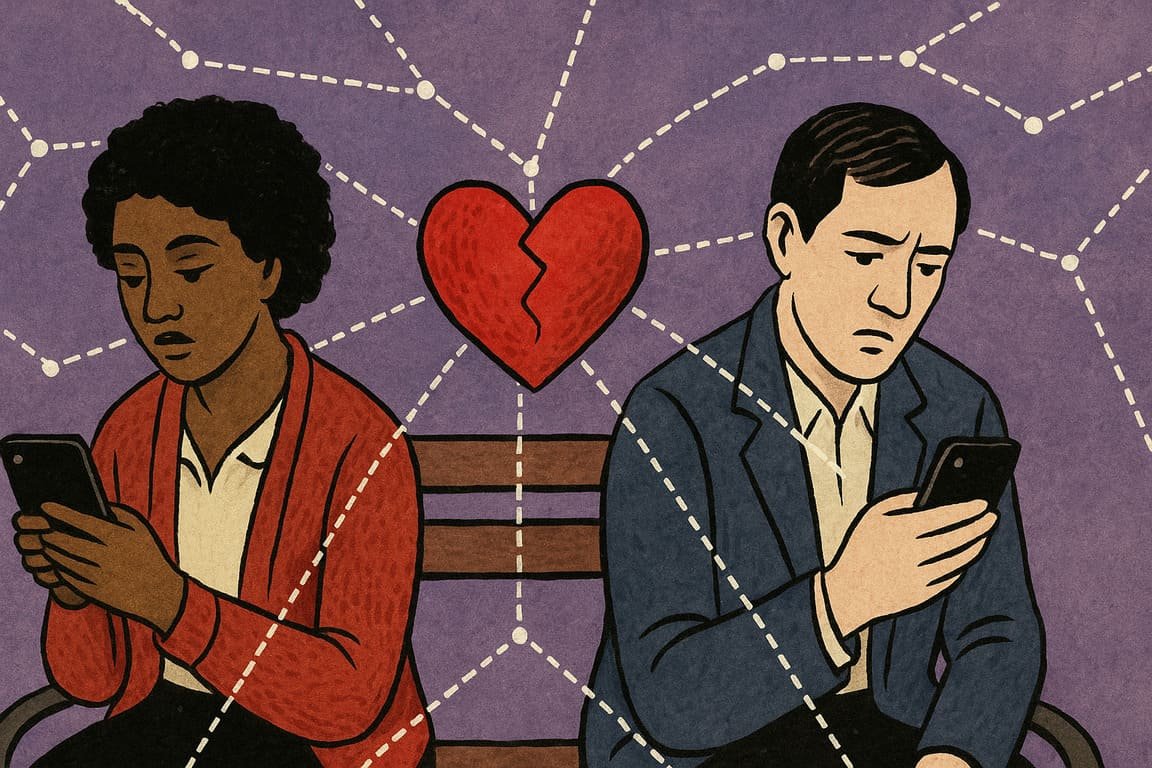
Evenings fall over a city painted in LED glow, apartments stacked high like pixels in a giant grid. Behind every window, a phone or tablet lights a face—swiping, liking, searching for company in the infinite scroll. On paper, everyone’s connected, messages flying at lightspeed, notifications singing for attention. But the silence in these rooms is thick. Nobody knocks. Nobody calls just to say hello. A thousand digital friendships, yet not a single hand to hold when the world tilts off its axis.
At a bustling co-working space in Lagos, Ade feels invisible. Slack pings and emails flood in, but the laughter of real friends is just a memory from before the world went remote. At midnight, across the ocean, Sarah trades memes with strangers. She laughs out loud, but nobody hears. When the power goes out, her world shrinks to four blank walls and a hollow ache.
The myth of digital closeness crumbles, bit by bit. What began as connection now feels like exile—a loneliness that tech promised to erase, but only made easier to hide.
Quick Notes
- The Illusion of Intimacy: Social media and chat apps create a sense of belonging, but often leave users more isolated than ever.
- Silent Suffering: Digital communication hides pain and longing, making it easy to mask loneliness with busy feeds and curated profiles.
- Disconnected in the Crowd: Remote work, virtual events, and endless notifications fragment real relationships and reduce empathy.
- Pop Culture’s Cry: From hit shows to viral memes, art mirrors the epidemic of hidden loneliness even in the most hyperconnected cultures.
- Reclaiming Real Connection: New movements, mindful practices, and daring experiments help people rediscover the art of true friendship and presence.
The Illusion of Intimacy: Why More Isn’t Closer
A decade ago, getting a message from an old friend was an event. Now, inboxes bulge with notifications, group chats, and emoji chains. But for Ade, the more he scrolls, the lonelier he feels. “Everyone’s talking, but nobody’s listening,” he jokes to his reflection. His closest friend lives two blocks away, but they haven’t met in months.
Algorithms boost content from people you barely know, while real friends disappear beneath the noise. At a Toronto startup, employees joke that their “work family” knows more about their favorite memes than their birthdays. Digital intimacy feels real, but it’s a surface gloss over an empty room.
Studies show people with hundreds of online “friends” still report rising loneliness. The illusion is strong—likes and comments mimic affection, but without the warmth of real voices, they fade quickly. Users reach for more, hoping the next ping fills the gap.
Pop culture spotlights the trap. In the film “Eighth Grade,” the protagonist’s life is dominated by her phone, yet she can’t make eye contact with classmates. Comedians riff on the irony of being “alone together”—each person glued to a separate screen.
The myth persists, even as hearts grow colder. Connection is not the same as closeness.
Silent Suffering: Hiding Pain in the Feed
Sarah’s feed is full of selfies, clever captions, and endless laughter. Yet, she admits, “I post more when I’m lonely, hoping someone will notice.” Her most-liked photo came on a night she cried herself to sleep. Friends sent heart emojis, but none called.
Digital life is perfectly engineered to hide pain. Stories disappear after 24 hours, comments can be deleted, and DMs ignored. It’s easier to project happiness than to confess isolation.
In New York, a therapist named Mark reports a wave of clients struggling with “digital despair”—feeling invisible despite constant connection. One patient described scrolling through a sea of celebrations while eating dinner alone every night.
Workplaces, too, mask distress behind “all good” updates. When Ade lost a family member, colleagues sent generic condolences, then moved on. He muted the group, missing the comfort a real hug might have offered.
Artists and musicians channel the loneliness in viral songs and poems, turning silent suffering into a chorus that resonates worldwide. The story is always the same: the loneliest people are often the loudest online.
Disconnected in the Crowd: Fragmented Relationships and Fading Empathy
Remote work promised freedom but delivered distance. Video calls replace meetings, but the subtle rituals of friendship—shared lunch, inside jokes, the quick touch on a shoulder—have faded. Ade misses the energy of real rooms, the tension and release of laughter echoing off walls.
Even families aren’t spared. Dinners are interrupted by phone buzzes, siblings sit side by side while texting other friends. In Tokyo, grandparents try to FaceTime with grandchildren, the delay and glitches a poor substitute for the warmth of a lap.
Teams fragment as chats replace conversations. “I can’t tell when someone’s really struggling,” confesses a London manager. “Everyone seems fine until they vanish.” Empathy erodes when the human face is just a pixel on a crowded screen.
Pop culture reflects this emptiness. The series “BoJack Horseman” skewers digital friendship—its antihero finds millions of followers, yet spirals into despair. Memes about “ghosting” and “breadcrumbing” expose how easy it is to vanish in a world built on fleeting connection.
The more people connect, the easier it is to hide. Community fades into the crowd.
Pop Culture’s Cry: Stories That Mirror the Empty Scroll
Art does not lie about loneliness. The most-watched shows, movies, and viral videos center on characters desperate for real contact. “Her” tells of a man who falls for an AI, only to be crushed by its emptiness. Songs about missing someone, about being unseen in a crowd, top the charts.
Social media platforms become confessionals. Viral threads ask, “Who else feels alone?” and are flooded with stories. One meme, “Check on your strong friend,” ricochets around the globe—funny and tragic at once.
Creators build worlds where even digital gods cannot save lonely mortals. In “Black Mirror,” technology never delivers what it promises. The punchlines are sharp: all this power, and still, nobody answers when you really need them.
Famous voices—athletes, musicians, CEOs—speak out about digital isolation. Their bravery starts conversations in boardrooms and classrooms, showing loneliness does not discriminate.
Culture cries out for touch, for voice, for something more than a flicker on a screen.
Reclaiming Real Connection: The Courage to Reach Out
The cure for digital loneliness is old-fashioned, but radical: be present, reach out, and risk real conversation. Around the world, communities experiment with “phone-free” nights, shared meals, and digital detoxes. At Ade’s co-working space, a new rule bans devices after 6 p.m.—the laughter returns.
Friendship circles revive pen pals, book clubs, and walking groups. A Berlin artist starts a “human library” where people share stories in person, not posts. Attendance grows every week.
Even tech giants notice. Some apps now nudge users to call, not just text. Mindful leaders schedule weekly “check-in” calls with no agenda but care. A company in Chicago created a “happiness hotline,” open to all employees—no questions, just a listening ear.
Mental health professionals encourage honest status updates: “I’m lonely” is no longer taboo. The courage to be vulnerable breaks the cycle. One act of kindness—a visit, a note, a voice—can transform a lonely night.
As more people trade scrolling for real presence, hope flickers again.
When the Glow Fades: Rediscovering Warmth in a Silent World
A storm sweeps the city, lights flicker, and the internet dies. In that darkness, Ade hears a knock at his door—a friend, soaked and grinning, holding a thermos of tea. They talk into the night, stories rising above the rain, loneliness dissolving into laughter that fills the quiet at last.
The future belongs to those who step away from the feed, who dare to be present, who choose voice over text and arms over avatars. You hold the spark. Reach for someone tonight, and let the loneliness go.