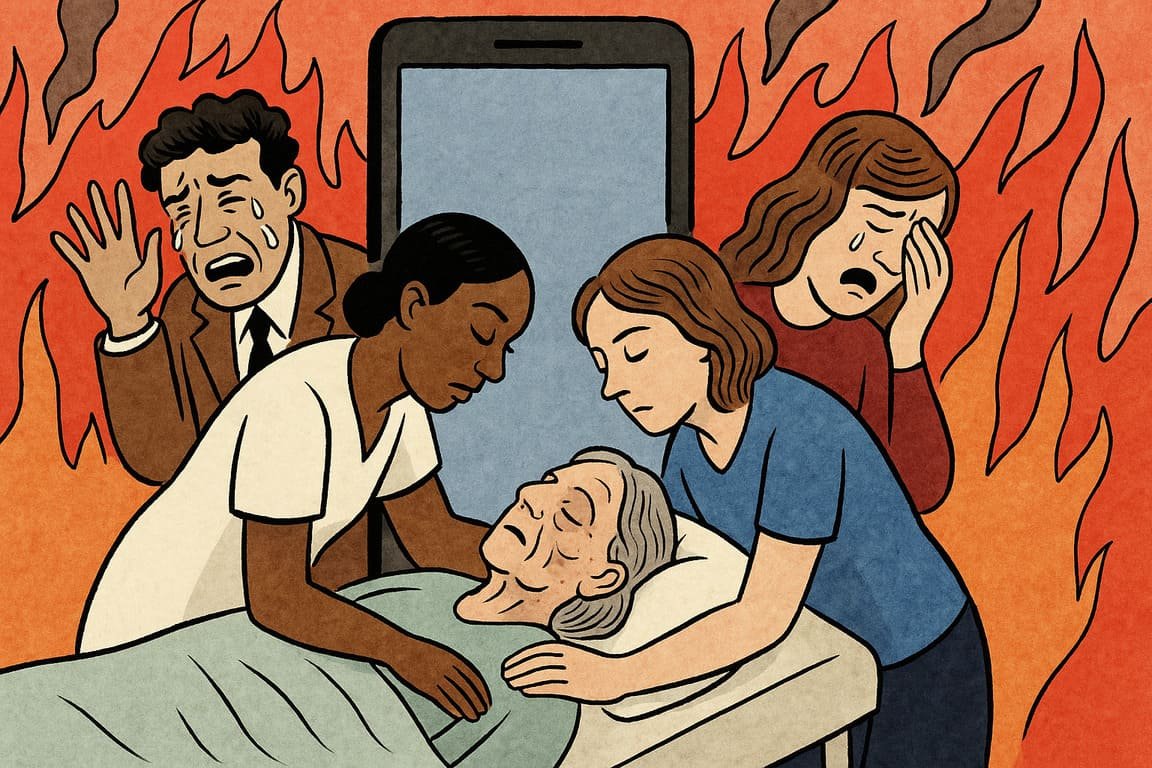
Emergency room waiting areas rarely fall completely silent, yet one evening every chair held someone staring into a glowing screen while an elderly man searched quietly for help carrying his wife across polished floors. Hundreds of messages crossed invisible networks within seconds, but a simple act of noticing never arrived. Progress looked magnificent from a distance. Up close, human attention had quietly become the rarest resource in the room.
Digital tools have transformed healthcare, education, customer service, and collaboration by making knowledge and communication available almost anywhere. Yet efficiency often becomes the loudest measure of success while compassion fades into an invisible metric that never appears on executive dashboards. Fast responses are valuable. Feeling understood is often priceless, especially when technology mediates conversations during moments of uncertainty, vulnerability, or emotional stress.
Airbnb invested heavily in community trust because transactions alone could never sustain a global marketplace built around strangers welcoming strangers into their homes. Salesforce placed growing emphasis on customer relationships rather than simple software delivery, recognizing that successful digital experiences combine intelligent systems with genuine human understanding. Helena worked for an insurance provider handling claims after severe flooding. One thoughtful phone call lasting a few minutes generated more gratitude than dozens of perfectly automated status updates sent during the previous week.
Empathy is frequently misunderstood as kindness alone, although thoughtful organizations recognize it as a practical capability that improves decisions, products, and leadership. Designers who observe how real people struggle often build better services than those relying exclusively on spreadsheets and performance indicators. Satya Nadella has repeatedly spoken about empathy as a driver of innovation inside Microsoft, arguing that understanding people creates stronger solutions than technical brilliance operating in isolation. Listening remains one of technology’s most underrated competitive advantages.
Zoom connected families, classrooms, and businesses when physical distance suddenly became unavoidable, proving digital communication could preserve relationships during extraordinary circumstances. Even so, many organizations later rediscovered that face-to-face conversations revealed emotional signals impossible to capture through cameras and microphones alone. Balanced workplaces now combine digital convenience with intentional human interaction rather than treating one as a permanent replacement for the other. Strong cultures are built through shared experiences, not software licenses.
Street musicians sometimes attract strangers who pause together without exchanging a single word, discovering quiet connection through a shared moment instead of carefully optimized algorithms. Technology reaches its greatest promise when it strengthens those moments rather than replacing them with endless efficiency. Progress deserves both intelligence and compassion. Before celebrating another breakthrough, ask whether the newest system makes life easier while also making people feel genuinely seen, heard, and valued.
