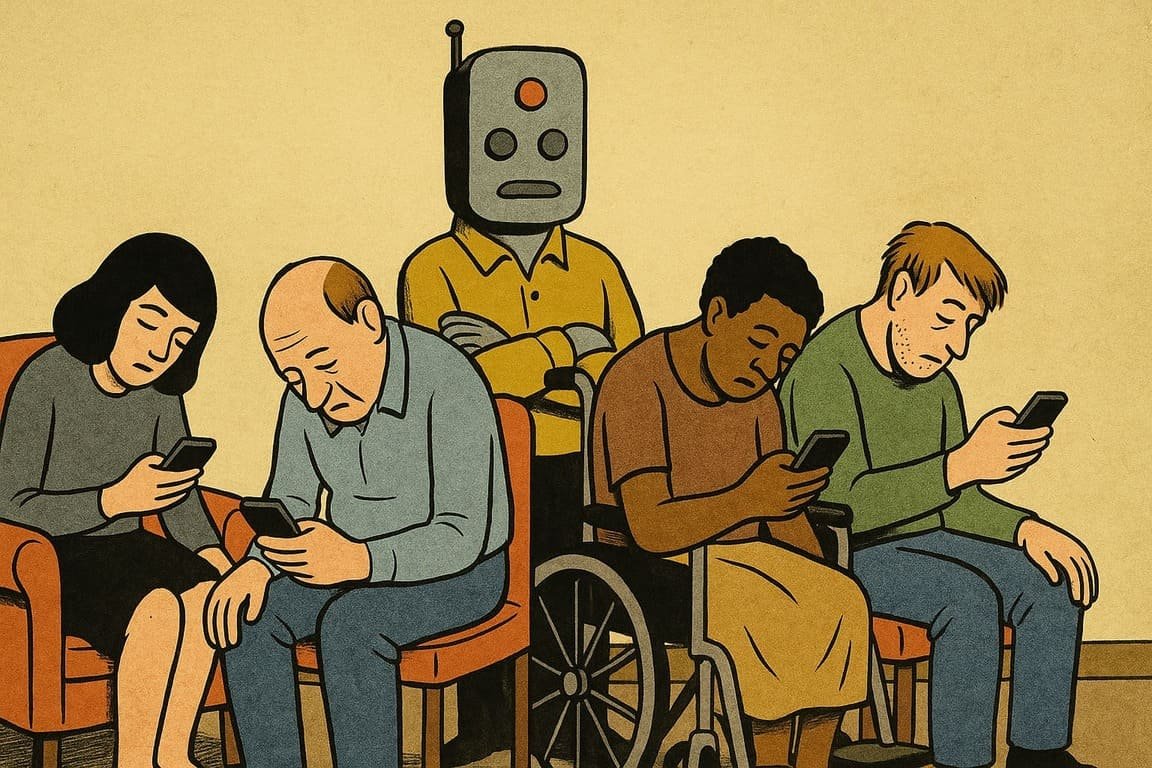
Cracked elevator doors slid apart inside a polished office tower where nobody looked confused, rushed, or particularly awake. Every movement unfolded with effortless precision because software had already planned the route, suggested the meeting, completed the reminder, and answered the routine questions. Efficiency filled every corner. So did an unsettling absence. Skills that once demanded attention quietly faded into the background while convenience accepted applause for work that people barely noticed they had stopped doing.
Progress has always replaced difficult tasks with easier ones. Calculators reduced mental arithmetic, navigation apps replaced folded maps, and streaming platforms eliminated shelves packed with discs. None of those advances deserve condemnation because they solved genuine problems. Trouble begins when convenience gradually shifts from supporting human capability to replacing curiosity, judgment, memory, and resilience. That transition rarely announces itself. It arrives through countless tiny decisions that feel perfectly reasonable in isolation but transformative when viewed together.
Adobe has introduced creative tools that accelerate editing tasks once requiring hours of meticulous work. GitHub Copilot helps developers write software faster by suggesting code drawn from learned patterns, allowing professionals to focus on broader design challenges. Both innovations demonstrate remarkable productivity gains. They also reveal an uncomfortable tension. When machines complete increasing portions of creative or technical work, expertise risks becoming supervision rather than craftsmanship unless people deliberately continue practicing the skills hidden beneath automation.
Nadia loved photography long before intelligent editing software became commonplace. Months after relying almost entirely on automated enhancements, she admitted that choosing composition, adjusting light, and experimenting with manual settings suddenly felt unfamiliar, almost intimidating. Across another workplace, logistics coordinator Victor trusted automated scheduling until an unexpected outage froze every recommendation. Experienced colleagues adapted quickly. Younger staff stared at blank dashboards, uncertain how deliveries had ever been coordinated without digital guidance.
This pattern extends beyond workplaces. Recommendation engines increasingly choose entertainment, navigation systems determine routes, translation software interprets conversations, and predictive typing finishes unfinished thoughts before fingers reach another key. Each tool removes friction. Friction, though frustrating, has always strengthened observation, patience, problem solving, and adaptability. Human capability grows through effort more often than ease. Durable societies therefore invest not only in smarter technology but also in preserving opportunities for people to think independently when assistance disappears.
Wind swept across an abandoned railway platform where rusted tracks still pointed confidently toward distant horizons despite carrying no passing trains. Old pathways rarely disappear because they become useless. They fade because fewer travelers remember why they mattered. Human capability follows a similar path whenever convenience quietly replaces participation instead of supporting it. Real progress is measured not by how much work machines remove, but by how much wisdom people continue carrying without them. What ability will you refuse to outsource?
