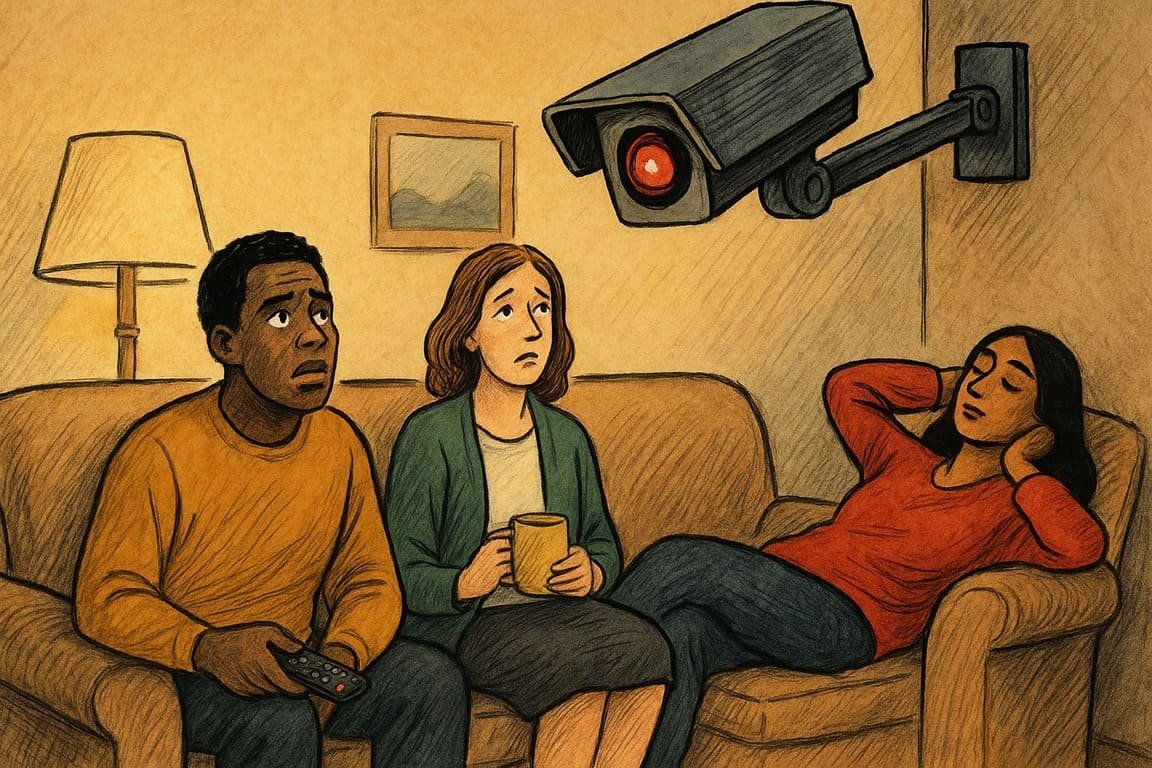
An apartment window framed the city’s neon arteries, but inside, the real glow came from tiny cameras, LED dots, and blinking routers. Screens lit up bedrooms and kitchens—baby monitors streaming gentle lullabies, doorbells capturing footsteps at midnight, fitness bands logging restless dreams. Families sprawled on sofas, half-watching streaming news as security apps pinged, promising peace of mind. The hum of surveillance stitched itself into bedtime stories, grocery lists, even whispered secrets in hallways.
In the next building, an elderly man adjusted his smart thermostat, trusting sensors to keep him warm and safe. Downstairs, a teenager checked her phone for neighborhood alerts, confident that every door and sidewalk was watched. A mother waved at a wall-mounted screen, sharing dinner with a friend a continent away—unaware that cloud servers kept a silent archive of their laughter and their worries. In this world, the watching was not a threat, but a blanket—a reassurance that nothing would slip by unnoticed.
Yet behind every pixel, an invisible audience lingered. Companies, algorithms, maybe strangers—always present, always ready to step in, fix a problem, or simply watch and record. The city glimmered, and nobody remembered what life felt like before comfort and surveillance became the same thing.
Quick Notes
- Surveillance Feels Safe: Smart devices and monitoring tech sell comfort, making constant watching feel like a warm embrace.
- Loss of Privacy Is Normalized: People adapt quickly, letting cameras and trackers into daily life in exchange for safety, ease, and status.
- Trust in the Machine: Personal anecdotes reveal families, workers, and elders who welcome surveillance—sometimes forgetting what’s lost.
- Hidden Costs Surface: Real-life misfires, data leaks, and subtle behavior shifts expose how surveillance erodes freedom and trust.
- Choose Your Watchers: The real question becomes not whether you’re watched, but who gets to watch—and what comfort is worth.
The Everyday Watcher
Surveillance used to be the stuff of spy thrillers, but now, it’s just life. At Sunset Meadows, a retirement home in Arizona, families praise the network of cameras that let them “visit” relatives remotely. “It’s peace of mind,” says a daughter named Ellen, who checks on her mother each night. Her friends marvel at the technology, trading stories of gentle reminders and early alerts that caught wandering or falls before harm was done.
Schools are next. At Pinewood Middle, parents get real-time text alerts when students enter or leave campus, plus access to hall cameras on a dedicated app. “I love seeing my son’s smile at lunch,” beams one mother. The school’s principal, Ms. Vargas, credits the system for stopping bullying and lost backpacks. “It’s a layer of care we never had,” she claims.
In the gig economy, ride-share drivers like Kwame rely on dashcams for protection. One night, his camera caught a drunk passenger’s angry outburst, saving him from a false complaint. “The truth is on tape,” he says, tapping the device like a lucky charm.
Stories like these explain why surveillance comfort spreads. Every ring, ping, and playback promises less fear, more control. The trade-offs seem invisible—until they aren’t.
The Seduction of Control
Home security giants know their audience. Ads for smart locks and doorbell cams show parents sleeping soundly, children laughing, burglars running away in defeat. In real neighborhoods, homeowners post “Protected by [Brand]” stickers with pride, trading jokes about porch pirates and nosy neighbors. The gadgets create tiny bubbles of control.
At GreenLeaf Realty, property managers install “amenity” cameras in lobbies, gyms, and even mailrooms. Resident complaints are rare—if anything, new tenants demand better coverage. “We feel looked after,” says Marcus, a college grad in his first city apartment.
Companies extend the logic to work. A logistics startup, ZipRoute, uses wearable trackers to optimize driver routes and reduce accidents. Sam, a longtime dispatcher, loves getting real-time updates. “I don’t worry about lost shipments anymore,” he says. The drivers, though, are divided: some welcome the help, others resent being tracked down to the second.
Control is seductive. When everything can be watched, mistakes can be fixed, harm can be prevented, and the “bad guys” caught. This comfort sells well, burying doubts about what it costs to feel so safe.
When Privacy Becomes a Relic
Comfort makes old ideas look outdated. A senior at Midtown University laughs about the “ancient” time before campus WiFi tracked student locations for safety. “Now I can always find my friends,” he says, waving his phone. In a workplace experiment, a marketing firm tried turning off meeting room mics for a week; productivity slumped, and staff felt “out of sync.” The manager switched them back on.
For many, giving up privacy isn’t a loss, but a status symbol. Tech-savvy couples share smart home routines online, showing off integrated lighting, thermostats, even fridge cameras that text when milk runs low. At a trendy café, patrons wave phones to unlock doors and pay for lattes, exchanging data for convenience and cool points.
Sometimes, the transformation is deeper. A new mother, Priya, welcomes sleep-tracking baby monitors, even as she jokes about never having an unrecorded moment with her child. “It’s weird, but I love it,” she says, scrolling through a timeline of naps, feedings, and tiny milestones.
The comfort is real, but so is the surrender. Old worries about “big brother” fade into the background, replaced by a new belief: to be unwatched is to be unsafe, out of step, or left behind.
The Unseen Costs
For all its comforts, surveillance brings headaches and heartbreak. At CloudSpring Apartments, a server hack exposed months of video feeds. Residents panicked when private moments ended up online, prompting apologies and promises from the management. Lawyer Anita Chow represented the tenants. “Trust is hard to win back,” she explains, “especially when the watchers won’t admit who’s watching.”
Sometimes, the harm is subtle. In a Chicago hospital, nurses noticed patients self-censoring conversations and avoiding rooms with visible cameras. One patient, Malik, stopped asking for extra pain relief, worried that every request was logged and judged. “It’s like there’s always someone looking over your shoulder,” a nurse whispered.
Children sense the pressure, too. A teenager, Zuri, began unplugging her smart speaker after realizing it recorded private jokes and sleep talks. Her parents dismissed her worries until a targeted ad revealed just how closely the device listened.
Surveillance comfort can also breed dependency. When a tech company’s monitoring network went offline for a day, families in three states called emergency hotlines, convinced something terrible had happened. The world felt more dangerous—if only for a moment—when the watcher closed its eyes.
Deciding Who Deserves the View
Not everyone wants the comfort surveillance sells. A community in Portland voted to remove street cameras after a campaign led by chef Luis, who argued for “trust over tape.” His restaurant became a gathering spot for those who crave privacy, laughter, and imperfect memory.
Some businesses opt out, too. At WanderWell, a boutique hotel, guests check in anonymously, phones surrendered at the door. Reviews rave about the “freedom to disappear,” even if it means a lost towel or missed wake-up call. The founder, Tessa, insists, “Real comfort comes from being unseen.”
A movement grows for “slow tech”—intentional, limited watching, always with consent. At Lakeview School, cameras record only when emergencies arise, not every second of every day. Teachers and parents sign privacy pledges, and the policy wins national awards.
The power now lies in choosing who gets to watch and when. For every story of safety gained, there’s a story of freedom lost. Surveillance comfort is a habit—and like all habits, it can be broken, if you decide it’s worth the risk.
The Glow Fades: Stillness in the Watching
The apartment lights dim, screens shut down, and the night air creeps in, unmeasured and free. On a rooftop, the elderly man stands alone, gazing at a city pulsing with unseen eyes. He breathes, for once unwatched, feeling his heart quicken not with fear, but with the thrill of being invisible. Far below, cameras blink in the dark, recording nothing but silence.
The watchers may never rest, but the comfort they promise is yours to claim—or to refuse. You can choose the blanket of their gaze, or step into the cool relief of being lost in the crowd.