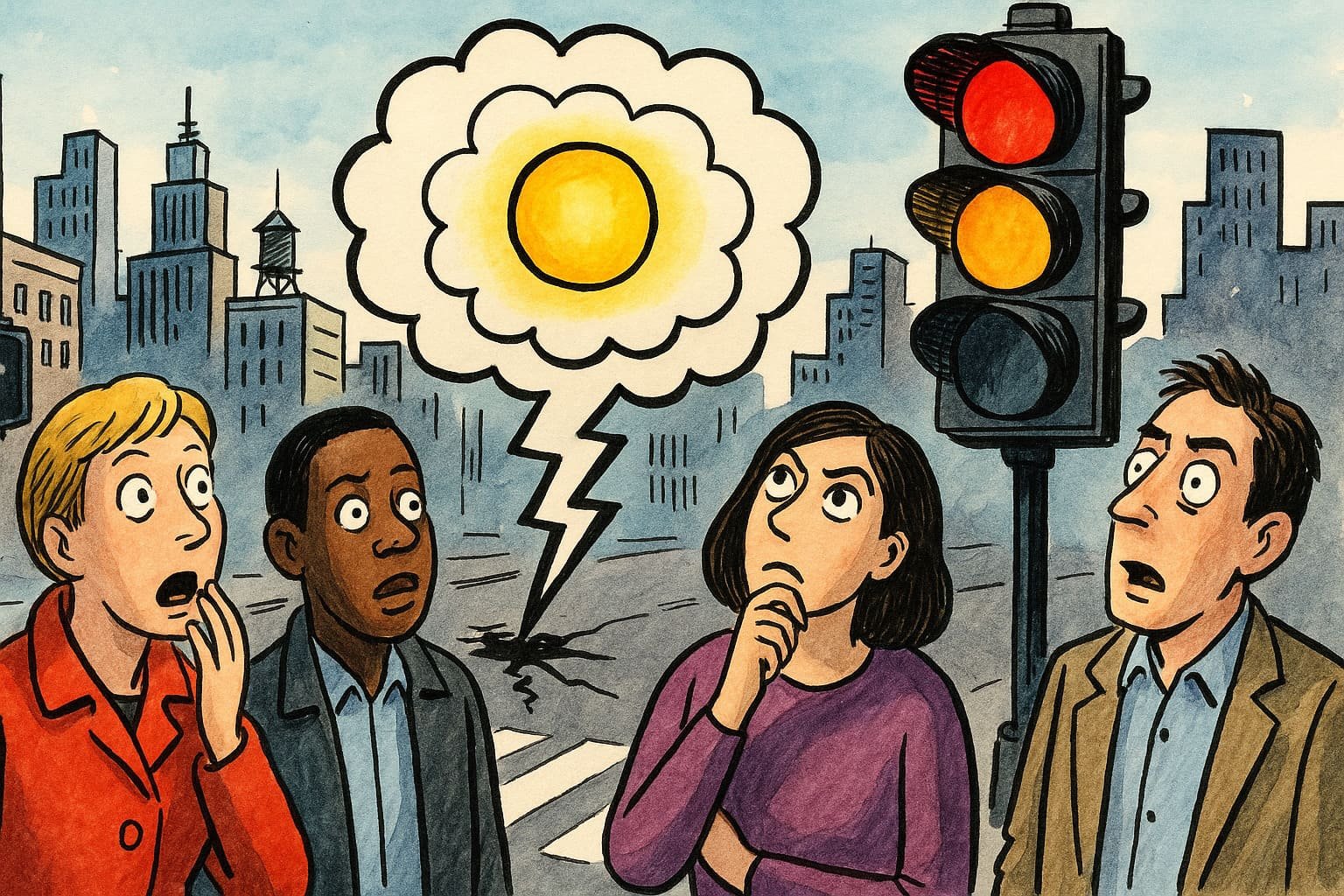
Traffic lights blinked without urgency while a delivery rider waited at an empty intersection, convinced unseen eyes had already judged every possible movement. Nothing looked extraordinary. Yet invisible calculations had quietly rewritten ordinary life before anyone noticed. Cities once responded after people acted. Increasingly, streets anticipate decisions before footsteps land, buses arrive before crowds gather, and infrastructure behaves less like concrete than a living conversation unfolding beneath everyday routines, inviting admiration while raising unsettling questions about who truly directs modern urban life.
Smart cities are often marketed as collections of connected sensors, intelligent traffic systems, digital utilities, and responsive public services. That description sounds harmless. Reality feels more complicated because every improvement depends upon thousands of invisible decisions flowing across networks that rarely pause. Barcelona demonstrated how connected infrastructure could improve lighting, parking, and waste collection while reducing unnecessary resource consumption. Singapore continues integrating mobility, planning, and environmental monitoring, proving that smarter infrastructure succeeds only when coordination matters as much as sophisticated software.
Consider Maya, who managed operations for a growing food distribution company serving crowded neighborhoods. Delivery delays frustrated customers until city traffic signals began adapting dynamically instead of following rigid schedules. Her drivers stopped racing unpredictable congestion and started planning confidently because roads behaved with surprising consistency. Nearby cafés noticed fresher ingredients arriving earlier, while hospitals experienced fewer interruptions supplying urgent materials. One adjustment inside municipal infrastructure quietly reshaped dozens of businesses that never realized traffic management had become part of their competitive advantage.
Technology companies often celebrate smarter sensors or faster connectivity, yet enduring success rarely begins with hardware. Strong design starts by understanding relationships between transportation, housing, utilities, emergency services, businesses, and citizens as interconnected parts rather than isolated departments. Amsterdam illustrates this philosophy by encouraging collaboration between government, universities, companies, and residents instead of treating innovation as purely technical work. Cities improve sustainably when information moves freely across institutions without overwhelming people responsible for everyday decisions affecting millions.
Critics sometimes worry that intelligent cities simply become giant surveillance machines wearing attractive marketing slogans. That concern deserves careful attention because convenience always carries tradeoffs. A transport application recommending efficient routes also collects movement patterns, while energy optimization reveals habits inside homes and workplaces. Trust becomes valuable infrastructure alongside roads and electricity. Successful cities therefore balance efficiency with transparency, allowing residents to understand how decisions emerge instead of asking communities to accept automated authority without explanation or accountability.
Rain drifted across polished pavement as reflections shimmered like circuits stretching toward unfamiliar horizons. Every illuminated crossing suggested possibility instead of certainty because intelligence embedded within cities remains shaped by human priorities rather than silicon ambition alone. Streets may become increasingly responsive, adaptive, and predictive, yet wisdom cannot be downloaded into concrete. Progress will belong to communities asking difficult questions before celebrating impressive answers. Perhaps tomorrow’s smartest city will be remembered not for thinking fastest, but for helping humanity think better.
