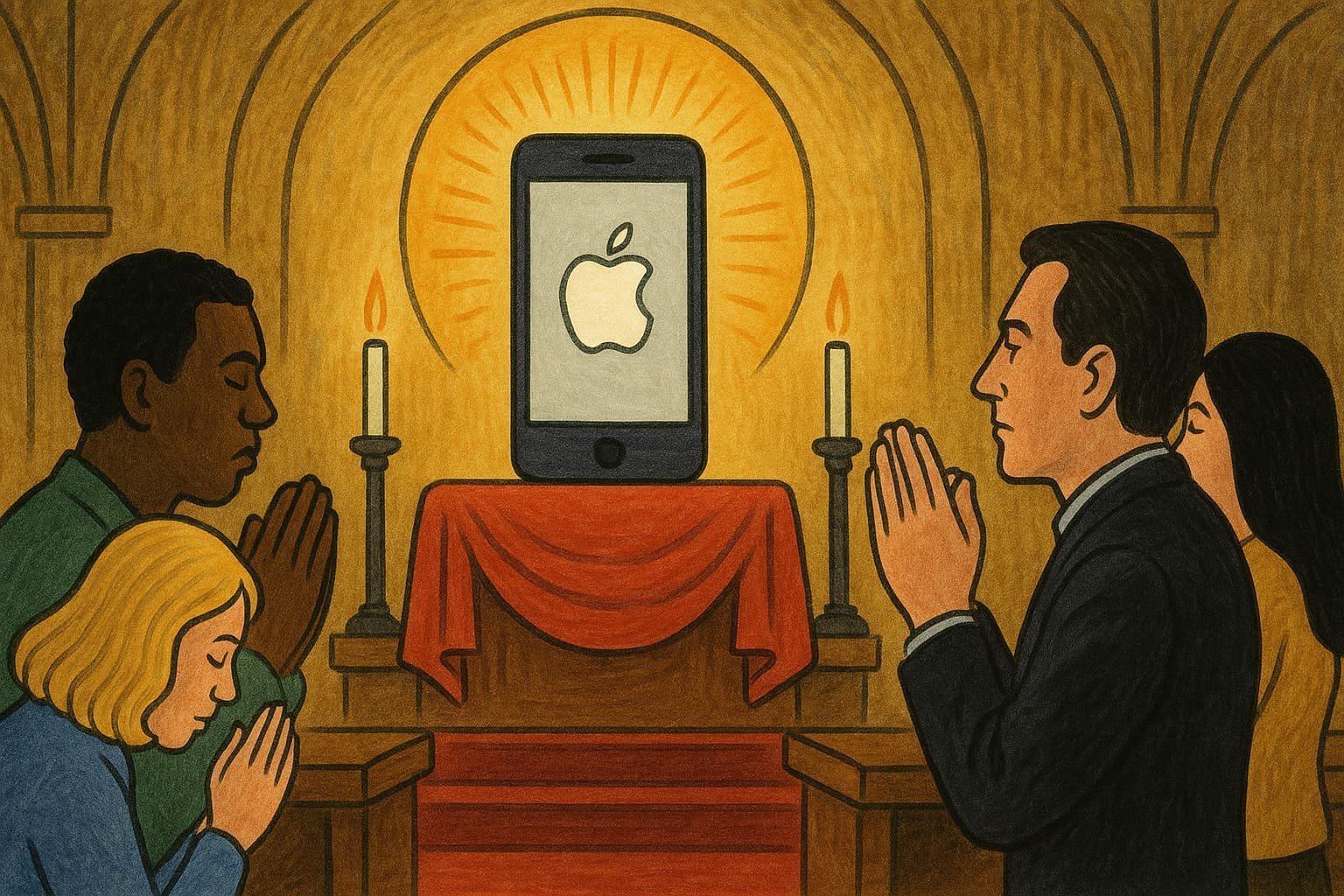
Neon halos flicker above a midnight queue, snaking outside a glass-walled store lit like a stage. Streetlights cast sharp shadows on sneakerheads camping for a shoe drop, their faces painted with hope and hunger. Inside, staff move with choreographed grace, arranging products as if preparing holy relics for a ceremony. Outside, laughter and arguments swirl in the chilly air, every conversation a confessional about what makes this brand worth sleeping on concrete for.
Beyond the doors, a marketing team watches live security footage, coffee growing cold in their hands, marveling at the spectacle their logo inspires. The crowd’s fever rises with every rumor of limited stock or exclusive perks, turning scarcity into scripture. An old-timer in line whispers to a newcomer, “This isn’t shopping. This is devotion.” The words hang in the air, half joke, half gospel.
Elsewhere, a teenager scrolls through social media, thumbs trembling as the countdown clock ticks toward the next “drop.” Every like, retweet, and DM feels like a prayer sent into the void, hoping for a sign. Brands don’t just sell products now. They sell purpose, belonging, and a chance to join something bigger than yourself.
Inside the store, a manager lights a scented candle—part ritual, part joke—and surveys the crowd. Every face reflects a longing for more than a logo. This is how lunatic loyalty mutates into worship. Brands have become belief systems, and their followers don’t just buy. They belong.
Quick Notes
- Obsession Is the New Loyalty: Modern consumers want faith, not just features, and reward brands that create experiences worth believing in.
- Scarcity Turns Products into Relics: Brands that master the art of limited releases and exclusive access build a mythology that transforms desire into ritual.
- Community Makes Consumption Sacred: Customers crave connection, and brands that foster community gain followers who defend, evangelize, and recruit.
- Mythology Drives Marketing: Storytelling isn’t a tactic—it’s the temple where brand worship thrives and grows beyond any advertising budget.
- Identity Is the Final Battleground: Winning brands fuse with personal identity, turning buyers into brand disciples whose loyalty is nearly impossible to break.
From Transaction to Transcendence: The Rise of Brand Rituals
Brand worship rarely begins in a boardroom. It starts in moments that feel almost accidental—like the first time a tech giant staged an event with the gravity of a papal conclave. Employees nervously adjust banners, while die-hard fans camp overnight, clutching thermoses and trading rumors. When the CEO finally takes the stage, the crowd erupts as if witnessing a prophet. Every product reveal becomes a ceremony, every keynote a sermon.
This is more than hype. It’s ritual. Rituals are sticky. The first time a customer unwraps a sleek device or pulls a sneaker from its special-edition box, the moment is framed with music, scent, and tactile detail. A whole generation of fans grew up memorizing the unboxing order, like altar boys rehearsing the Eucharist. At a branding workshop in Boston, consultant Mia Hartley tells the story of a coffee chain whose employees repeat a mantra each morning: “We serve happiness, not just caffeine.” That motto infuses every cup with a kind of secular blessing.
Scarcity intensifies the ritual. When a fashion house drops a limited-edition bag, lines wrap city blocks. The wait becomes a rite of passage. Ownership confers status, but the story behind it is what makes it sacred. People still talk about the day Apple dropped the iPhone, when customers hugged strangers in line and journalists called it “the closest thing to a secular holiday.”
Mini-case: Hugo, a college freshman, camped outside a flagship store to snag the latest gaming console. He later told friends, “I didn’t just buy a console. I earned a memory.” Brands that manufacture ritual win a deeper kind of loyalty.
Scarcity and Salvation: How Brands Write Their Own Scriptures
Scarcity is not just economics—it’s gospel. A brand’s value spikes when access is rationed and the story becomes legend. Limited releases, invite-only launches, and countdown timers turn products into relics. Followers swap hacks and rumors online, forming underground churches of brand belief.
Take Supreme, the streetwear titan that turned supply-demand tension into street-corner mythology. Every Thursday, crowds gather in hope. It’s not about clothes anymore. It’s about being chosen. Sarah Klein, a marketer at a rival label, says, “We spent millions on ads. Supreme just dropped a brick with their logo and it became priceless.” The joke became prophecy.
Scarcity works because it makes the consumer feel special, as if they’ve unlocked a secret. Marketing professor Oscar Delgado once quipped, “Modern brands have confessionals, not customer support.” Online forums are littered with tales of triumph and heartbreak over missed drops and fakes.
Not every brand pulls this off. When done wrong, scarcity just frustrates. But when it works, it forges a bond. A mini-case: A bakery in Chicago releases a single batch of a rare pastry every Friday. Lines form before sunrise, not because the pastry is revolutionary, but because the ritual has become folklore.
Scarcity is not about creating need—it’s about creating meaning. The best brands don’t just sell products. They sell the story of how hard it is to get them.
Community Cults: When Customers Become Evangelists
A brand without a congregation is just another logo. The true magic happens when customers become missionaries, spreading the gospel in group chats and social feeds. Nike Run Clubs, Peloton leaderboards, and Tesla forums turn transactions into tribes. The marketing playbook shifts from selling features to building fellowship.
The community effect is visceral. Fans rally around product launches like pilgrims gathering for a festival. Online, they trade advice, defend against “heretics,” and organize real-life meetups. Rachel, a thirty-something marketing exec, found her best friend in a line for a sneaker release. “It’s our version of church,” she laughs. “We worship at the altar of the Swoosh.”
Brands cultivate these cults with closed groups, branded events, and even branded language. Harley-Davidson calls its fans “HOGs,” while Lego fans self-organize into “AFOLs” (Adult Fans of Lego). Identity fuses with community until the brand becomes the handshake that brings outsiders in.
Community comes with power—and risk. When a brand betrays its flock, the backlash is swift and viral. Recall the uproar when a luxury brand changed its logo, only to reverse course days later after a digital rebellion. Fans acted not as buyers, but as guardians of the sacred.
Micro-story: Diego, a tech blogger, leads a Discord for smart home fans. When a beloved brand announced a controversial merger, Diego’s group drafted an open letter and launched a meme campaign. The brand listened. Evangelists are the new gatekeepers.
Branding as Mythmaking: Storytelling and the Creation of Icons
The most beloved brands do not just sell. They tell. Marketing becomes mythmaking. Every logo, slogan, and campaign is another line in the scripture. Customers don’t remember product specs, but they never forget the origin stories, hero journeys, and dramatic plot twists.
Look at the Marvel Cinematic Universe: every movie, spinoff, and marketing beat is coordinated like a religious calendar. Fans tattoo symbols, debate lore, and pilgrimage to premieres. Apple, Disney, and Patagonia deploy founder myths—visionaries tinkering in garages, rebels against the system, protectors of the Earth. These stories become shared memories, transcending the transaction.
Mini-case: Local bike brand RadCycle rebranded with a campaign about surviving a near-bankruptcy fire. Founder Lila Perez narrates each ad with humility and humor, turning adversity into legend. Sales doubled. Lila’s story became a communal tale, not a corporate pitch.
Mythology has rules. It needs villains—rival brands, outdated thinking, the faceless bureaucracy. It rewards sacrifice. Nike’s Colin Kaepernick campaign drew lines in the sand, inviting fans to pick a side. Storytelling is not just a tactic. It’s the altar where the faithful kneel.
Mythmaking turns marketing from message into movement. The best stories invite customers to become co-authors.
When Brands Become Identity: The Age of Personal Creed
Wearing a brand used to mean signaling status. Now it means declaring belief. Every purchase is a pledge of allegiance, a personal manifesto. Consumers curate their lives with logos, from the phone they carry to the shoes they wear, constructing identity from a patchwork of brand affiliations.
This runs deeper than preference. Brand loyalty has become a form of self-expression. When a consumer is told their favorite tech brand is “overrated,” it feels like a personal attack. Marketers fuel this fusion with campaigns that celebrate “the tribe.” Starbucks’ “To Be Yours” ads, Apple’s “Think Different,” or Dove’s “Real Beauty” turn purchase into proclamation.
Personal stories drive this trend. Maria, a nurse in Barcelona, collects vintage Levi’s jackets. Each jacket marks a milestone—a graduation, a new job, a breakup survived. “They’re my armor,” she says. Brand choices now chart the arc of a life.
There’s a dark side. When brands disappoint, the disillusionment is spiritual. Customers who once evangelized become the fiercest critics. In this world, brand trust is a sacred contract. Lose it, and you lose more than sales. You lose your congregation.
In the end, the brands that thrive are those who honor the weight of belief. They know customers don’t just want to buy. They want to belong, confess, rebel, and, above all, believe.
Worship and the Wreckage: The True Cost of Belief
A storm rolls in, thunder rumbling over an empty flagship store at midnight. The floor still glistens, echoing footsteps of the day’s last pilgrim. Outside, discarded packaging drifts along the curb, each box a remnant of a devotion now faded into night. Security cameras blink, recording the silence. Upstairs, a founder sits alone with the ghosts of slogans, loyalty programs, and broken promises.
She rereads old letters from fans, fingers trembling on signatures that once swore eternal loyalty. A cracked photo of the first product launch sits beside an untouched cup of coffee. She wonders if the faith she inspired can survive one more crisis. On the wall, the brand’s motto glows faintly, illuminating both triumph and regret.
Below, a former evangelist lingers at the window, tracing the logo on the glass, eyes reflecting memories of shared joy and betrayal. The air is thick with longing and loss, the knowledge that worship can burn as bright as it can destroy. Every brand that reaches for belief must face the day belief is broken. You will choose what you believe. You will decide what deserves your devotion.
Why scroll… When you can rocket into Adventure?
Ready to ditch the boring side of Life? Blast off with ESYRITE, a Premier Management Journal & Professional Services Haus—where every click is an adventure and every experience is enchanting. The ESYRITE Journal fuels your curiosity to another dimension. Need life upgrades? ESYRITE Services are basically superpowers in disguise. Crave epic sagas? ESYRITE Stories are so wild, your grandkids will meme them. Want star power? ESYRITE Promoted turns your brand cosmic among the stars. Tired of surface-level noise? ESYRITE Insights delivers mind-bending ideas, and galactic-level clarity straight to your inbox. Cruise the galaxy with the ESYRITE Store —a treasure chest for interstellar dreamers. Join now and let curiosity guide your course.