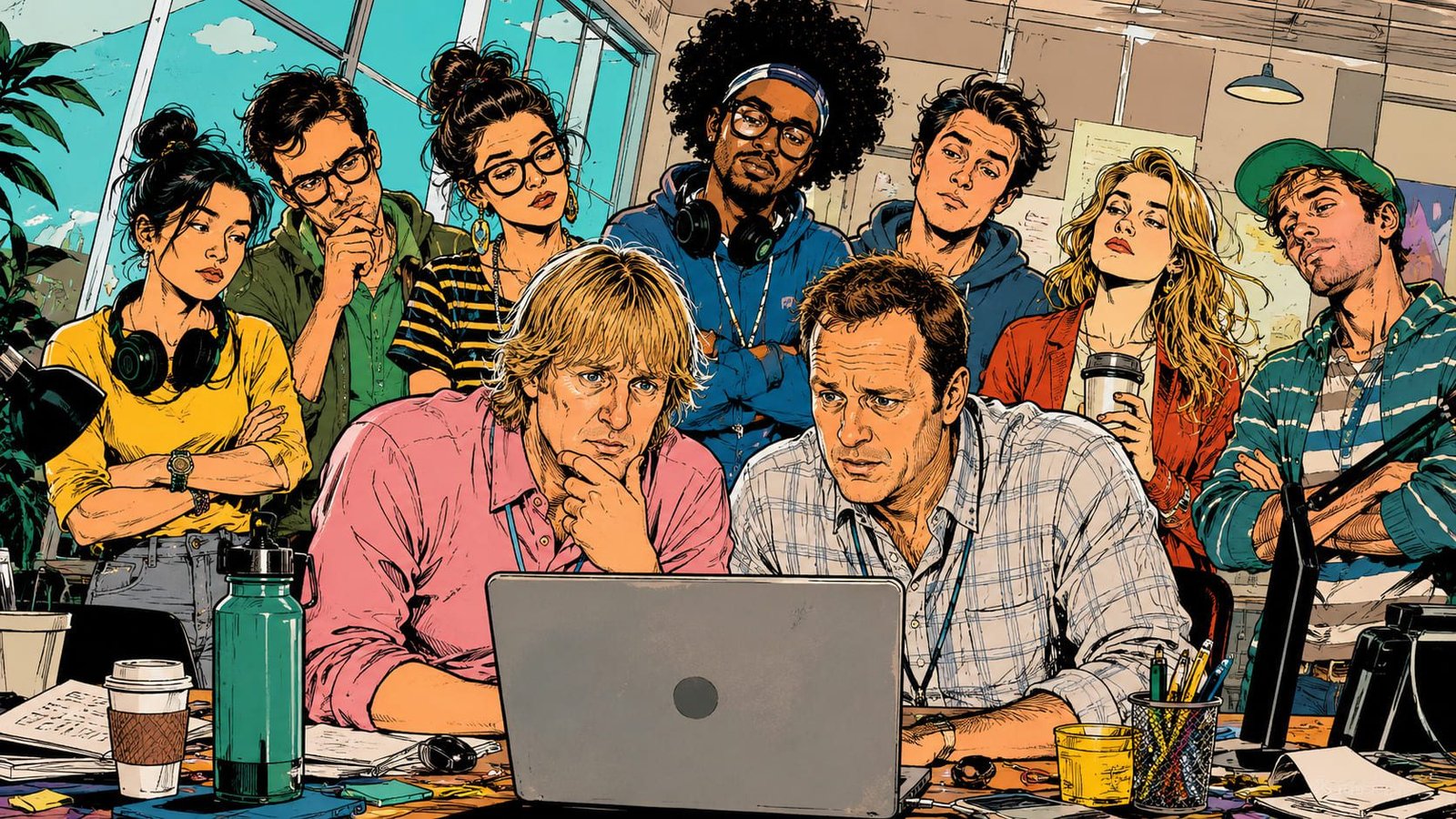
Neon bicycles leaned against glass walls while sleep-deprived programmers wandered through cafeterias stocked like futuristic amusement parks for adults afraid of silence. Giant screens pulsed with data beneath the polished optimism of California ambition. Somewhere inside that brightly colored ecosystem, two middle-aged salesmen arrived carrying obsolete instincts into a world worshipping algorithms, velocity, and youth. The Internship disguises itself as light comedy, yet beneath the jokes and chaotic interviews sits a surprisingly emotional meditation on modern irrelevance. The film understands a fear many professionals quietly carry but rarely confess aloud: the terror of becoming outdated while the world reinvents itself faster than identity can adapt. Vince Vaughn and Owen Wilson play Billy and Nick with enough warmth to transform technological disruption into something deeply human. Their struggle is not merely about getting jobs at Google. It is about preserving dignity inside a culture addicted to novelty.
Most workplace comedies reduce corporate environments into caricature. The Internship does something subtler. It presents Silicon Valley as both utopia and emotional experiment. Google’s campus appears almost absurdly generous, like a billionaire’s attempt to redesign adulthood into permanent graduate school. Free food, beanbags, nap pods, endless stimulation. Everything encourages movement while quietly discouraging stillness. The environment reflects a larger cultural shift where companies stopped merely employing people and began designing entire emotional ecosystems around them. A product manager named Serena once described tech campuses as “summer camp for people too ambitious to notice they never fully leave work.” That observation pulses quietly through the film. The colorful architecture hides a deeper question about identity in the digital age: if your value depends entirely on staying technologically relevant, what happens to the parts of yourself that cannot be optimized?
Billy and Nick enter this world carrying skills the market suddenly considers antique. Their watch-sales careers collapsed because human persuasion lost ground to e-commerce efficiency. That detail lands harder today because automation continues swallowing entire industries while executives describe disruption with the emotional warmth of weather forecasts. The film captures something many management books avoid honestly: economic transformation feels exhilarating only when it is happening to somebody else. For the displaced, reinvention often feels humiliating first. Billy’s optimism becomes both admirable and tragic because it functions like emotional survival equipment. He refuses cynicism even while standing inside a system engineered to reward younger, faster minds. A former journalist named Matteo once admitted after losing his newsroom position to digital restructuring that “the hardest part wasn’t unemployment, it was feeling culturally expired.” The Internship understands that invisible grief intimately.
The younger interns initially treat Billy and Nick like relics from another civilization. Their discomfort reflects a broader cultural obsession with speed over wisdom. Modern industries often mistake familiarity with new tools for maturity itself. Yet the film slowly dismantles that assumption. Emotional intelligence, adaptability, resilience, and interpersonal instinct remain valuable even inside hyper-technical environments. Billy’s ability to connect people emotionally begins solving problems algorithms alone cannot fix. That dynamic feels increasingly relevant as workplaces become more digitized yet emotionally fragmented. A cybersecurity analyst named Hana once confessed during a rooftop networking event in Singapore that her company employed brilliant engineers who “could code miracles but struggled to hold eye contact during lunch.” Technology scales systems elegantly. Human connection scales much slower.
There is also an underappreciated melancholy running beneath the film’s humor. Billy and Nick are not simply chasing employment. They are chasing relevance. The difference matters. Modern professional culture ties self-worth tightly to productivity and market value. Lose your role, and identity itself begins wobbling dangerously. That emotional instability explains why career transitions feel existential rather than logistical for many adults. The movie softens this reality through comedy, yet the ache remains visible beneath the surface. Billy watches younger candidates dominate technical challenges while realizing charm alone no longer guarantees survival. Nick drifts through interviews carrying the exhausted expression of someone discovering the rules changed without warning. Their anxiety feels universal precisely because technological progress moves faster than emotional adaptation.
The team competition structure becomes surprisingly philosophical once viewed carefully. Google frames collaboration as innovation theater while quietly fostering intense rivalry underneath. That contradiction defines many modern organizations. Companies preach community while incentivizing individual performance aggressively behind polished mission statements about teamwork. Billy’s group succeeds precisely because its members stop treating one another like market competitors and start functioning like emotionally invested collaborators. The movie argues something many corporate cultures struggle accepting: sustainable performance often depends more on psychological trust than raw talent density. A startup founder named Liora once watched her high-performing engineering team collapse after internal competition turned meetings emotionally toxic. “Nobody wanted to lose more than they wanted the company to win,” she admitted while stirring cold tea inside a nearly empty office kitchen at midnight. The Internship captures that organizational tension beautifully beneath its comedic surface.
The film’s portrayal of technology itself remains refreshingly nuanced. Google appears magical without becoming entirely villainous. Innovation creates possibility while simultaneously generating alienation. Smartphones connect strangers globally while isolating people emotionally inside rooms together. Search engines democratize knowledge while shortening attention spans into fractured digital impulses. Billy and Nick embody older forms of human interaction slowly disappearing beneath automation culture. They remember conversation before notification systems interrupted every silence. Their emotional warmth feels almost rebellious inside environments optimized for efficiency. The movie never fully condemns technological progress. Instead, it asks whether civilization can evolve digitally without abandoning human texture along the way.
Owen Wilson’s performance carries unexpected emotional weight because Nick gradually confronts his own passivity. Beneath the laid-back humor sits a man who stopped believing reinvention remained possible. Billy pushes forward aggressively because motion protects him from despair. Nick hesitates because failure feels emotionally final after a certain age. That distinction gives the film depth beyond its comedic packaging. Many adults quietly shrink their ambitions after repeated disappointment convinces them growth belongs primarily to younger people. The movie rejects that narrative gently but firmly. Adaptation remains painful, awkward, embarrassing even, yet still possible. Watching these men stumble through coding challenges and social disasters becomes oddly inspiring precisely because they refuse emotional surrender.
Late at night beneath glowing computer screens and endless California stars, a group of mismatched strangers sat together sharing cold pizza while algorithms quietly organized the future around them. Somewhere inside the laughter, anxiety, and exhausted optimism, something deeply human survived the machinery of acceleration. That is why The Internship lingers longer than critics often admit. The film recognizes that modern life moves so quickly many people wake up feeling left behind by systems they barely understand anymore. Yet it also whispers another possibility beneath the humor: relevance is not always about mastering the newest technology first. Sometimes it comes from remaining emotionally alive in cultures increasingly engineered to make human beings behave like software updates chasing the next version of themselves forever.
Editorial Disclaimer: Whether a film is rooted in fiction or inspired by real events, the actions, decisions, and behaviors portrayed within are not intended to be encouraged, replicated, or endorsed in real-world settings. This review exists solely to analyze the storytelling, characters, themes, and business dynamics presented in the film for educational, analytical, and entertainment purposes. Any ethical or unethical conduct depicted in the film does not reflect the views, values, or endorsements of ESYRITE.
