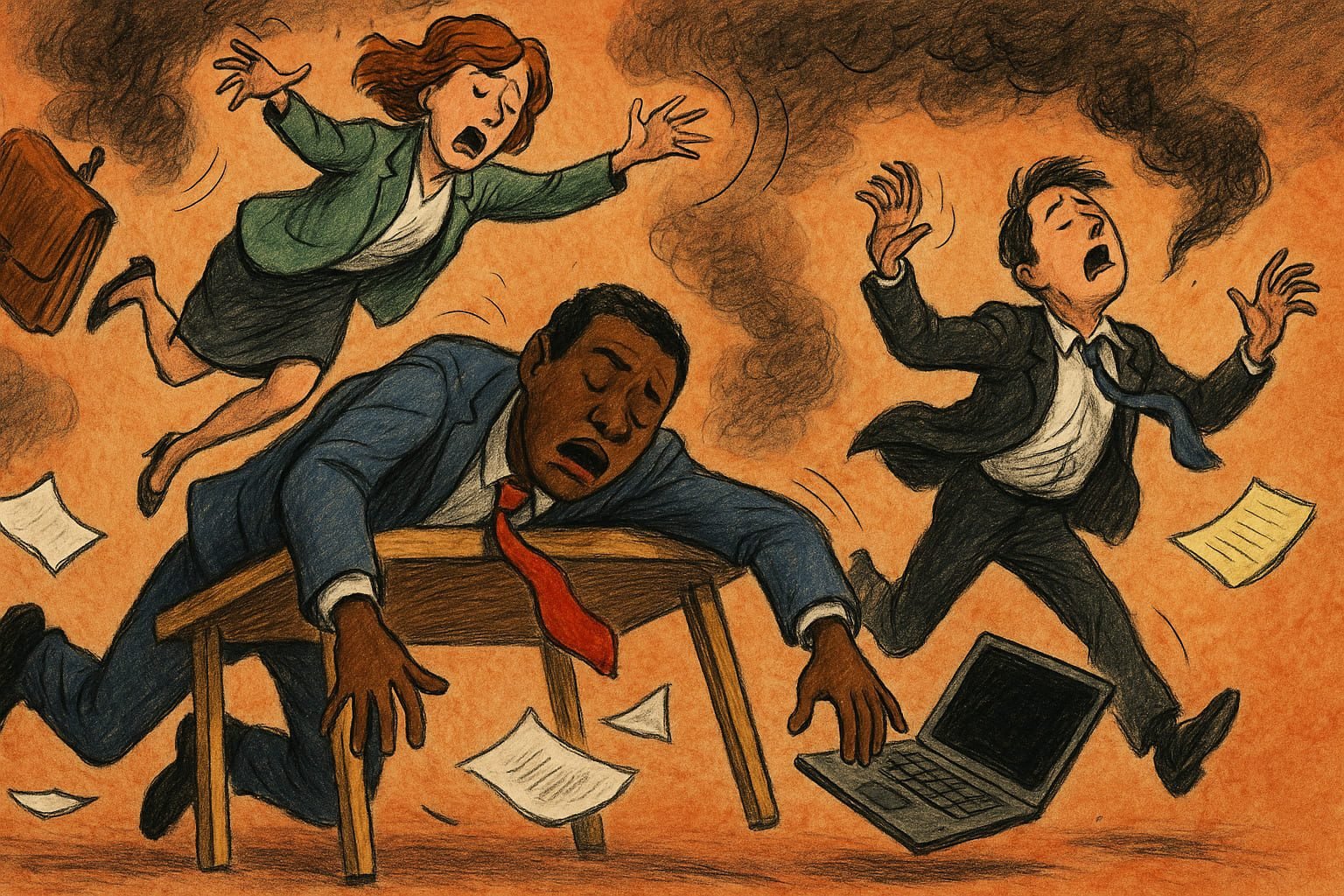
Step inside the mind of an entrepreneur and you’ll hear a thunderous symphony, pitch meetings, product pivots, relentless “hustle” worship, and sleepless nights staring at ceilings. On the outside, founders appear bulletproof, scaling peaks with LinkedIn-perfect smiles. Under the surface, though, many are unraveling. Dreams morph into dread, passion flickers into panic, and the hunger for success often mutates into exhaustion that can hollow out the spirit.
What if the greatest threat to the world’s next breakthrough isn’t a failed launch, but a founder suffering in silence? Startup culture idolizes sacrifice, but rarely stops to count the cost. We’re trained to idolize the “all-nighter” as a badge of honor, yet the toll on mind, body, and soul can be catastrophic. This piece is for every entrepreneur who’s secretly wondered, “Is it supposed to feel this hard?” or for anyone watching a loved one disappear behind a screen in pursuit of “the dream.”
Today’s article slices through the hype, exposing the burnout epidemic sweeping through the entrepreneurial world. We’ll unravel why the mental health of founders is neglected, explore real stories of struggle and survival, and argue that prioritizing wellbeing isn’t just wise; it’s the only path to true, sustainable success. Stick around, because this is the story the glossy startup podcasts won’t tell you.
Quick Notes
- Startup Success Hides an Epidemic of Exhaustion: Behind every funding headline, countless entrepreneurs battle anxiety, insomnia, and emotional collapse.
- Hustle Culture Is Hurting Founders More Than It Helps: Glorifying burnout as a “rite of passage” keeps founders trapped in a destructive cycle and shames those who need help.
- Mental Health Is the New Business Imperative: Investors, boards, and teams are waking up: sustainable businesses require healthy, resilient leaders at the helm.
- Real Founders Are Speaking Out-And Changing the Conversation: Personal stories of vulnerability, breakdown, and breakthrough are giving entrepreneurs permission to prioritize self-care.
- Redefining Success: Thriving, Not Just Surviving: The next generation of founders are building businesses and lives that put mental health at the very center of their journey.
From Fire to Ashes: The Anatomy of Entrepreneurial Burnout
Startups love stories of triumph, but there’s another narrative pulsing in the shadows. Many founders, beneath the bravado, are collapsing under pressure. Building a company isn’t just a sprint; it’s an ultramarathon over broken glass, run in the dark. Each day feels like a new mountain, yet there’s never a summit, just a horizon that recedes with every step.
Jessica, a SaaS startup founder, recalls waking up at 3 a.m., heart pounding, certain her company would implode. She hid her panic from investors, doubled her workload, and watched her relationships evaporate. It took a panic attack in her car; hands frozen to the steering wheel, tears streaming; to finally admit she needed help.
Burnout doesn’t knock politely. It creeps in quietly, camouflaged as “hard work,” then detonates without warning. Some founders spiral into depression, others lose sleep, appetite, or their sense of self. The startup graveyard is littered with brilliant minds who were never defeated by competition, but by the silent siege inside their own heads.
Maslow’s hierarchy says safety and belonging come before self-actualization. Yet many entrepreneurs invert the pyramid; sacrificing their health and relationships for “success,” hoping fulfillment will follow. In reality, the collapse is inevitable if the foundation is cracked.
Why does this happen? Because the world celebrates grit but punishes weakness. Many founders believe asking for help signals incompetence. It’s time to call that out for what it is; a dangerous myth that destroys more dreams than failure ever could.
The Toxic Currency of Hustle: How Startup Culture Fuels Collapse
Founders live in a world saturated with “hustle porn.” The message is everywhere; sleep is for losers, vacations are for the weak, and your worth is measured in missed birthdays and skipped meals. It’s a toxic brew that poisons even the most passionate dreamers.
Instagram is filled with stories of “overnight” success that took a decade of all-nighters. Podcasts glorify founders who grind until their marriages unravel. This mythology breeds a culture where working until you drop isn’t just expected; it’s demanded.
Sam, an app developer from Berlin, tried to outwork his competition. He wore stress like a trophy. One day, he blacked out on the subway and woke up in a hospital, surrounded by doctors who told him to slow down or risk permanent damage. He hid his hospital band, returned to his laptop, and pretended nothing happened.
This cycle is everywhere, from Silicon Valley to Singapore. Boards, mentors, and investors cheer for “hustle” without asking at what cost. Vulnerability is seen as weakness, not wisdom. The cycle persists because burnout is invisible; until it explodes.
The real danger? Founders teach their teams to follow suit, creating organizations built on unsustainable habits. When leaders normalize self-sacrifice, the disease spreads. The company’s DNA becomes a time bomb, waiting to detonate at the worst possible moment.
Daniel Pink’s “Drive” reminds us that motivation is rooted in autonomy, mastery, and purpose; not self-destruction. Real innovation happens when founders work smart, not just hard. The new gold standard is stamina, not sacrifice.
The Mental Health Blind Spot: Why Founders Suffer in Silence
Mental health isn’t just a personal issue; it’s a business imperative. Yet too many entrepreneurs treat it like a side quest, not the main event. The relentless grind, constant uncertainty, and emotional whiplash of building something from nothing leaves scars few are willing to show.
Ravi, who built a successful e-commerce brand, admits he couldn’t tell anyone he was struggling. Investors expected bravado, not vulnerability. Friends assumed he was living the dream. The truth was messier; panic attacks, guilt, and the crushing fear that asking for support would spook everyone around him.
Entrepreneurial burnout often hides behind excuses; “I’m just busy,” “It’ll get better after the next launch.” The stigma is compounded by isolation. Founders rarely have peers who understand their pressure, and family members can’t always relate to the chaos.
Mental health struggles don’t just hurt the founder; they can sink an entire company. Decision-making deteriorates, vision blurs, and culture erodes from the top down. Employees sense when their leader is unraveling, and the cracks start to widen.
There is hope. More investors, advisors, and ecosystem leaders are waking up to the reality that founder wellbeing is the foundation for sustainable growth. Healthy founders build healthy companies. It’s that simple; and that profound.
From Breakdown to Breakthrough: Founders Who Fought Back
There’s a growing rebellion against burnout; one led by entrepreneurs who refuse to be casualties of the hustle machine. They are telling their stories, sparking a movement where mental health isn’t shameful, but celebrated.
David, the cofounder of a fintech unicorn, hit rock bottom after two years of nonstop expansion. Anxiety left him unable to eat or sleep. After a public breakdown at a tech conference, he checked into a wellness retreat and began therapy. His transparency inspired a wave of founders to seek help and share their struggles.
Some companies are reimagining startup life from the ground up. Buffer, a remote-first SaaS company, publishes their internal mental health policy and offers coaching stipends to all staff, including founders. Their CEO, Joel Gascoigne, speaks openly about his battles with anxiety, encouraging leaders everywhere to make wellness a business strategy.
The power of storytelling can’t be overstated. When founders speak up, it makes it safe for others to do the same. Sharing a single moment of vulnerability can ripple through a whole industry, making mental health visible, urgent, and actionable.
Case study: After Arianna Huffington’s public collapse, she founded Thrive Global; a company dedicated to ending burnout culture. Her mission: Prove that you can lead, succeed, and thrive without destroying yourself. Her story is a north star for every founder on the edge.
The tide is turning. The more leaders who put mental health first, the more it becomes the norm; not the exception.
Redefining Success: Thriving Entrepreneurs Build Thriving Companies
The future of entrepreneurship belongs to those who reject burnout as a badge of honor. Tomorrow’s most influential founders will be the ones who understand that a rested, resilient mind is the greatest business asset. They are reimagining success; not as survival, but as sustainable growth and joy.
Anya, who scaled her fashion tech startup internationally, now schedules “creative sabbaticals” every quarter. She returns recharged, bursting with ideas, and credits her company’s record-breaking product launch to time spent walking in the woods, not chained to a desk.
Organizations are starting to see the upside too. Boards and VCs now look for evidence of founder self-care before writing checks. They know a founder in crisis is a risk, and a founder who prioritizes wellness is an investment in the company’s future.
Redefining success means building teams that value balance. Startups are offering therapy stipends, mandatory unplugged days, and open channels for honest conversation. They recognize that productivity follows well-being, not the other way around.
Ikigai, the Japanese concept of purpose, teaches that meaning comes from the intersection of what we love, what we’re good at, what the world needs, and what we can be paid for. Founders who live at this intersection don’t just survive: they inspire.
The true entrepreneurial revolution isn’t about apps or IPOs. It’s about building a world where passion fuels progress and mental health is the secret weapon that propels founders beyond burnout.
The New Entrepreneurial Imperative: Lead With Your Mind, Not Just Your Metrics
The myth of the invincible founder has outlived its usefulness. The next wave of great entrepreneurs won’t be those who sacrifice everything for their startups, but those who dare to protect their most precious resource; their own minds.
Startups are hard. The lows can be brutal, and the highs fleeting. But there is no glory in becoming a casualty of your own ambition. Every founder, investor, and team member must make a choice: Build a legacy of pain, or prove that the most innovative companies are built by leaders who dare to care for themselves.
Next time you see a founder glorifying sleep deprivation or sacrificing every personal boundary for growth, ask: “What story will they tell in five years?” Will it be about a rocket ship or a wreck? If you are building something world-changing, remember: your mind is your most powerful engine. Treat it with the care, respect, and love it deserves.
So, what’s your story going to be: a cautionary tale or an anthem for a healthier, brighter entrepreneurial future?