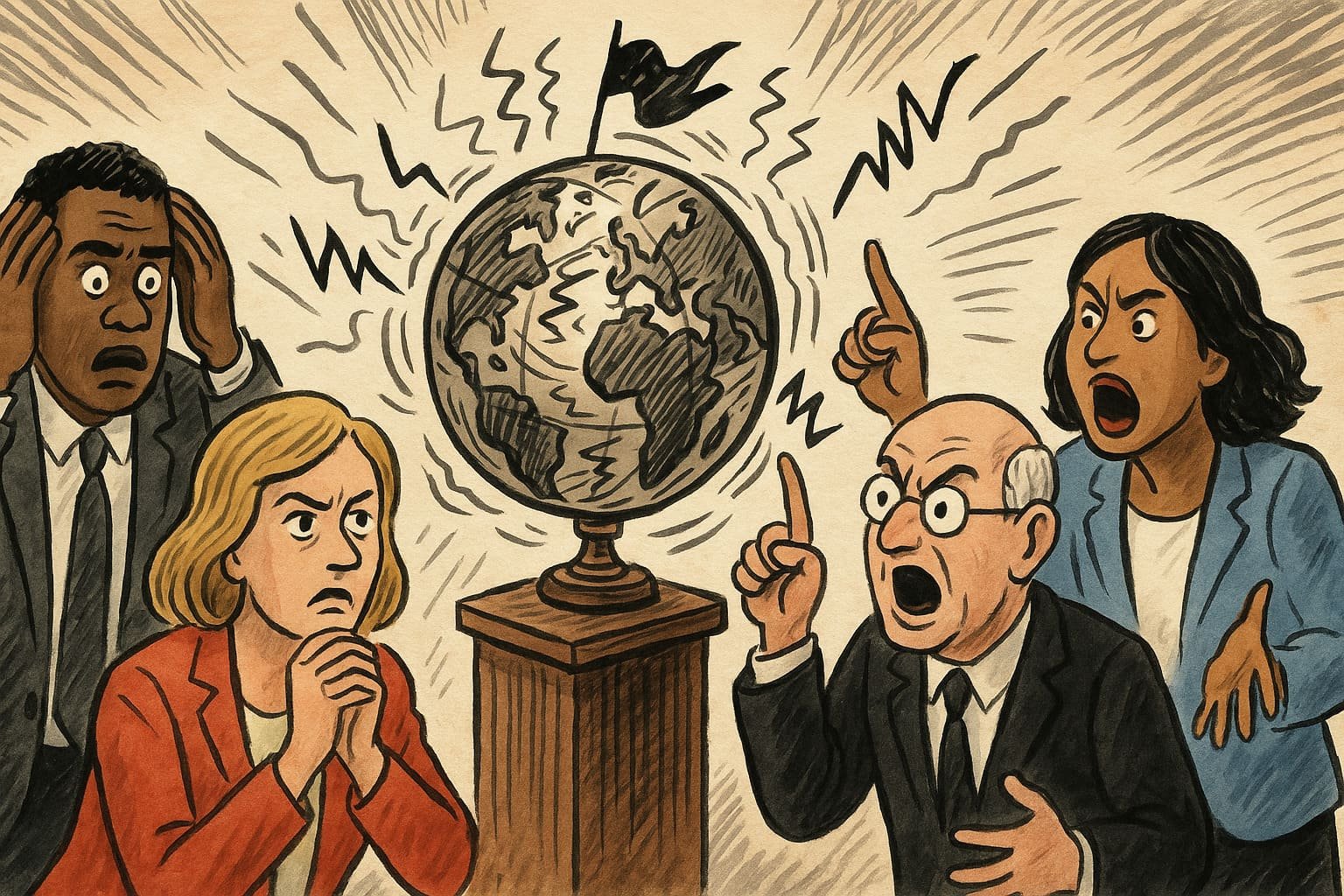
Remember when “breaking news” actually broke something new? These days, it’s more like waking up to an endless fever dream. Across the globe, political chaos has morphed from a rare headline into a daily ritual. Every morning, another government teeters, a leader tweets meltdown, or a policy U-turns so fast you feel whiplash through your phone. Is the world losing its collective mind or have we all simply grown numb to the storm?
We’re living through a moment where satire can’t keep up, comedians read the news with straight faces, and the word “normal” feels quaint as a rotary phone. Political madness isn’t just an episode; it’s the whole series. From shock elections and billionaire takeovers to viral protests toppling power overnight, this isn’t business as usual. It’s a wild new game and no one handed us the rulebook.
So what’s fueling this relentless surge of volatility? Social media mobs can make or break a leader before lunch. Misinformation sprints faster than truth. Institutions trusted for generations now seem built on sand. Every crisis feels existential, every headline feels personal, and every vote feels like a battle for the soul of something bigger. The old guard can’t control the script; the newcomers want to burn it.
This article is a whirlwind tour through today’s political madhouse. We’ll explore why the chaos erupted, how power changed hands in ways no one saw coming, and why ordinary citizens are forced to become their own watchdogs. Through case studies, personal stories, and a few uncomfortable truths, you’ll see why this “new normal” is anything but. Fasten your seatbelt: the only certainty left is uncertainty itself.
Quick Notes
- Upheaval Unleashed: Around the world, traditional political order has collapsed, replaced by unpredictability, viral outrage, and fast-moving shocks.
- Rise of Disruptors: Outsiders and rule-breakers now shape policy, fueled by digital mobs, meme culture, and billionaires who play by their own rules.
- Trust on Trial: Institutions once pillars of stability are losing public trust, creating a void for conspiracy, misinformation, and new tribal identities.
- Personal Stakes: Individuals are forced to become fact-checkers, advocates, and activists just to keep up in a reality where the ground shifts daily.
- Beyond the Chaos: Surviving and thriving requires a new playbook: emotional resilience, critical thinking, and courage to question the narrative.
When Reality Breaks: The Global Stage Turns Upside Down
Waking up in 2025 means checking if your country’s government survived the night. France’s parliament dissolved after a viral scandal erupted on TikTok. In India, a pop star’s tweet ignited street protests, ending decades of one-party dominance. Brazil’s new leader was a stand-up comic who went viral roasting elites. What used to be unthinkable is now the opening act.
Social media’s wildfire speed means a slip-up, a misquoted joke, or a doctored photo can ignite global outrage within minutes. Take the Member of Parliament who lost her seat overnight after a fake deepfake video made her the villain of a trending hashtag. Her story isn’t rare; it’s now routine. The digital mob plays judge, jury, and executioner, often before the real facts come out.
Even long-established democracies like the United States aren’t immune. Presidential campaigns now resemble influencer battles, with viral memes sometimes swaying votes more than debates or policies. The last election saw candidates dancing on TikTok, trolling rivals on Instagram, and crowd-sourcing campaign slogans from Reddit. Politics has become performance art, and the audience is global.
Dictators once felt invincible, but the madness is contagious. In Russia, hackers exposed secret deals on Telegram, triggering mass resignations. In Myanmar, protesters livestreamed their revolution, forcing military leaders to retreat into digital silence. The internet leveled the field now anyone with Wi-Fi can destabilize a regime.
Behind the mayhem are real lives upended. Families in Lebanon watched their savings evaporate as politicians bickered on TV. Venezuelan doctors fled to Colombia, escaping a health system collapsed by government gridlock. These stories remind us: every act of political madness ripples outward, reshaping destinies far beyond the halls of power.
Outsiders Take the Throne: The Age of the Disruptor
The king is dead; long live the influencer. Around the world, the old playbook is toast. Outsiders now crash the gates and rewrite the script. Take Ukraine’s Volodymyr Zelensky: a comedian who played the president on TV before voters handed him the real job. His rise wasn’t a fluke; it was a warning shot.
Today’s disruptors wield TikTok videos and Twitter (X) threads instead of manifestos. The “Joe Rogan Effect” is real: trust the podcast host, not the career politician. Brazil’s Lula comeback happened on WhatsApp, not the radio. Thailand’s youth leader crowdsourced policy on Discord, then used viral challenges to win an election. Traditional power brokers can’t keep up.
Billionaires play politics like a hobby; buying media empires, launching party start-ups, and swinging elections with a tweet. Elon Musk’s move into geopolitical commentary sent shockwaves through Europe, reminding everyone that the new kingmakers aren’t tied to borders or tradition. They answer only to attention.
Pop culture now blends with parliament. In South Korea, K-pop stans fueled a political earthquake, organizing flash mobs and online voting campaigns to oust corrupt officials. Africa’s anti-corruption movement started with a viral music video, then snowballed into mass protests and coup d’etats that toppled long-entrenched elites. Power has shifted from the backroom to the group chat.
These disruptors promise fresh answers but sometimes deliver more chaos. In Italy, an anti-establishment comedian won big but floundered in office, paralyzed by the very transparency that got him elected. In America, celebrity candidates draw crowds, but often struggle to govern. The disruptor’s gift is shaking things up; their challenge is building something lasting.
Trust in Tatters: Institutions Under Siege
Once upon a time, people believed in the system. Not anymore. Courts, parliaments, even charities—none are immune from suspicion. Scandals go viral before anyone can spin them. The World Health Organization lost trust in a matter of weeks as competing experts clashed on Twitter (X). The result? Confusion, anxiety, and a rush to alternative sources sometimes with disastrous results.
The story of Cambridge Analytica, a tiny firm that hacked elections by scraping Facebook data, turned trust into a punchline. When the dust settled, citizens around the world looked at their governments and each other with new cynicism. The age of blind faith is gone. Now, even weather reports spark conspiracy theories.
In Hungary, “fake news” laws criminalize dissent but deepen public suspicion. Citizens build encrypted chat groups, suspicious of government and media alike. In America, a new cottage industry of fact-checkers and rumor-debunkers sprung up to fill the gap. These efforts help but trust, once broken, is hard to rebuild.
Misinformation is only half the story. Institutional inertia feeds the madness. When the United Nations dragged its feet on a humanitarian crisis, a group of young volunteers organized on Telegram, delivered supplies, and embarrassed the world’s diplomats. In Australia, wildfire victims turned to local hackers when official aid stalled. Authority isn’t just questioned; it’s openly bypassed.
Case in point: When Nigeria’s government botched its pandemic response, a grassroots coalition led by a young doctor, Amara Okafor, organized their own relief. Donations poured in from around the globe. Okafor’s group succeeded where the state failed—showing that when trust vanishes, people step up. The old institutions scramble to catch up.
Everyday People in the Eye of the Storm
It’s not just leaders on the line. Citizens are forced to become their own watchdogs, researchers, and defenders. In the Philippines, a mother named Lea quit her job to investigate government corruption after her son was wrongly arrested. Her YouTube exposé went viral and led to the release of dozens of prisoners. Lea’s courage inspired thousands, turning personal pain into collective action.
The “citizen journalist” is no longer a buzzword but a lifeline. In Hong Kong, students streamed live footage of police raids, outsmarting state censors and alerting the world. In Poland, pensioners built a network to monitor election irregularities, refusing to let their democracy slide quietly away. Ordinary people now track, record, and challenge power in real time.
But there’s a toll. Anxiety and burnout soar as the information never stops. In Turkey, mental health helplines report record calls after political violence trended online. Fear seeps into daily life, pushing many to withdraw. Surviving the madness means learning when to unplug and how to reconnect.
Still, people adapt. Community groups pop up to share news, support one another, and fact-check viral claims. In Chile, a WhatsApp group for earthquake survivors became a model for civic engagement, coordinating food drives and advocating for reforms. Shared struggle creates new bonds and sometimes, real change.
Personal transformation becomes the new norm. Parents become activists. Baristas become election monitors. Retirees run grassroots campaigns. A new generation is learning by necessity to question, investigate, and when needed fight back. The world may be mad, but the crowd refuses to be passive.
Beyond the Frenzy: Finding Resilience, Meaning, and a Way Forward
Surviving political madness requires a new kind of resilience. Gone are the days when you could tune out and hope for the best. Emotional strength, digital literacy, and critical thinking are now survival skills. People need new ways to manage stress, sift facts from fiction, and find hope amid the noise.
There’s an art to thriving in chaos. In Japan, a start-up founder, Sora Tanaka, built a meditation app for activists overwhelmed by burnout. The app became a lifeline for thousands, showing that mental health is political, too. Resilience doesn’t mean retreating; it means recharging to re-enter the fight.
Education must keep pace. In Finland, schools now teach media literacy alongside math and science. Kids learn to spot fake news before they’re old enough to vote. Civic engagement becomes a habit, not a crisis response. Adults, too, sign up for “democracy bootcamps” designed to teach advocacy, negotiation, and community-building.
Meaning emerges from the madness when people unite around shared purpose. After the 2020s wave of climate protests, cities across the globe saw citizen-led “mini parliaments” set policy, from Paris to Nairobi. In Mexico, street artists became de facto spokespeople for neighborhoods ignored by city hall. Art, activism, and action converge to create hope.
The transformation isn’t just personal. Companies, too, are forced to become more transparent and agile. Start-ups now appoint “chief trust officers” to rebuild bonds with employees and the public. Political madness, it turns out, can spark innovation and even restore faith if we learn to play by new rules. The world may never “return to normal,” but that’s not the tragedy it first seemed.
Chaos Is a Gift: If You’re Ready for It
There’s a wild rumor that the world is ending. But what if, in truth, we’re just beginning again? Political madness is a storm; violent, dizzying, and impossible to ignore. Yet in the swirling wreckage of old certainties, something rare grows: a hunger for meaning, a drive to connect, and the courage to remake what’s broken.
This is the age of radical transformation, where anyone; armed with a smartphone and a sense of justice can tip the scales of power. Complacency is obsolete. Cynicism is tempting but empty. The challenge is to rise above the madness, find your footing in the swirl, and shape the future, not just fear it.
History’s greatest leaps forward have come not in moments of calm, but chaos. Think of Nelson Mandela, who found hope in a prison cell, or Greta Thunberg, who sparked a global movement from a solitary protest. Even in the wildest storms, visionaries see possibility. Today, that visionary could be you.
So here’s the dare: Embrace the madness. Become the watchdog, the advocate, the bridge-builder. Question everything, but never lose your sense of wonder. The world’s gone wild but in that wildness lies the chance to craft something better than “normal” ever was. The only thing scarier than chaos is missing your moment to change it. Will you take the leap, or just scroll by?
Partnered. Provocative. Worth Your Scroll.
This is a Promoted Post by ESYRITE—yes, it’s paid, but never filtered. Our voice stays raw, real, and razor-sharp. We team up with bold ideas, game-changers, and stories that spark something real. If it’s here, it earned its place—no fluff, just impact. We don’t just promote—we provoke. Stay sharp. Dive deeper.
