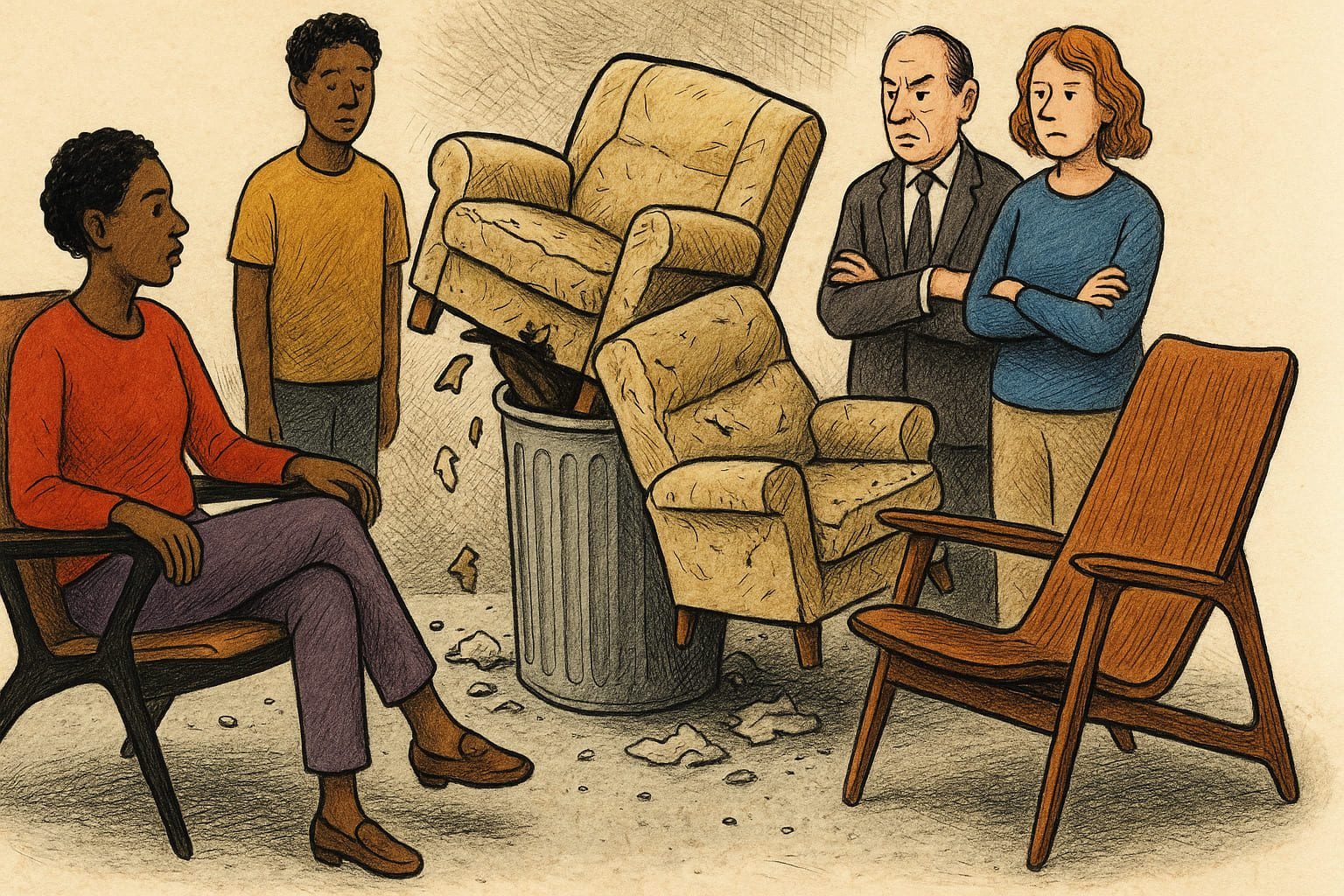
Under the glare of museum lights, a battered plastic chair sits next to a rare Eames lounge. The crowd doesn’t even look at the chair. Eyes lock on the Eames, every detail burnished by decades of silent admiration. Cameras flash, phones rise, and the auctioneer’s gavel cracks through the air. What makes one object fade, and the other become legend? In this cathedral of desire, the answer drips with irony: time has crowned the winner, and design is the only judge.
Dust clings to the unsold, disposable things. Shadows stretch across faded logos and cracked vinyl. Above it all, a single chair glows as if dipped in liquid memory. It’s not just a seat; it’s a relic of ambition, a sculpture of usefulness. People whisper stories; how that chair shaped rooms, sparked trends, survived decades. Meanwhile, yesterday’s “must-have” sits abandoned, a casualty of the quick-fix era.
Around the edge, a young designer traces the armrest of a wooden icon. Her fingers linger over nicks and grains; every imperfection a badge of survival. In this room, the difference is palpable, as sharp as the scent of old varnish and the cold tang of regret. Disposable things tell no stories. Premium design hums with history, outlasting trends and owners alike.
Somewhere near the exit, an entrepreneur in a crisp suit snaps a photo of a well-loved lamp. Its brass glimmers in a halo of light. He posts it with a caption: “Legend. Worth every penny.” People nod. They know. The crowd isn’t chasing the newest thing. They’re here for something better: proof that true value outlasts fashion, hype, even memory.
Tonight, the auction closes. The plastic chair rolls offstage, unseen. The icons find new homes and a second chance to inspire. In that final applause, a new question echoes: will what you create today still matter when you’re gone, or will it disappear before the room even empties?
Quick Notes
- Premium Endures, Disposable Dies: That chair in your grandmother’s living room is proof: design with intent lasts beyond its time. Fads fill landfills, but icons get passed down.
- Every Scratch Tells a Story: Scuffs on a leather bag or the patina on a wooden table aren’t flaws; they’re living proof that real value comes from use and memory, not price tags.
- Fast Design, Fast Regret: Instant gratification from cheap products fades quickly, leaving behind clutter, disappointment, and a sense that something is missing.
- Real Value Is Felt, Not Just Seen: Ever held a tool that fits your hand perfectly, or opened a door that swings like a secret? Those moments are why premium design changes lives.
- Legacy Outshines Novelty: Design isn’t about being the first to the market; it’s about being the last one people want to part with. In the end, only the meaningful remains.
The Cult of the Throwaway: Why Fast Isn’t Forever
Walk through any discount store and the landscape is a graveyard of plastic. Colorful bins overflow with gadgets, knockoff bags, and wobbly chairs. Each one whispers the same promise: convenience, speed, and instant happiness. There’s a rush in grabbing a bargain. Yet the truth is, these pieces are only rented from the future, fated for the landfill by next season.
When you choose the quick fix, you’re really buying silence; nothing to pass down, nothing to remember, nothing that marks a moment. Cheap design doesn’t just waste resources; it wastes meaning. Remember the craze over single-use kitchen tools or fast-fashion sneakers that fell apart in weeks? The result is a world cluttered by regret, not joy.
Consider the story of the “miracle mop” that stormed late-night TV, promising to change lives for a low price. Millions bought it. Within a year, most were trashed, replaced, or collecting dust. Contrast that with the decades-old Staub cocotte, a cast-iron pot that becomes part of family rituals. The difference isn’t just in material. It’s in intent: one is designed for survival, the other for show.
Ask any waste management worker about the saddest part of their job. The answer isn’t hazardous waste, but seeing “good as new” stuff tossed away, victims of their own disposability. When design is cheap, nothing is worth keeping, and nothing ever comes back.
Psychologists warn that disposable culture warps the way people see themselves. When everything around you is replaceable, your sense of connection and care starts to erode. Suddenly, nothing feels worth fixing. Premium design isn’t just a luxury; it’s an antidote to a world that’s forgotten what lasting love feels like.
The Alchemy of Quality: When Details Become Destiny
Every time a craftsman sharpens a chisel or a designer sketches a curve, something invisible happens. The process slows, deepens, and magic seeps in. In the world of premium design, details aren’t add-ons; they’re the main event. True artisans obsess over invisible joints, perfectly balanced hinges, or the click of a well-made clasp.
Remember when Apple’s first iPhone arrived? The tactile joy of glass and steel replaced the hollow snap of plastic. People lined up overnight, not for a feature, but for a feeling. Steve Jobs didn’t just sell a phone; he sold reverence for detail. That’s why, years later, a battered first-gen iPhone can draw gasps at auction, while cheap rivals are forgotten.
In Italy’s Umbrian hills, the Cucinelli family makes cashmere so soft it almost dissolves. Each sweater is woven in a sunlit studio where laughter and pride fill the air. Customers don’t just buy warmth; they buy a slice of human devotion. The story sticks in the weave, and you can feel it every time you put it on.
Consider the quiet power of a Montblanc pen. It’s heavy in your hand, cool to the touch, and balanced as a dancer. A cheap pen lasts a week. The Montblanc stays with you for a lifetime, even if you lose it. Its design is a vow to outlast impatience.
A detail-obsessed team at Leica still assembles cameras by hand, passing each one through dozens of checks. Photographers treasure the result not because it’s flawless, but because it feels like holding a piece of intention. When the world is built to last, you sense the difference every single day.
Scarcity, Story, and the Seduction of Timelessness
What transforms an object into an heirloom? Not price, but scarcity and the stories that grow around it. A pair of battered Red Wing boots tells more about a life than a dozen glossy pairs from the mall. Each scuff becomes a memory, each stain a testament. People crave legacy, not landfill.
Imagine the 1970s: a generation of parents invested in Danish teak, not because it was trendy, but because it would last through childhood brawls and wild parties. Decades later, their children polish the same sideboards, awed by the stories buried in the wood. This isn’t nostalgia; it’s survival. Scarcity makes you cherish, while abundance tempts you to forget.
Pop culture feeds on icons. Think of Indiana Jones’ battered fedora or Marty McFly’s DeLorean. These aren’t just props; they’re signals of meaning, scarcity, and myth. What survives is what was built for the long game, not the quick buck. In the resale market, “vintage” isn’t a look; it’s proof that value has survived chaos, change, and trend cycles.
Consider how Patagonia’s “Worn Wear” program turned used jackets into cult treasures. People send back old fleeces, trading stories about mountain peaks or heartbreaks endured. The brand repairs, not replaces, rewarding care instead of speed. Suddenly, the jacket isn’t just gear; it’s a passport to meaning.
A collector once said, “Objects worth keeping come with scars.” Scarcity and story are the real currency of value. When you buy for tomorrow, you create a future people want to remember.
The Psychology of Meaningful Possession
Not every possession is equal. Most people forget the disposable things they buy before the box hits the recycling bin. But everyone remembers the first thing they truly owned; a guitar, a fountain pen, a coat that fit like destiny. Ownership becomes an extension of self, a tiny rebellion against a world obsessed with “next.”
Ask a musician about their first real instrument. The answer is always the same: the cheap ones get left behind, the good ones become family. It’s not about price; it’s about connection. Premium design shapes the owner, not just the other way around.
Researchers at Yale call this “the endowment effect.” People value what they feel is part of their story. When design is thoughtful, people bond with objects, care for them, and fight to keep them alive. When it’s disposable, the magic dies the moment the receipt prints.
A story from a Japanese design studio: a man comes in to repair his grandfather’s watch, worn so thin the numbers have almost vanished. He tells the craftsman, “It’s part of me.” The craftsman nods. He spends weeks restoring it, refusing to swap parts unless absolutely necessary. When the watch finally ticks again, the man cries; time itself feels restored.
Meaningful design is a psychological contract. It says, “I will outlast your impatience if you care for me.” Disposable things don’t ask for your love, so they never earn it. The result is a world drowning in things, but starved for meaning.
Building a World That Remembers: The Value Revolution
Every revolution starts with a whisper, then a roar. Today, designers, brands, and rebels are staging a revolt against the throwaway age. The slow design movement, circular economies, and repair cafés aren’t just trends; they’re proof that people want their world to remember them. Longevity has become the new luxury.
Look at the rise of companies like Muji and Herman Miller, or the viral success of shoe brands promising repairs for life. Their message is radical: design is a relationship, not a fling. The longer something lasts, the more valuable it becomes; not just in money, but in memories and meaning.
Startup founder Lea Tran tells her team to design “for the grandkids.” Her company makes backpacks meant to survive every continent, every spill, every failed relationship. When a bag comes back for repair, she posts its story online. Customers become part of the legend. Disposable things can never compete.
Even cities are catching on. In Amsterdam, the “right to repair” movement rewrites the rules: fix, don’t toss. Designers get awards for inventing new ways to reuse, upcycle, or reinvent. It’s not about being old-fashioned. It’s about refusing to waste life on things that disappear.
When you create something meant to last, you invite the world to care, remember, and believe. The future belongs to the bold, the thoughtful, the slow; those who build a world that remembers.
Echoes in the Gallery of Time
Beneath the marble dome, the last light of day slips across the faces of old statues and worn leather. The curator walks among them, his steps muffled by centuries of care. In his hand, a faded photograph: a boy seated on a wooden chair, laughter caught midair. The chair is still here, unchanged by passing storms or shifting fashion. In this hush, every shadow speaks.
Somewhere, a craftsman sets down his tools, hands trembling with satisfaction. A family gathers for dinner around a scarred but sturdy table, the wood still warm from the sun. Far away, a traveler clings to a backpack, its seams tired but unbroken. Each artifact, each memory, is a silent protest against forgetting.
Nothing truly meaningful can be rushed or discarded. True value lingers in the grain of wood, the shape of light on metal, the silent resilience of what survives. The disposable world offers applause for a moment, then silence. Premium design offers a seat at the table for generations.
The greatest tragedy is not to lose things, but to forget what they meant. In this gallery of time, only the cherished remain.
You hold the power: will your life fill landfills, or will your story echo in rooms you’ll never see?
