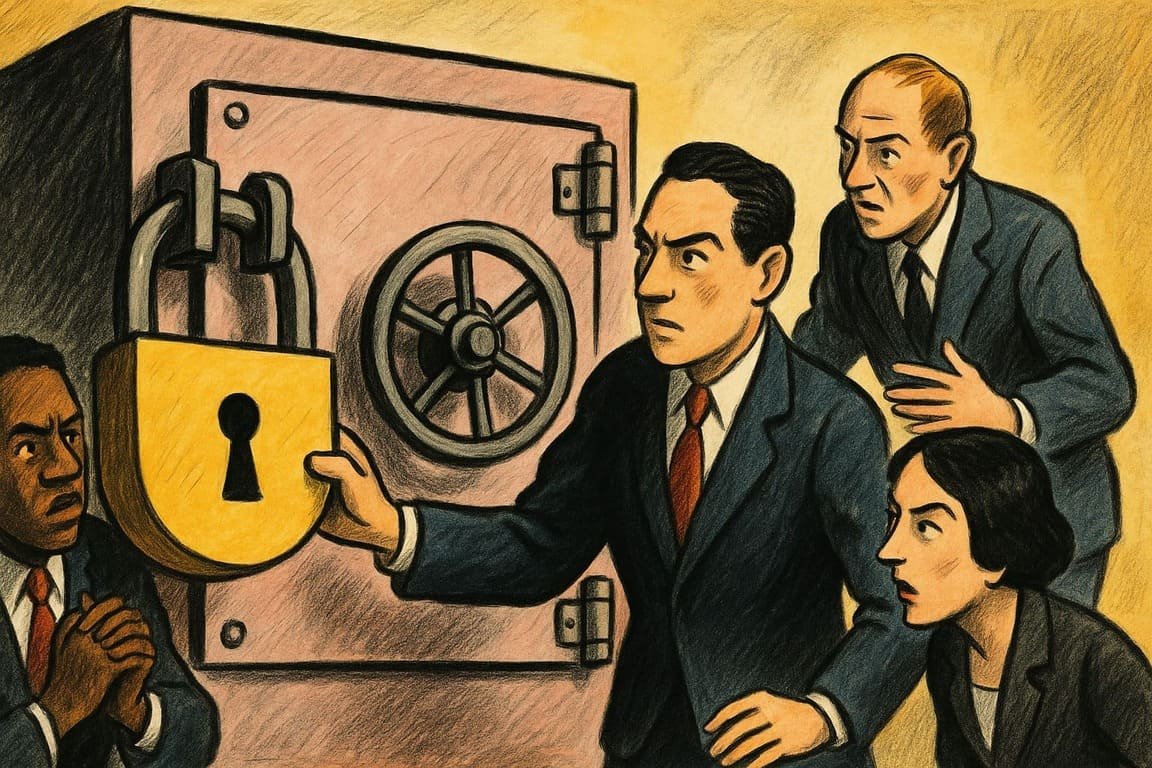
The city falls silent, yet the heartbeat of business thumps behind glowing monitors, steel doors, and passwords whispered like sacred spells. Security cameras blink red in the gloom. Somewhere inside a high-rise, a lone IT director glances at a dashboard, hunting for anomalies like a code-breaking detective searching for a saboteur at midnight. Outside, the world scrolls, swipes, and shops, unaware of the invisible forces at war for control over secrets, systems, and the stories we trust.
Under the fluorescent buzz, an exhausted finance officer sips cold coffee, anxiety rising with every alert that pings across her screen. The last cyberattack still leaves a scar, a quiet fear that never really fades. It lingers in every boardroom, every late-night security review, every nervous glance at the news after a new breach makes headlines. Most never see the true battle: the slow, silent siege where hackers move like ghosts, exploiting every gap, every shortcut, every forgotten patch.
Somewhere else, a founder clutches a phone, face pale under harsh light as they realize a single stolen password has unraveled years of work. The cost is not just lost data or stolen funds. It’s the betrayal of trust, the unraveling of reputations, the cold panic that comes from watching your dreams slip away because you believed security was someone else’s job.
Tonight, inside these offices, the only thing standing between a business and chaos is the relentless, invisible machinery of core protection. Security is not an IT checkbox. Security is a survival instinct. Those who understand its secrets do not sleep easy, but they sleep prepared.
Quick Notes
- Security Is a Team Sport: True resilience begins when everyone owns the risk, not just IT.
- Layers Stop Disasters: One password, one firewall, or one shiny tool will never be enough. Only layered, adaptive defense stands a chance.
- People Are the Weakest Link: Hackers exploit habits, fear, and curiosity. Human error is the backdoor nobody wants to admit.
- Preparedness Is Priceless: Training, backup drills, and honest reviews expose the gaps and build muscle memory for real attacks.
- Complacency Kills Faster Than Hackers: The companies that fail are always the ones that think they are already safe.
Fortress or Mirage? Why Security Demands Realism, Not Hype
Security myths seduce leaders into dangerous sleep. Vendors pitch “unbreakable” tools, promising that one platform or service can make a business untouchable. The reality is far less comforting. Every year, news breaks of giant corporations breached by simple mistakes, not supervillains. Security is not an add-on; it’s the foundation of every digital ambition.
Consider the case of Lila, a marketing director at a rising startup, who trusted a fancy security suite but ignored regular software updates. One day, a ransomware email disguised as an invoice slipped past their filters. By the time anyone noticed, client data was gone and backup systems had failed. The breach did not start with hackers in hoodies. It started with the team’s own blind spots and wishful thinking.
Protection requires more than products. It demands a culture that sees risk everywhere and reacts without delay. From the front desk to the server farm, everyone must see security as part of their job. Not once a year, not after a breach, but every day, as naturally as locking the door when you leave home.
Industry leaders like Marina Sullivan, head of security at a major logistics company, live by this mantra: “Every employee has a role in our defense. Security works best when it is invisible, automatic, and woven into our daily habits.” That mindset separates businesses that survive from those that make headlines for all the wrong reasons.
Every organization’s first line of defense is honesty about its weaknesses. Complacency breeds disaster. Vigilance, humility, and learning from every near miss will protect you far more than any slick dashboard or glowing sales pitch.
Layered Defense: Building Security That Bends, Not Breaks
No castle stands on a single wall. The modern business must rely on many shields—firewalls, access controls, multi-factor authentication, encrypted backups, and constant monitoring. Security is a process of building layers so that if one fails, others hold firm. Too many rely on hope or the myth of a “silver bullet” solution.
Dale, a project manager at a retail chain, recalls the week their point-of-sale terminals started glitching. Malicious code had crept in through a supplier’s account, slipping past simple passwords and unchecked network access. The breach never would have happened if multi-factor authentication and vendor access reviews were standard. By the time investigators traced the intrusion, losses mounted and trust evaporated.
Smart companies bake security into every step. They map critical assets, segment networks, and use regular penetration testing to catch vulnerabilities before criminals do. They treat every device as a potential risk and every new app as a possible Trojan horse.
“Layers give us time to react, contain, and fix problems before they spiral,” says Enrique Torres, CTO at an e-commerce firm known for its zero-breach record. His team practices simulated attacks monthly, learning from mistakes in a safe environment so real incidents are met with speed, not panic.
Even as threats evolve, the layered defense buys precious moments when they matter most. It is the difference between a minor scare and a public meltdown. In security, time is the only currency that matters.
Humans: The Achilles’ Heel No Firewall Can Patch
Hackers do not need to outsmart machines. They only need to outwit people. Social engineering is the art of tricking employees, vendors, or even leaders into giving up secrets, clicking poisoned links, or wiring funds to fake accounts. A single mistake can undo millions spent on technology.
Janice, an HR officer at a mid-size firm, learned this the hard way. An email arrived, supposedly from the CEO, asking for employee records. The message felt urgent, official, and believable. Janice complied, only to discover weeks later that she had handed sensitive data to criminals. No system can protect against a well-crafted con unless people are trained to spot them.
The most advanced security programs are worthless without buy-in from the people behind the screens. Training must go beyond PowerPoint slides. Simulated phishing attacks, real-world drills, and open conversations about mistakes make a difference. Leaders must reward honesty when errors happen, not shame, so lessons are learned quickly and quietly.
Pop culture, from spy movies to crime shows, loves the image of the hacker as a lone genius. The truth is much less glamorous: most breaches start with curiosity, distraction, or misplaced trust. The strongest firewall is a culture where every person feels empowered to question, challenge, and report anything suspicious.
Security is not a technology race. It is a human marathon. Those who finish strong are not the smartest, but the most vigilant.
Breach-Proof Habits: How Preparedness Saves Companies
The best security teams are obsessed with practice, not just policy. Drills and rehearsals make crisis response second nature, shrinking the gap between disaster and recovery. Businesses that win at security treat preparation as a core value, not an afterthought.
There’s a story behind every successful defense. At Westgate Medical, disaster struck during a citywide power outage. Their IT manager, Vince, had rehearsed emergency shutdowns with his staff every month. When the alarms blared and screens went dark, no one panicked. Systems shut down smoothly, backups kicked in, and not a single patient record was lost. That night, their reputation as a “fortress hospital” was born.
Preparedness is never about paranoia. It is about confidence built through practice. Recovery plans, redundant systems, and clear lines of communication mean surprises are rare and panic is short-lived. Companies that invest in drills are not betting against bad luck. They are betting on resilience.
Leaders who ignore the power of practice gamble with their company’s survival. A beautiful plan on paper means nothing if people freeze or argue during a real breach. The difference between a small scare and existential ruin is always in the hours and minutes after a crisis hits.
Security is less about secrets and more about habits. Winners rehearse until reaction is automatic, not accidental.
The Myth of “Safe Enough”: How Complacency Wrecks Giants
The gravest danger to any business is not hackers, viruses, or even rogue insiders. It is the creeping belief that “we’re probably fine.” Complacency is the breeding ground for every headline-making breach. History is packed with organizations brought down by their own pride.
Hannah, the CEO of a tech startup, once prided herself on running a “tight ship” after years without a major incident. Then came a slow, silent attack—malware lurking undetected for months, stealing customer data and eroding trust from within. The wake-up call came too late. Insurance paid some costs, but reputations, clients, and momentum were lost for good.
The companies that avoid disaster are those that question everything, especially success. They hire outside experts to audit defenses, test new threats, and challenge their own assumptions. Leaders treat every “all clear” as a chance to dig deeper, not relax.
The true cost of complacency is always invisible until it’s catastrophic. Once the breach hits, no excuse or apology can restore lost faith. Survival is a reward for those who stay hungry, curious, and never forget that the enemy is often boredom, not brilliance.
Security is a living thing. Feed it with questions, not comfort.
Fearless Vigilance Never Sleeps
A lone security guard watches monitors in a dimly lit office, the digital pulse of the company flickering across screens. Outside, the world moves on, blind to the fortress built by quiet, unrelenting vigilance. Somewhere, a founder stares out at a rain-slick street, remembering every near-miss and close call that shaped the company’s story. The true cost of protection is rarely measured in money, but in hours, sweat, and the courage to face the unknown, day after day.
Security is not the end of risk. It is the acceptance that survival demands endless watchfulness. The strongest businesses are not the ones with the most tools or the flashiest dashboards. They are the ones that choose, every morning and every midnight, to protect their people, their secrets, and their future—no matter the cost.
One question remains: Will you let comfort lull you to sleep, or will you become the sentinel your business needs most?
