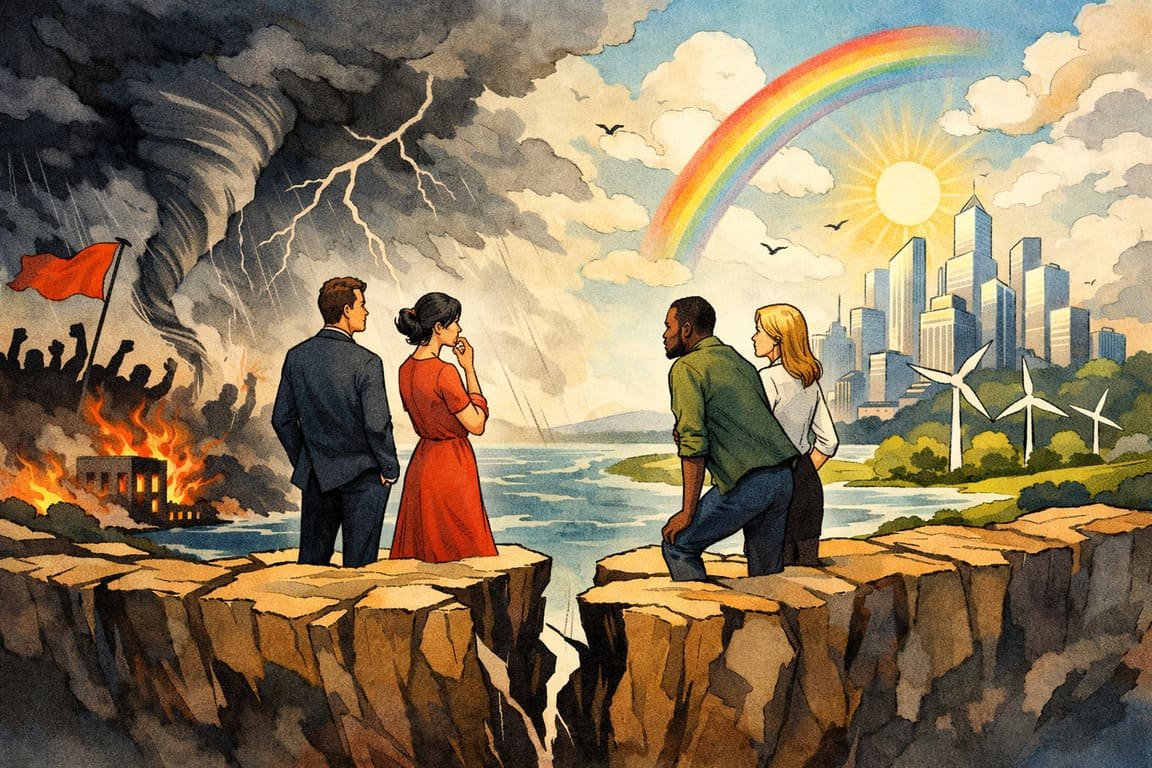
The crowd gathers before the message fully forms, a low murmur turning electric as slogans harden into belief. Faces glow with recognition, not because answers arrived, but because someone finally named the pain. Populism does not begin with ideology. It begins with exhaustion. People feel unheard, unseen, managed rather than represented. Into that silence steps a voice that sounds different, rougher, familiar. It rejects polish. It mocks restraint. It offers clarity where complexity felt like betrayal. The storm builds not from lies alone, but from truths long ignored until they curdled into fury.
Populism thrives where institutions lose credibility. Courts feel distant. Media feels patronizing. Expertise sounds self serving. Economic systems reward abstraction over effort. A factory worker once described watching executives celebrate growth while his town hollowed out. Numbers rose. Lives shrank. That disconnect fuels resentment more effectively than propaganda ever could. Populist leaders sense the fracture instinctively. They promise restoration without explaining cost. They simplify cause and blame. Complexity becomes enemy. Emotion becomes evidence.
The language matters. Populism speaks in binaries. Us and them. Real and fake. Pure and corrupt. It offers belonging through opposition. Identity hardens around grievance. Nuance weakens loyalty. A political strategist once admitted that anger converts faster than hope. It travels farther. It sticks longer. Populism understands that attention rewards outrage more than policy. Speeches resemble rallies. Governance resembles performance. Winning the moment replaces managing consequences.
Culturally, populism borrows symbols aggressively. National myths resurface stripped of context. History becomes costume. Songs, flags, and slogans reappear carrying new meanings. People feel anchored again. That emotional anchoring feels like relief. It also narrows imagination. A historian once noted that nostalgia feels safest when the present feels unmanageable. Populism sells the past as certainty, even when that past never existed for everyone equally.
Philosophically, populism challenges liberal assumptions about rational choice. It reveals that people vote with identity before interest. Dignity matters more than GDP. Recognition outweighs efficiency. Populist movements expose failures elites prefer to ignore. That exposure holds value. The danger emerges when critique becomes capture. Once in power, populists often mirror the systems they condemned, concentrating authority while claiming to dismantle it. The cycle repeats. Disillusion deepens.
Media accelerates the storm. Platforms reward emotional extremes. Simple narratives dominate feeds. Populist messages fit perfectly into compressed formats. They feel authentic because they sound unscripted. Fact checking struggles to keep pace. A journalist once described chasing claims that mutated faster than corrections could follow. Reality fragments. Truth competes with loyalty. Correction feels like betrayal. Belief becomes a team sport.
Economically, populism feeds on uneven globalization. Winners and losers diverge sharply. Urban centers thrive. Rural regions decline. Education gaps widen. Mobility stalls. Policy debates flatten these experiences into statistics. Populists translate them into stories. Often inaccurate. Always compelling. A truck driver once explained supporting a populist leader not because promises sounded realistic, but because someone finally sounded angry on his behalf. That emotional alignment outweighs feasibility.
Institutions respond poorly. Condescension replaces curiosity. Mockery replaces engagement. Populist voters feel confirmed in suspicion. The divide hardens. Dialogue collapses. A former civil servant once admitted that dismissing populist supporters as ignorant guaranteed their loyalty to populist leaders. Alienation feeds the movement more effectively than any speech. Populism grows strongest when opposition refuses to listen seriously.
Not all populism leads to catastrophe. Some movements correct genuine imbalances. They force accountability. They disrupt complacency. The problem lies in sustainability. Governing requires compromise. Populism thrives on refusal. Once compromise begins, purity fractures. Leaders double down rhetorically to preserve legitimacy. Institutions strain. Norms erode. Short term victories obscure long term damage. Democracies weaken not from collapse but from exhaustion.
History offers caution without certainty. Populist waves rise during transition periods. Industrialization. Globalization. Technological disruption. Each era produces its storms. Outcomes vary. Some societies absorb the energy constructively. Others fracture. The difference lies in whether systems adapt or entrench. Ignoring populism invites radicalization. Embracing it uncritically invites authoritarian drift. The path between demands humility few leaders practice comfortably.
Somewhere between a chant and a policy memo, a choice waits. Anger can illuminate or consume. Populism reflects pain honestly even when it lies about solutions. The storm will not pass through dismissal alone. It requires engagement grounded in respect and reform grounded in reality. The future hinges on whether societies hear the warning beneath the noise or mistake volume for truth, choosing transformation over rupture before the clouds decide for them.
