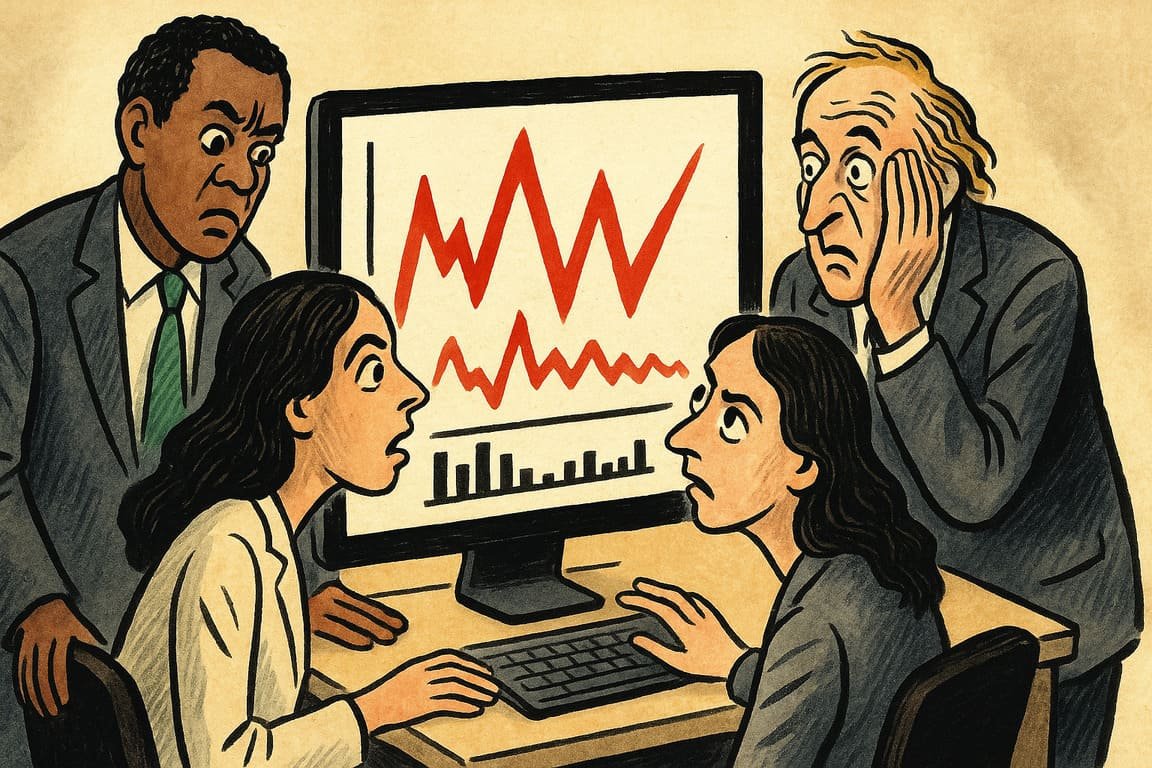
The room stays silent, except for the hum of monitors and the soft clack of a lone keyboard. Bright screens flicker in the shadows, illuminating tired eyes fixed on a wall of moving graphs. Beyond glass doors, the world rushes past in color, but here everything boils down to numbers, arrows, and tiny bursts of red or green. Inside this digital war room, one question slices through the silence: What’s really working—and what’s quietly dying?
Modern websites are digital arenas where every action, pause, or rage-quit leaves a hidden fingerprint. Each scroll, bounce, or conversion is tracked, measured, and weighed like evidence in a high-stakes trial. Every CEO craves answers but dreads the brutal honesty of metrics that never sugarcoat the truth. Behind polished headlines and dazzling visuals, cold data delivers the verdict, sometimes celebrating a silent victory, other times quietly foreshadowing disaster.
No one escapes this accountability. There’s a raw thrill in the power metrics hold—a single shift in page speed or bounce rate can upend years of careful planning. Once you see your site through the eyes of real visitors, denial collapses. Suddenly, every overlooked bug or bland image carries a cost. Even the most stubborn leader can’t argue with the numbers flashing on the dashboard at 3 a.m.
Consider the midnight panic of Arif Kamau, a founder who once scoffed at analytics. One night, watching a critical campaign tank in real-time, he realized the truth: vanity opinions fold before the cold gaze of real metrics. “I never slept again without checking the numbers,” Arif jokes now, remembering how performance insights turned his hunches upside down. Metrics became his daily oracle, offering hard-earned wisdom nobody could ignore.
Inside the dashboard, every click tells a story more honest than any elevator pitch. The only question is—are you ready for the truth?
Quick Notes
- Metrics Are the Mirror: Every click and scroll is a reflection of how real users see your brand, not how you want to be seen.
- Numbers Don’t Lie: Feelings about your website can seduce, but only hard data can reveal hidden leaks or unexpected goldmines.
- Data Drives Growth: The path to improvement starts by facing uncomfortable truths—successful sites always iterate based on insights, never assumptions.
- Human Stories in the Numbers: Behind every bounce rate or dwell time is a person making choices—treat every metric as a clue to real user behavior.
- The Best Sites Obsess Over Metrics: Continuous learning from analytics separates the winners from the rest—those who measure are those who lead.
The Myth of “Looks Good”: When Design Hides Weakness
A beautiful site catches the eye, but beauty can deceive. Many teams launch websites dripping with style, only to find silence where applause should roar. Metrics pierce the illusion—exposing friction, confusion, or disappointment that hides behind glossy banners. Pretty websites still fail if nobody clicks, shares, or buys. The metric dashboard is where design meets reality.
Every founder dreams of the perfect homepage. Most wake up to a harsh bounce rate that exposes their blind spots. Real performance isn’t about how much time or money went into design, but how quickly a visitor can find what they need. If confusion reigns, people vanish. The data will call out what nobody dares to say: the audience cares less about your color palette and more about their own journey.
The saga of Lumi Shoes, a high-fashion startup, began with a site worthy of a style magazine. Yet conversions sputtered until the team dove into analytics and realized customers struggled to check out. Their lead designer, Naomi Achieng, remembers the sinking feeling when session replays showed frustrated users stuck on one page. The fix was simple, but the lesson stung. Real performance hides in the gaps between intention and outcome.
A website’s true value lives in its metrics. Heatmaps, click paths, and drop-offs all whisper the real story. It’s tempting to ignore bad news and chase likes instead. Yet, those who listen to data build brands that last.
Design is only the opening act. Real success starts when you measure what matters—and act on what you learn.
Deceptive Comfort: Why Gut Instinct Fails in the Analytics Age
Trusting your gut in the digital world is like reading tea leaves at a stock exchange. Intuition feels powerful, but numbers always win. Assumptions breed risk, while evidence breeds growth. Metrics expose the gap between how you think people use your site and how they actually move through it. Every business leader who’s lost sleep over a confusing funnel or mysterious dip knows the pain of being blindsided by reality.
Feelings about content, features, or offers often mislead. What seems obvious in the boardroom may look like a puzzle to actual visitors. Metrics cut through ego and reveal the raw, sometimes awkward, truth. There’s comfort in being certain, but certainty is dangerous when it isn’t tested by data. Every digital team eventually learns this lesson—usually the hard way.
A famous misstep haunts the memory of EkoDigital, an ambitious SaaS firm. The founder, David Macharia, insisted on keeping a quirky explainer video at the top of their homepage. Metrics showed users were skipping it en masse and leaving without converting. “It was like a punch in the stomach,” admits David. When the team finally moved the video, engagement soared and the whole company adopted a new mantra: Measure before you brag.
Performance insight is not about removing creativity. It’s about respecting your users enough to let their actions drive your evolution. Only then do opinions give way to progress.
Gut instinct might feel heroic, but only data can save the day.
Analytics as Therapy: Turning Painful Truths into Opportunity
Metrics can sting, but they can also heal. Painful truths are better than comforting myths. When you embrace performance insight, you open the door to rapid growth and lasting relevance. Websites evolve through cycles of failure, feedback, and fearless iteration. The best teams treat analytics as therapy—not punishment—because facing facts means building better experiences for real people.
Every lost visitor, abandoned cart, or ignored offer is a chance to adapt. Patterns emerge in the data, mapping out obstacles and opportunities. Sometimes, the smallest tweak can unlock massive value. A forgotten page title or misplaced button may hold the key to double your engagement. Analytics isn’t just about cold numbers. It’s about real human behavior, often revealed in the patterns you wish you could ignore.
Mara Learning, an online course platform, struggled to retain users. By diving into session analytics, the team found their sign-up flow was too demanding for busy parents. They simplified it, added progress bars, and saw completion rates spike. The CTO, Irene Wambui, now swears by a single phrase: “The data never lies—listen and improve.” Metrics guided the turnaround, and every team member felt the thrill of seeing hard numbers reward their effort.
Performance insight requires humility. It means admitting mistakes and celebrating every lesson, not just every win. The most resilient businesses treat analytics as the fastest route to excellence.
Metrics are not punishment. They are a blueprint for your next breakthrough.
Hidden Gold: Finding Unexpected Wins in Data
Sometimes, the numbers reveal secret treasures hiding in plain sight. Metrics do more than diagnose weakness; they also spotlight your unexpected strengths. Real insight lies in discovering which content, product, or strategy quietly drives loyalty or sales. Performance data shows you where momentum lives, letting you double down where it counts. The smartest companies build growth engines by obsessing over what already works.
The trick is to treat every metric like a map, not a report card. Even a spike in a strange search term or an oddball referral source might point to your next big idea. Sites that thrive watch these signals, celebrate them, and quickly act. Your biggest opportunity is often hiding in data you nearly skipped.
Bakari & Co, a boutique travel agency, watched their analytics and discovered a surge in bookings for a little-advertised destination. Instead of chalking it up to luck, they launched a photo contest and featured customer stories. The result was a viral wave of traffic, bookings, and glowing testimonials. As the CEO, Wycliffe Bakari, put it, “We stopped chasing trends and started owning our own story.”
Data-driven growth is not just for giants. Any business, armed with the right insight, can flip the script on competitors. The only limit is how bravely you listen.
In every dashboard, a new treasure waits. Those who pay attention find gold where others see only noise.
Growth by Numbers: The Ritual of Relentless Improvement
The best websites never rest on a single win. Performance insight is a discipline, not a destination. High performers treat metrics as a daily ritual, looking for small gains and tiny losses that add up over time. Each improvement builds on the last, weaving a story of relentless growth that others struggle to match. Continuous measurement breeds cultures of learning, creativity, and ownership.
Improvement comes not from chasing every trend, but from mastering your own numbers. Knowing what works, for whom, and when, is a secret weapon in any market. Teams that gather weekly to review analytics become sharper, faster, and more competitive. They celebrate progress but never grow complacent. The process itself is a competitive advantage—one that’s impossible to fake.
Think of Chipo Tech, a digital agency that grew from a two-person outfit to a regional powerhouse. Their secret? A weekly “metrics huddle,” where every win and loss was dissected and every insight became a next step. “It kept us humble and hungry,” recalls project manager Ruth Gichuhi. Success was never accidental—it was engineered, measured, and always up for debate.
Relentless improvement is more than ambition. It’s the discipline to measure, adapt, and try again, no matter how well things are going.
Those who embrace this ritual win in the long run, every single time.
Shattered Mirrors: Where Numbers Reveal the Soul
An empty office glows in the blue after-hours, paper cups and tangled cables littering a desk beside a humming server. On the screen, a silent dashboard flickers—a constellation of graphs, green lines rising, red ones crashing, each pixel a confession. The founder lingers in the doorway, feeling the gravity of data pressing on their chest. No crowd applauds, but every metric on the screen carries a memory, a regret, a celebration, or a warning.
Metrics never sleep, never flatter, and never forgive. The honesty of numbers brings hope and humility in equal measure. There are days when the graphs feel like accusation, other days when a single spike feels like sunrise. The only way out is through—the more you face, the more you learn. In this twilight silence, the true story of a website pulses in real time, breathing with every click and every exit.
Growth and decline leave the same digital footprints. Only those brave enough to read them become architects of their own destiny. Analytics is not a prison; it’s the key to everything you dare to dream. In the quiet, you can almost hear the future whisper: trust the numbers, write a better story, never look away.
If you closed your dashboard forever, would your story end—or would you finally begin to see what your website was always trying to say?
