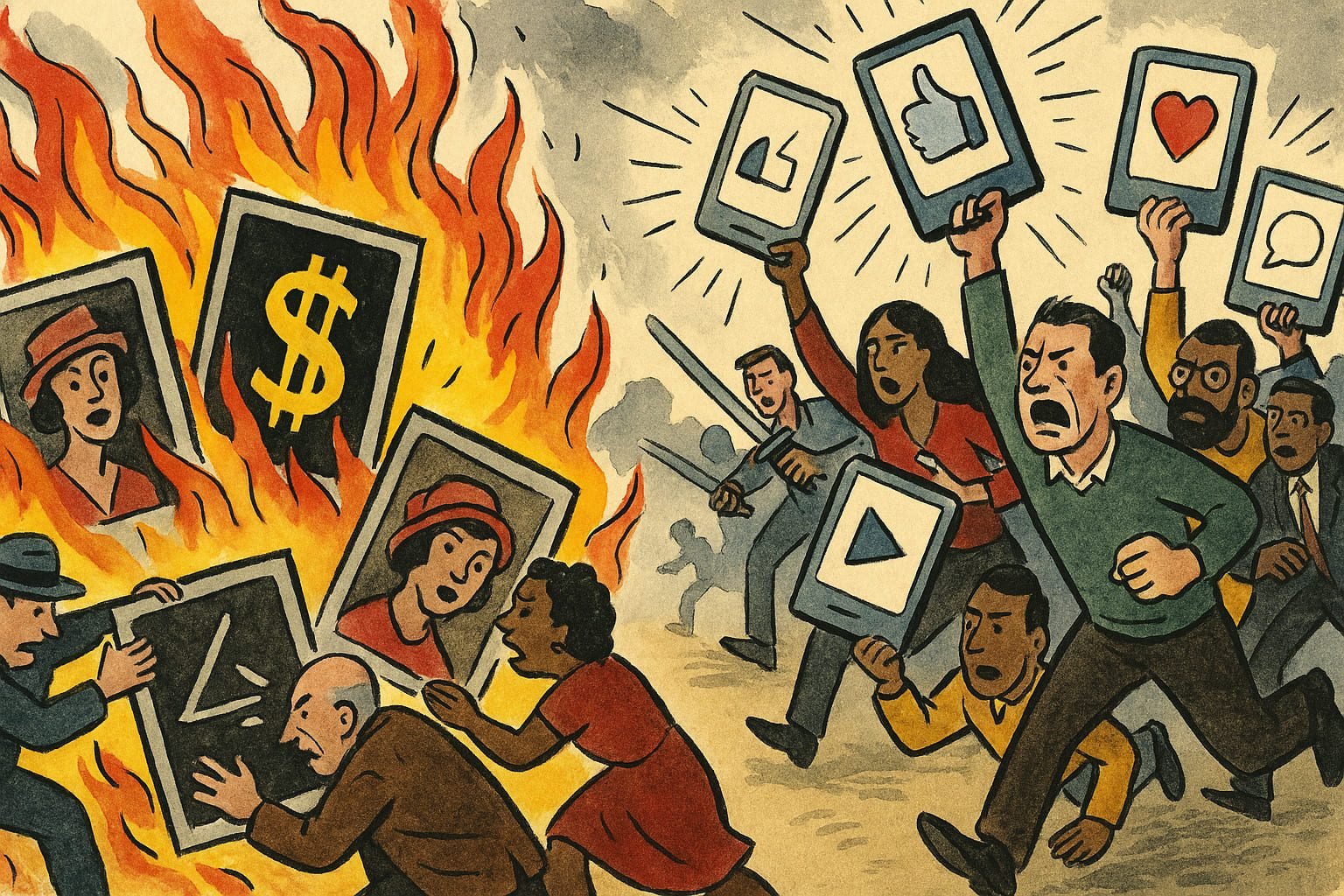
There was a time when a jingle could hijack an entire generation. One line on a billboard could sell out a product nationwide. Those were the golden days of advertising; broadcast TV, glossy magazine spreads, and full-page newspaper buys. But today, those once-mighty tools are rusting in the shadow of an unrelenting digital storm. The digital battlefield isn’t just disrupting the old playbook; it’s torching it.
Marketers are fighting for every click, scroll, and second of attention like warriors in a gladiator pit. What used to be a simple media buy is now a complex dance between algorithms, creators, and cultural moments. Traditional advertising is gasping for relevance in a landscape ruled by micro-influencers, meme warfare, and AI-generated content. If your brand still relies on a TV spot and a prayer, you’re not just behind; you’re invisible. The digital war has begun, and only the bold will survive.
Quick Notes
- Legacy Ads Are Collapsing: Traditional channels like TV and print no longer deliver the ROI they once promised. Brands must abandon nostalgia and pivot fast.
- Digital Attention Is a Bloodsport: Social feeds are warzones. Only content with emotional gravity or disruptive creativity wins the algorithmic battle.
- Influencers Wield Power, Not Agencies: Influencers are no longer just brand cheerleaders. They’re the front lines of consumer trust.
- AI and Data Rule the Frontlines: Smart data isn’t optional anymore. Predictive analytics, personalized funnels, and machine learning dictate growth.
- Brand Survival Requires Reinvention: To survive, brands must shed their old skins and embrace agility, cultural relevance, and platform-native storytelling.
Billboards to Graveyards: Where Old Ads Go to Die
The slow death of traditional advertising isn’t a quiet retirement; it’s a public execution. Print magazines have thinned out, their once-iconic pages replaced by Google Ads and Instagram reels. TV commercials are skipped, blocked, or ignored by generations raised on ad-free streaming. Even radio spots struggle to be heard over the rise of on-demand podcasts. The trust consumers once placed in big-budget campaigns has vanished like smoke.
Remember when Super Bowl ads were considered creative meccas? Today, the viral TikTok before kickoff holds more cultural cachet than a million-dollar primetime slot. Brands clinging to old channels are hemorrhaging attention they can’t afford to lose. Consumers have developed ‘ad-blindness’; a subconscious defense mechanism. If it looks like an ad, sounds like an ad, and feels like an ad, it’s ignored on sight.
Take Blockbuster. Their refusal to digitize wasn’t just a bad bet; it was a death sentence. The same fate awaits brands that romanticize their media past instead of rewriting their digital future. Kodak didn’t lose to better photography; they lost to better storytelling. And now, storytelling doesn’t happen on TV. It happens on phones, with faces, emojis, and authenticity.
The world moved from slow-burn impressions to instant dopamine hits. Old ads were long-form lectures. Digital content is punchline-driven and scroll-stopping. If your brand’s still talking, it better be doing it in memes, micro-videos, or influencer collaborations. Otherwise, it’s whispering in a hurricane.
Even nostalgia has a shelf life. The world doesn’t need another feel-good Coca-Cola commercial. It needs a creator chugging it on a Twitch stream while reacting to live chat. Old ads didn’t die of natural causes. They were executed by attention economics.
Clicks, Chaos, and Content Carnage
Welcome to the attention economy, where seconds decide winners. It’s no longer about who can shout the loudest, but who can whisper the most seductively in a sea of noise. Digital content isn’t a channel; it’s a warzone. Every scroll is a battlefield of brands, creators, memes, and moments all elbowing each other for oxygen.
Facebook posts are suffocated by Instagram reels. YouTube thumbnails bleed over into TikTok stitches. One minute you’re reading a heartfelt ad about sustainability, the next you’re tagged in a trending sound that subverts everything your brand stands for. Control? It doesn’t exist. Creators are remixing content faster than your legal team can draft a memo.
Consumers aren’t passive spectators anymore. They’re weaponized with cameras, commentary, and viral fluency. A single comment under a brand post can become a full-blown PR crisis in hours. Wendy’s Twitter (X) is a masterclass in digital roasting because silence is surrender. Brands that ignore the cultural chaos lose.
The rules have changed. Static ads are content grave markers. Today, winning means creating emotional shrapnel; short, sharp content that stings, entertains, or sparks tribalism. Campaigns aren’t just launches anymore; they’re conversational entry points. If your ad doesn’t invite participation, it invites irrelevance.
Ryanair didn’t win TikTok by being polished. It did so by being absurd, meta, and unapologetically weird. The new rule of advertising? Embrace chaos or become part of the algorithmic landfill. Don’t advertise to be remembered. Create to be reacted to.
Influence Is the New Currency of Trust
Trust isn’t bought anymore; it’s earned by creators with cracked iPhones and raw opinions. Influencers are the new ad agencies, and their studios are their bedrooms. What makes them powerful isn’t polish; it’s proximity. Audiences believe them because they seem real, flawed, and unscripted.
The rise of parasocial relationships has turned everyday people into authority figures. A fashion brand today doesn’t sell through catwalks. It sells through Instagram stories of someone who wore the dress to brunch and tagged it mid-mimosa. Credibility isn’t tied to a legacy logo. It’s tied to who consumers feel gets them.
Influencers operate like media empires. They build communities, spark movements, and weaponize relatability. When Dunkin’ collaborated with Charli D’Amelio, they weren’t just buying reach. They were buying cultural currency. The ad wasn’t the video. It was the conversation.
Brands that cling to rigid scripts and corporate filters miss the plot. The consumer journey is no longer linear. It’s tangled in a web of shared experiences, peer reviews, and aesthetic vibes. If your brand doesn’t have a human face speaking directly to its audience, it’s speaking into a void.
To thrive, marketers need to think like network producers, not advertisers. Identify voices that spark trust, not vanity metrics. Partner with creators who bleed authenticity, even if their videos aren’t perfectly lit. In the new age of marketing, imperfection sells better than perfection.
AI and the Rise of Smart Warfare
Behind every viral video and conversion spike is a machine. This isn’t about guessing anymore. It’s about knowing. AI has flipped marketing from intuition-driven to data-dominated. If your campaign doesn’t understand behavior patterns, timing windows, and psychographic profiles, it’s flying blind.
Recommendation engines shape more purchases than any billboard ever did. Email campaigns optimized by machine learning outperform generic blasts. Predictive analytics doesn’t just tell you what customers want. It tells you before they know they want it. The brands winning today are armed with algorithms, not slogans.
Spotify Wrapped is a case study in personalized magic. It’s AI-powered storytelling, turning data into emotion. That’s the secret: emotional resonance with surgical precision. Netflix thumbnails change based on your preferences, creating mini-ads just for your eyes. This isn’t the future; it’s the norm.
Marketers must stop treating AI as a tool and start treating it as a co-pilot. The ones who will win the next decade aren’t the loudest. They’re the smartest. And smart doesn’t mean robotic. It means using AI to humanize content at scale; to predict, personalize, and persuade.
Don’t fear the robots. Hire them. Train them. Use them to build strategies that evolve faster than trends. The digital war isn’t just waged with creativity. It’s executed with code.
Burn the Rulebook or Watch Your Brand Burn
There are no more templates. No more guaranteed playbooks. The only constant in the marketing world now is movement. Brands that adapt, pivot, and experiment will outpace those still waiting for their “big campaign” moment. Speed beats perfection.
Nike didn’t ask for permission when it backed Kaepernick. It took a stand, owned the conversation, and made history. That’s the new blueprint: risk, relevance, and resonance. Silence doesn’t keep brands safe. It makes them obsolete.
Culture is shifting by the second. One meme can redefine your positioning. One comment can dismantle your mission statement. If your brand isn’t built to flex, it’s built to fall. Static branding is a relic in a dynamic world.
The most resilient companies operate like content labs. They test, listen, tweak, and scale. Their value isn’t just in what they sell. It’s in how fast they adapt. Speed, empathy, and storytelling will beat media spend every time.
Ask yourself: If your brand vanished tomorrow, would anyone notice? Loyalty today is rented by relevance. To be remembered, you have to matter. Not once. But always. And that takes reinvention.
The War Isn’t Coming: It’s Here
Marketing is no longer a department. It’s a battlefield strategy. The days of Mad Men are over. We now live in the age of Mad Algorithms, Micro-Moments, and Meaning. Brands that fail to evolve will not be defeated by competitors. They’ll be forgotten by consumers.
There’s no room left for complacency. No seat at the table for the unoriginal. Every touchpoint is a test of your brand’s ability to connect, surprise, and stay relevant. Old ads didn’t just die. They were sacrificed in the name of progress.
The truth is sobering: attention isn’t owed, it’s earned daily. Your competition isn’t just another brand. It’s the infinite scroll, the creator with a better punchline, the algorithm with a new agenda. In this war, creativity is a weapon. Speed is armor. Authenticity is your only currency.
So ask yourself: is your brand fighting with yesterday’s weapons in today’s war? Or are you rewriting the playbook before it even prints?
Because in the digital age, relevance is war and only the bold survive.
