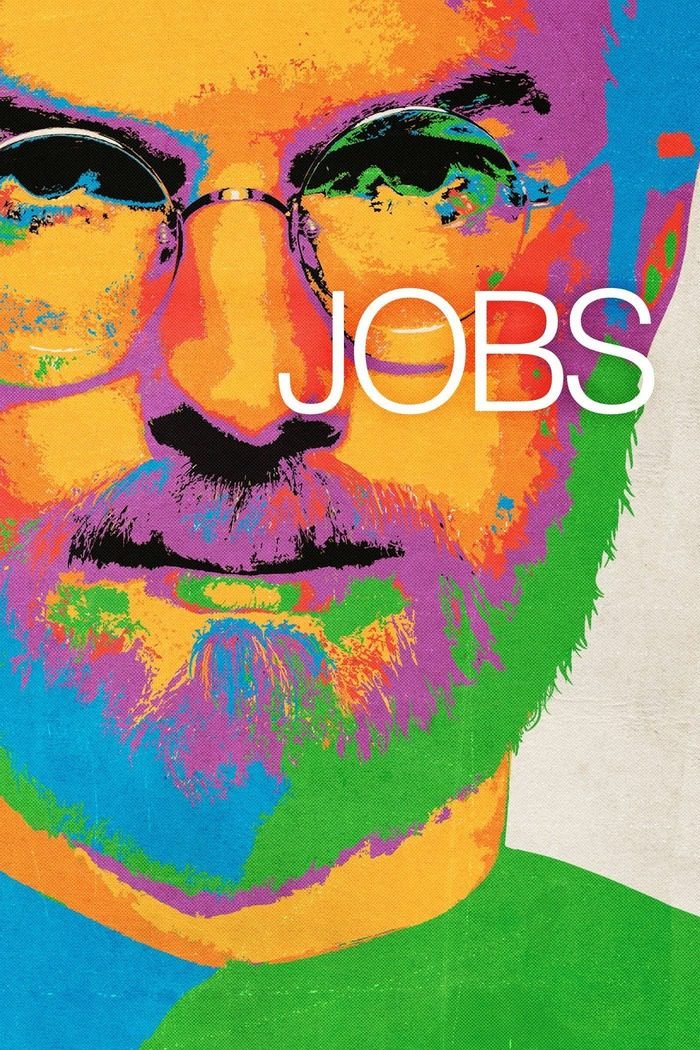
When a barefoot college dropout with a half-smirk tells his professors he’s building the future in his parents’ garage, the world rarely pays attention. That’s precisely why “Jobs” (2013) hits differently. It doesn’t just dramatize a man’s tech journey; it wires viewers into the mind of a rebel who refused mediocrity. The film isn’t just about invention; it’s about intensity, friction, obsession, and emotional turbulence; those undercurrents that power revolutions. And let’s be honest, very few revolutions started with khakis, calm meetings, and compromise.
Ashton Kutcher steps into Steve Jobs’ moccasins, not merely impersonating the Apple co-founder, but attempting to channel the spiritual static of a man who saw things in binary yet lived in messy grayscale. From psychedelic experiments in India to storming boardrooms with pitchfork precision, Jobs’ path wasn’t paved with humility; it was paved with defiance, vision, and a thousand burned bridges. And the film doesn’t try to paint him as a saint, which is what makes it so arresting.
What makes “Jobs” compelling isn’t the timeline of Apple products. It’s how it maps the emotional circuitry of a man torn between brilliance and brokenness. This biopic slices through the tech lore and shows us the power struggles, the betrayals, and that unforgettable garage where Silicon Valley’s seeds were sown. Each scene breathes with the kind of uncomfortable honesty most films shy away from.
Now, is it perfect? No. Critics often accuse it of skimming over key milestones and sugarcoating complex relationships. But the soul of the movie isn’t in chronology; it’s in capturing the paradox of Steve Jobs: visionary vs. villain, prophet vs. provocateur, icon vs. outcast. And that paradox? It’s what keeps the viewer glued to every scene.
For anyone chasing greatness or building something from nothing, “Jobs” is a flick you don’t watch casually; it’s one you feel. It prods, inspires, frustrates, and ultimately forces introspection. And if you’ve ever dreamed of bending reality to your will, this movie will either fuel your ambition or slap it with caution.
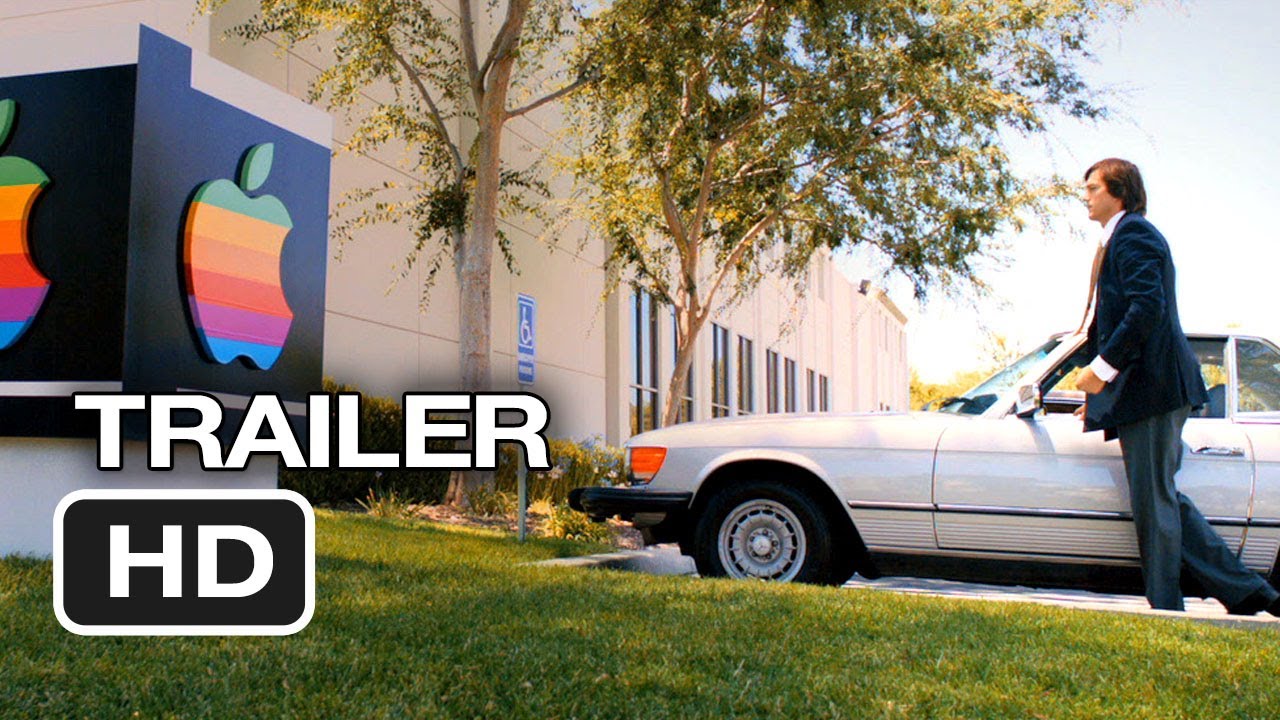
Quick Notes
- Ashton Kutcher portrays Steve Jobs with striking physical accuracy and surprising emotional depth.
- The film centers on Jobs’ journey from a garage startup to Apple’s first big successes, leaving out much of the post-1990s revival era.
- It emphasizes Jobs’ complex relationships: with Wozniak, colleagues, and Apple itself.
- While tech milestones are highlighted, emotional conflicts and leadership flaws dominate the narrative.
- The biopic focuses less on Apple’s products and more on Jobs’ personality evolution.
Behind the Screens of a Disruptive Genius
A raw, almost unfiltered look begins with Steve Jobs barefoot at Reed College, haunting lecture halls he’s no longer enrolled in, staring at calligraphy with the intensity of a monk and the aim of a sniper. The opening moments of “Jobs” don’t scream “tech mogul origin story”; they whisper rebellion. You immediately sense this isn’t a man interested in following systems. He’s obsessed with creating new ones. There’s a restlessness in Kutcher’s portrayal that’s both charming and discomforting, like watching a storm gather before the thunder.
From LSD-fueled spiritual quests in India to moonlit epiphanies on electronics, the film jumps into Jobs’ early explorations with Steve Wozniak, a humble engineering genius with the social warmth that Jobs lacked. Their garage becomes the crucible of a revolution, where awkward soldering and philosophical banter blend into the prototype for the Apple I. While Woz dreams of accessibility and joy, Jobs dreams of domination; a sharp contrast that defines their friction throughout the film.
Jobs doesn’t just push ideas; he bulldozes people. His refusal to acknowledge his daughter Lisa, his explosive temper with colleagues, and his ruthless decisions at Apple showcase a man who believes the ends justify his ego. The film doesn’t hide these flaws. Instead, it uses them as ingredients in the greater soup of innovation. You start to realize: genius alone didn’t build Apple; it was genius plus fury, obsession, and a refusal to accept anything less than perfection.
The middle arc transitions into the rise of Apple, with the Macintosh becoming the crown jewel of Jobs’ early legacy. We witness his escalating clashes with board members, especially former CEO John Sculley, who eventually orchestrates Jobs’ ousting. That boardroom showdown is chilling not just for the betrayal, but for the silent admission: brilliance doesn’t guarantee belonging. It’s corporate Darwinism, and Jobs loses temporarily.
The movie ends not in grandeur but in rebirth. After exile, a quieter, more introspective Jobs is shown preparing for his return, implying the phoenix moment that led to iMacs, iPods, and iPhones. The final scenes don’t give us victory; they give us vindication. And that emotional arc, from spark to exile to comeback, makes “Jobs” feel less like a biography and more like a Shakespearean drama coded in ones and zeros.
Key Lessons and Insights to Learn From the Movie
Invention is rarely polite. Jobs teaches us that disruption demands confrontation with norms, with doubters, and with yourself. One of the strongest takeaways is that those who create new realities often alienate the current one. Jobs’ refusal to settle for “good enough” meant he routinely clashed with team members, but it also meant the bar for innovation kept rising. Comfort never created a world-class product. Discomfort did.
Leadership is not charisma alone it’s conviction and consequence. Jobs wasn’t always liked, but he was respected, feared, and followed. He reminds us that visionaries often walk a lonely path because few see the world through the same lens. He didn’t just want people to work for him; he wanted them to believe. That’s not management. That’s movement-building.
The movie also underlines the price of personal denial. Jobs’ neglect of his daughter Lisa isn’t just a subplot; it’s a mirror into the emotional blind spots many driven people develop. You can build the most elegant machine in history, but if you can’t embrace the messiness of love and vulnerability, what’s left? “Jobs” makes you ponder whether achievement without emotional intelligence is truly worth it.
One profound insight from the film lies in the idea that excellence is iterative. The first Apple computer was crude. So were early pitch meetings. But each rejection fed the flame. Jobs didn’t retreat; he recalibrated. For creatives and entrepreneurs, the message is crystal: rejection is fuel. Use it.
The movie paints a compelling case for intuition in business. Jobs trusted gut over data, aesthetics over analysis. He believed that what people don’t yet know they need can still be created for them. That instinct, while risky, birthed the user-friendly design ethos that made Apple a religion, not just a brand. And that’s a lesson worth meditating on in every boardroom today.
The Fruit Behind the Bite
“Jobs” doesn’t hand you a neat narrative tied with a bow. It delivers a character study more jagged than polished, more emotionally charged than tech-laden. You won’t find a tidy summary of product launches or market share charts. Instead, you get tension, grit, and the haunted beauty of a man consumed by what he believed the future should look like. It’s messy, and that’s precisely what makes it memorable.
This film doesn’t ask you to love Steve Jobs. It dares you to understand him. You may admire his conviction and recoil at his cruelty in the same breath. That’s the power of the story: it doesn’t sanitize him into a motivational meme. It preserves his contradictions. It doesn’t say, “Be like Steve.” It asks, “Are you willing to sacrifice like Steve?” That question lingers long after the credits roll.
In a business world often obsessed with scaling, “Jobs” reminds us that depth matters more than size. While others sought faster processors or cheaper products, Jobs sought elegance, precision, and legacy. That ethos; unpopular, uncompromising & unrelenting redefined how the world interacts with technology. And it came at a cost.
For dreamers, founders, and renegades, “Jobs” is more than a movie. It’s a jolt. A cinematic espresso shot for your ambition. You might not walk away wanting to be Steve Jobs, but you’ll definitely rethink how you pursue your own big ideas. What are you building? Who are you building it with? And what are you willing to let go of in the process?
And maybe, just maybe, you’ll look at your smartphone, laptop, or tablet and realize: this wasn’t born in a boardroom. It was born in a garage; through rage, obsession, vision, and a man who wouldn’t take “no” for an answer.
Disclaimer
It’s also critical to remember that whether the Movie is either a work of fiction or a real-life depiction, it must be emphasized that the actions depicted within are not encouraged in reality and shouldn’t be imitated. The review aims to analyze the storytelling, characters, and business decisions portrayed in the Movie solely for educational and entertainment purposes. Any ethical & unethical practices highlighted in the Movie are not endorsed by the Esyrite publication.
Why scroll… When you can rocket into Adventure?
Ready to ditch the boring side of Life? Blast off with ESYRITE, a Premier Management Journal & Professional Services Haus—where every click is an adventure and every experience is enchanting. The ESYRITE Journal fuels your curiosity to another dimension. Need life upgrades? ESYRITE Services are basically superpowers in disguise. Crave epic sagas? ESYRITE Stories are so wild, your grandkids will meme them. Want star power? ESYRITE Promoted turns your brand cosmic among the stars. Tired of surface-level noise? ESYRITE Insights delivers mind-bending ideas, and galactic-level clarity straight to your inbox. Cruise the galaxy with the ESYRITE Store —a treasure chest for interstellar dreamers. Join now and let curiosity guide your course.
