A crowd gathers at the city’s grandest plaza, every face reflecting the mosaic of a global metropolis. Among them, a child traces patterns on a tablet, a grandmother adjusts her reading glasses to scan directions, and a tourist laughs as her phone translates street signs in real time. It’s more than convenience—it’s connection. This is inclusive UX in the wild, quietly turning strangers into loyal fans. Each interface feels like a gentle invitation: Come as you are. Stay as long as you like. When digital worlds open their arms wide, brands don’t just attract visitors; they build communities that last.
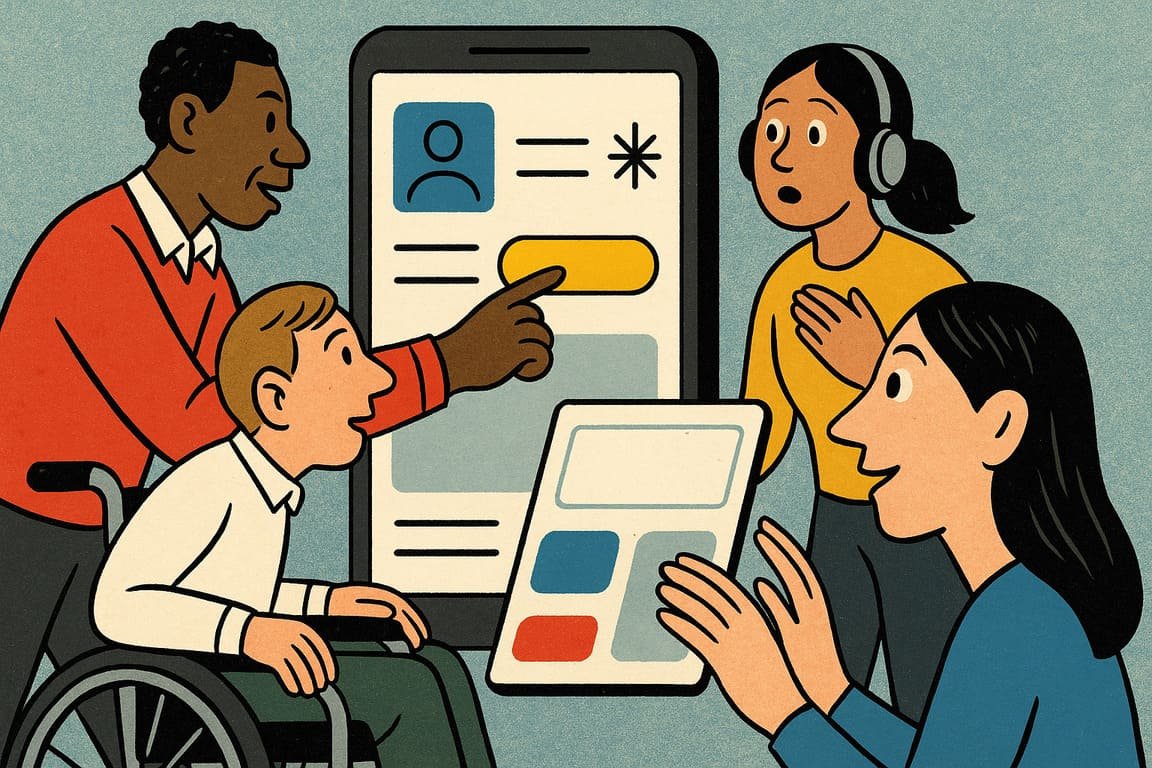
In a glass-towered startup, a product manager named Tariq hosts a usability test like no other. Participants speak five languages, some use wheelchairs, and one is colorblind. The team watches as barriers appear—tiny, frustrating, invisible until lived. Buttons blend into backgrounds, text shrinks to unreadable whispers, navigation hides itself from screen readers. Yet with every struggle, new ideas bloom. By lunch, the site’s contrast is higher, labels grow clearer, and a voice assistant guides every journey. That afternoon, Tariq’s team launches an update. Positive feedback pours in from around the globe. The product isn’t just better; it belongs to everyone.
The business impact is undeniable. A pizza chain in Toronto rolls out an app with visual menus, text-to-speech, and simplified checkout for those with learning disabilities. Sales surge, yes—but so does brand love. Stories flood in from families, new immigrants, and seniors, grateful for the dignity of being included. The brand’s Instagram fills with photos of grandparents ordering side by side with grandkids, the pizza box a symbol of belonging. Inclusion, once considered extra effort, becomes the smartest investment.
You feel this magic every time a product “just works” for you and everyone you care about. Maybe your left-handed friend raves about a note-taking app that respects her swipe. Or your colorblind cousin finally joins the gaming group, thanks to adjustable settings and custom icons. Each act of inclusion removes friction, lowers stress, and triggers delight. Brands that obsess over accessibility aren’t just checking a box—they’re building invisible bridges.
The science behind inclusive UX is rich and growing. Researchers show that accessible interfaces increase retention, referrals, and positive sentiment. Microsoft’s Inclusive Design framework is famous for stating, “Solve for one, extend to many.” When a banking app added high-contrast text for seniors, young users on sunlit trains reported a better experience, too. Inclusive UX multiplies value at every turn.
Fictional founder Ayana Mburu, who built her language app after struggling to learn Spanish as an adult, tells her team, “Our real competition isn’t other apps—it’s the fear of being left out.” Her engineers design with empathy, testing on slow connections, adding voice guidance, and supporting rare dialects. Reviews explode with gratitude from users who finally feel seen. The lesson is sharp: If you want loyalty, start with listening.
Case studies surface everywhere. A rideshare startup nearly collapsed after drivers with limited English dropped out, frustrated by confusing icons. The new team brought in translators, expanded voice prompts, and used plain visuals. Within months, driver retention jumped, and riders reported fewer missed pickups. Inclusion made the platform stronger, safer, and more profitable. Brands that forget this end up paying for it in lost users, legal headaches, and negative press.
Every theoretical framework in UX, from the Web Content Accessibility Guidelines to Universal Design, preaches the same gospel: design for the margins, and everyone benefits. Yet the real transformation comes from stories—when someone’s world expands thanks to a feature you almost didn’t build. That’s the power of inclusive UX: It turns technology into a stage for real, human triumph.
Designers who practice inclusion find themselves growing, too. They become better listeners, braver experimenters, and more creative problem-solvers. Inclusive UX is not charity; it’s an engine for invention. It pushes teams to see what they missed, challenge assumptions, and imagine new futures.
As the digital world grows louder and more crowded, brands face a choice: shout louder, or listen deeper. The companies that open their platforms to all voices, all abilities, all backgrounds discover a fierce kind of loyalty. Their users become advocates, their stories spread, and their products stand the test of time.
The world’s most admired brands—Apple, Nike, Google—have all faced setbacks in accessibility, and each time, the pivot to inclusion sparked innovation. Their journeys prove that the future belongs to those who welcome every user, not just the easiest ones to reach.
Inclusion isn’t a feature. It’s a philosophy. It’s the heartbeat behind every magical experience, every moment of delight, every lifelong customer. Brands that embrace inclusive UX won’t just survive—they’ll thrive in ways competitors can only envy.
A city’s heartbeat pulses through an open park gate, inviting everyone inside—athletes, elders, dreamers, skeptics. In a quiet corner, a developer watches as a mother and son explore a new app together, each discovery drawing laughter and confidence. The world outside may be busy and sharp, but inside this experience, everyone is welcome.
Far from the crowd, a brand strategist whispers, “Our job is to keep the door open.” The message spreads. Inclusive UX is more than a strategy—it’s the reason people stay, celebrate, and tell others to come see for themselves.
Your next click could change someone’s world. Are you building walls, or opening doors?
