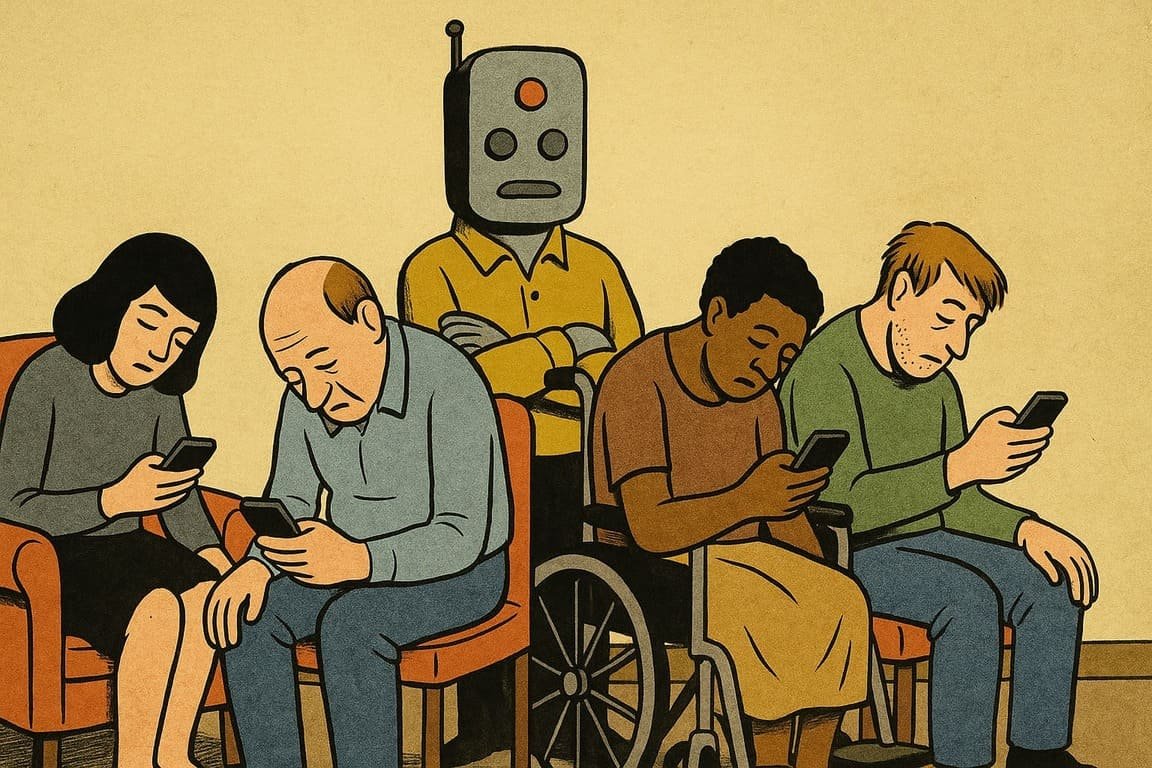
Rain taps against the glass as a city wakes, but the morning feels slower than it should. Traffic lights blink in perfect sync, guided by unseen servers, while apartment dwellers murmur requests to digital assistants without lifting a finger. In a silent kitchen, coffee brews at a schedule programmed months ago. A child’s shoes, ordered by one-click, arrive on the doorstep without a single conversation. A grandmother, her memories clouded, asks her tablet for the weather, for recipes, for company.
The world is wrapped in velvet ease, each friction ironed out by code, but something vital has dimmed. In sleek offices, rows of analysts watch dashboards automate decisions that once demanded skill, judgment, and grit. The elevator hums upward, doors sliding open with practiced anticipation. Nobody notices the slackening in their muscles, the fading urge to improvise. Outside, the rain falls harder, but most never feel it—they’re inside, protected by convenience that quietly smothers struggle, and with it, a piece of the human spark.
This isn’t a dystopia—it’s the gentle unraveling of effort, risk, and self-reliance. A generation that dreamed of flying cars wakes to find their greatest risk is a Wi-Fi outage. The cost of comfort is hard to see, harder to fight. Yet in the hush of seamless living, a question lurks: what happens to a society that outsources all of its discomfort? What becomes of the people who never need to try?
Quick Notes
- Ease Erodes Resilience: Every problem solved by tech chips away at the skills and toughness that once defined human growth. Today’s comfort seeds tomorrow’s weakness.
- Convenience Is Addictive: People crave more shortcuts—apps, devices, instant help—but become dependent on tools that make them softer, not stronger.
- Personal Agency Withers: When systems anticipate every need, initiative and problem-solving fade. The result: a passive, less capable population.
- Relationships Degrade: Convenience strips meaning from interactions. Automated services replace empathy and shared struggle with scripted transactions.
- True Growth Demands Discomfort: Only by embracing friction, challenge, and even boredom can individuals and organizations rebuild what silent convenience has taken away.
The Price of Effortless Living
Modern life rewards efficiency above all else. You can summon dinner, book a ride, or set your thermostat without leaving the couch. These luxuries save time, but something precious is traded in the bargain. Skills once taken for granted—navigating cities, cooking from scratch, fixing what’s broken—slowly slip away. The path of least resistance becomes a slide toward dependence.
This softening happens quietly, invisibly. When a downtown restaurant replaced servers with tablets, customers enjoyed shorter waits and seamless ordering. A year later, the staff who once solved crises on the fly found their confidence eroding, replaced by anxiety about glitches and updates. In cities worldwide, taxi drivers now follow navigation apps instead of instincts, losing the subtle art of reading traffic and reading people.
As machines absorb difficulty, humans avoid it. College students rely on “study” apps that spoon-feed solutions, bypassing the messy process of working through failure. Job seekers, guided by resume bots, abandon the networking and negotiation that once shaped careers. “We used to build resilience by facing setbacks,” says Dr. Lena Choi, a psychologist in Toronto. “Now we outsource struggle to software.”
But the convenience tax doesn’t show up on receipts. It accumulates in the background, dulling edge and initiative. The first loss is subtle: a little less curiosity, a little more hesitation when things don’t go according to plan. Over time, a generation learns to let the world happen to them, rather than making things happen.
Convenience is seductive because it hides its own cost. Each new shortcut feels like progress, until the tally of lost skill and lost will finally becomes impossible to ignore.
Dependency as Destiny
Every digital innovation comes with strings attached. You’re promised freedom from drudgery, but end up tethered to routines and reminders set by others. Smart homes, wearables, and cloud services promise control but train you to follow prompts and notifications. This constant feedback makes you feel busy, but quietly conditions you to wait for the next instruction. Dependence becomes habit.
Consider Amira, a project manager who used a workflow app to manage her team. At first, productivity soared as the system handled scheduling and delegation. Within months, junior staff waited for app alerts before making decisions, while Amira lost her knack for spontaneous problem-solving. “The tools made us efficient,” she says, “but we stopped thinking for ourselves.”
Tech companies design for dependency. Notification streaks, auto-renewals, and gamified check-ins transform convenience into compulsion. A recent viral story involved a gym-goer who realized she only exercised if her fitness band buzzed with encouragement. When the battery died, so did her motivation. The device didn’t build her discipline—it borrowed it.
The workplace isn’t immune. Automated hiring, algorithmic performance reviews, and templated feedback reduce human interaction to data points. Employees struggle to adapt when real conversations are required. Leaders lose their edge, delegating even the difficult work of firing or mentoring to scripts and surveys. The very systems meant to free people end up binding them to new, softer chains.
If you outsource challenge, you outsource growth. Comfort becomes constraint when it lulls you into passivity. Only by stepping outside the loop—by choosing difficulty over ease—can you rediscover what it means to be capable.
The Fade of Agency and Grit
Agency is the muscle built from solving problems nobody else can fix. As more of life becomes automated, you risk letting those muscles atrophy. It’s easy to confuse following instructions for taking initiative. After all, the path is always clearly marked—just swipe, click, or say “Okay, Google.” The cost? The ability to handle chaos when scripts fail.
Nate, a customer service rep, prided himself on defusing tough situations. When his company adopted AI-driven chatbots, complaints dropped at first. But over time, Nate and his colleagues forgot how to improvise. When a system crash forced everyone to handle angry clients by phone, panic set in. The “soft skills” had become softer than anyone realized.
Kids are growing up inside this feedback loop. Smart classrooms, digital tutors, and instant grading promise individualized learning, but too often erase the struggle of figuring things out the hard way. Teachers report students panicking when Wi-Fi drops, unable to proceed without step-by-step prompts. “Self-starting is a lost art,” says veteran educator Paul Mensah. “We’re raising button-pushers, not problem solvers.”
The result is subtle, yet profound. Organizations hire for adaptability, but cultivate obedience. People talk about “empowering” users, but rarely trust them to fail. Each layer of convenience dulls the appetite for risk and experimentation. Grit becomes a marketing slogan, not a lived virtue.
The final irony: the safer life becomes, the less safe people feel. When every task is guided and guarded, even minor setbacks feel catastrophic. Only by stepping outside the comfort zone can individuals and organizations regain lost resilience.
The Hollowing Out of Human Connection
The march of convenience hasn’t just softened skills—it has eroded relationships. Shared struggle, once the glue of family, teams, and community, gets replaced by transactional, scripted interactions. Order groceries by app, stream holiday gatherings, tap to “send thoughts”—every frictionless act chips away at real connection.
Take Maya and Isaac, a couple who managed their household with smart speakers and subscription boxes. When the pandemic hit, they realized they barely talked about meals, chores, or plans—the systems handled everything. “We lived in the same house, but on autopilot,” Maya confessed to a friend. Their lives ran smoothly, but the intimacy faded.
Businesses notice the shift. Retailers, banks, and clinics replaced front-line staff with kiosks and chatbots, saving money but losing the subtlety and empathy that only humans bring. When a customer’s problem didn’t fit the script, frustration boiled over. A viral video of a grandmother yelling at a pharmacy robot became a symbol of everything lost to automation.
Friendships, too, take the hit. Apps nudge people to remember birthdays, but few make the call. Messaging replaces conversation; likes stand in for affection. A student named Eric described feeling “connected but lonely” after realizing all his friendships were sustained by reminders, not real effort.
Convenience, it turns out, makes relationships easier—but shallower. Only shared effort and discomfort can forge true bonds. When everything is easy, little truly matters.
Choosing Growth Over Ease
Reclaiming strength, agency, and meaning demands a new mindset. You must seek out friction, not flee from it. Leaders who buck the convenience trend—who challenge teams to solve real problems, who ask children to invent rather than just consume, who unplug when the going gets tough—build resilience the hard way.
A Boston startup, Upward, banned Slack for a month and forced employees to organize projects in person. Productivity dipped at first, then rebounded with stronger collaboration and deeper trust. “We wanted people to talk, argue, even disagree,” said founder Alex Wu. “That’s where growth lives.”
For individuals, the path is the same. Turn off reminders, let yourself forget, and struggle through a recipe or a route. Embrace boredom, frustration, and trial. Each inconvenience is an opportunity to rebuild grit. Schools that assign open-ended projects, workplaces that celebrate creative failure, families that embrace chores and hand-written notes—all foster the skills and toughness that automation erodes.
Society can push back, too. Cities that support local repair shops, encourage citizen problem-solving, and build public spaces for unstructured play plant the seeds of renewal. Policy makers who value resilience over efficiency can spark a movement of reclaimed agency.
The path to strength is never easy. But only by embracing difficulty can you recover what silent convenience has taken. The future belongs not to the most comfortable, but to those who are willing to get uncomfortable—and grow.
Velvet Chains: The Cost of Comfort
The rain continues, painting city windows with streaks of light. Inside, a young child tries tying her shoes, fumbling, then smiling at the small victory. In another room, an elderly woman switches off her tablet, choosing a puzzle that reminds her of childhood. The world, so soft and seamless, waits outside—but tonight, its comfort holds no sway. Somewhere, a forgotten ambition stirs, hungry for a fight.
In a world bent on making everything easy, you face a quiet dare: will you let convenience hollow you out, or will you choose the harder path and rediscover your own strength?
