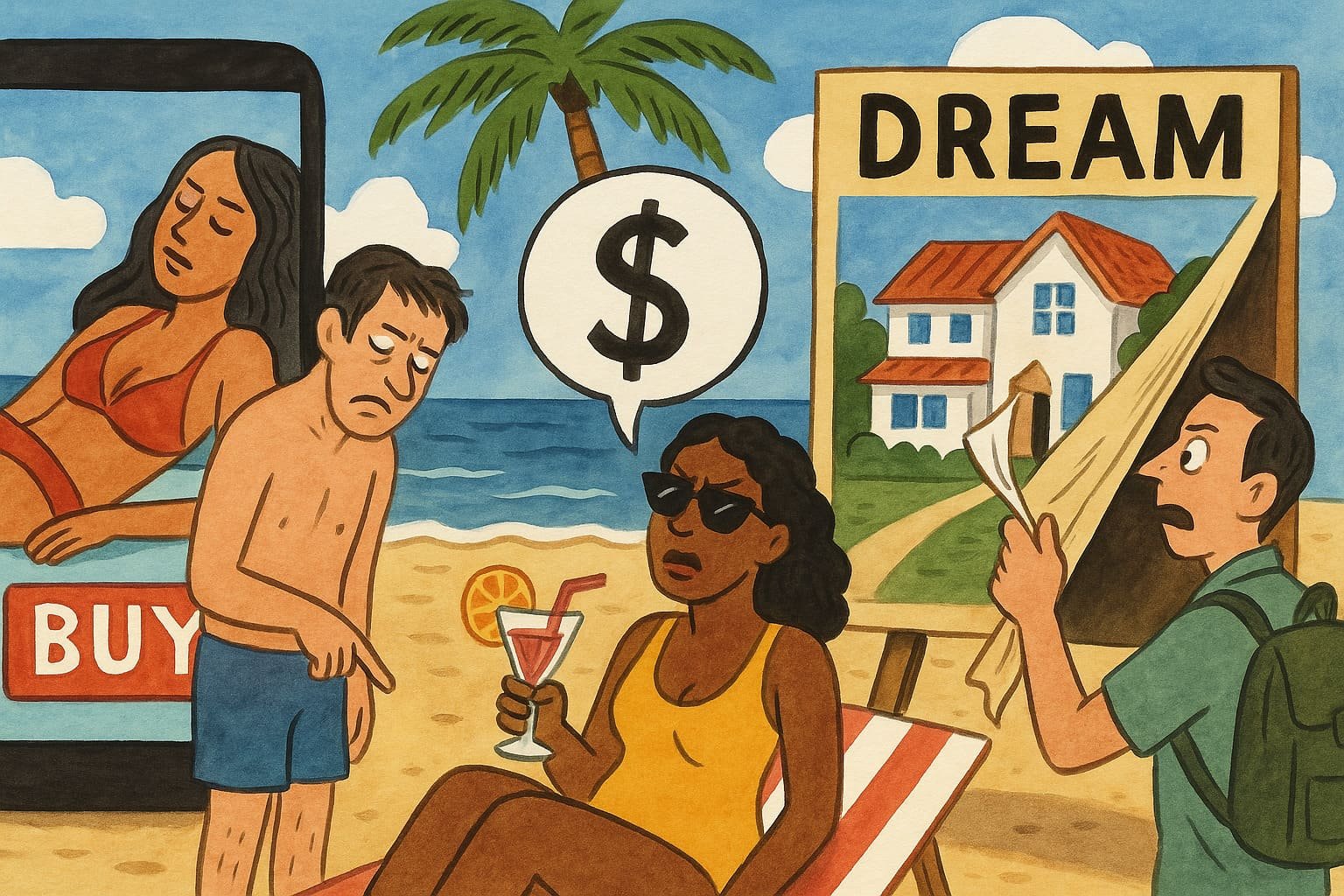
What if everything you wanted was weaponized against you? In a world addicted to aspiration, the biggest scam isn’t the overpriced handbag or the detox tea, but the dream itself. For decades, marketers have preyed on desires they helped manufacture, convincing you that success, love, and peace come in branded packaging. Behind every curated Instagram feed is a financial machine engineering envy at scale. It’s not commerce anymore; it’s psychological warfare disguised as lifestyle marketing.
Take the influencer who rose to fame selling skincare routines while battling cystic acne off-camera. Or the luxury brand that sold exclusivity while mass-producing in the same factories as fast fashion. These aren’t anomalies; they’re the blueprint. The dream life is the product, and you’re not just the buyer; you’re the fuel. Brands capitalize on FOMO and insecurity, planting narratives that whisper, “you’re not enough… yet.”
Luxury today isn’t about quality; it’s about identity. You’re not purchasing leather and thread. You’re buying belonging. You’re buying a momentary escape from feeling mediocre. And it works; brilliantly. But here’s the catch: the more you buy in, the more the goalpost moves.
Consider the real cost of that aspirational life. Not just in dollars, but in mental real estate. These dreams displace real fulfillment with perpetual striving. You chase the aesthetic instead of the life. But the aesthetic was always a mirage.
Beneath the glossy veneer lies the truth: the dream life isn’t sold to uplift you. It’s sold to trap you. As long as you keep reaching for more, brands will keep profiting. The dream is a dangling carrot not a destination.
Quick Notes
- Dreams as Products: Brands no longer sell goods; they sell fantasies. This turns your desires into profitable pain points.
- Luxury Redefined: True luxury isn’t quality; it’s exclusivity and status signaling, often built on manufactured scarcity.
- Emotional Hijacking: Marketing now works by tapping into self-worth and leveraging comparison culture to drive sales.
- Mental Toll: Aspiration marketing shifts our attention from intrinsic happiness to external validation, leading to burnout.
- The Trap of More: The system ensures the goal is always just out of reach, keeping consumers on a never-ending treadmill.
Manufactured Realities: When Storytelling Turns to Manipulation
Brand storytelling used to be about connection. Today, it’s about control. We’re told tales of founders bootstrapping their way to success, of eco-friendly missions and community uplift. But beneath the sleek origin stories are data-driven campaigns built to manipulate behavior, not inform it. It’s emotional engineering cloaked in relatability.
Take Everlane’s promise of radical transparency, now contradicted by labor disputes and quality inconsistencies. Or TOMS, which sold the idea of doing good by buying shoes, all while creating dependency in economies it claimed to help. The line between mission and manipulation isn’t just blurred; it’s gone.
Brands learned that customers don’t buy products; they buy identities. And if a story could simulate virtue or rebellion, it became a golden ticket. Companies crafted tales of underdog spirit and rebellious flair to mask monopolistic ambitions. These aren’t just tales—they’re bait.
Even corporate social responsibility became a marketing ploy. Sustainability? Great. As long as it doesn’t cut into profit margins. Diversity? Excellent. But only when it aligns with public relations goals. Behind every brand story now lies a spreadsheet.
This isn’t cynicism. It’s pattern recognition. When storytelling is engineered to evoke compliance, not connection, it stops being narrative and starts being propaganda. The true cost isn’t just money; it’s trust. And once that trust erodes, there’s no rebranding that can save it.
Cult of Consumption: Why You’re Always One Purchase Away from Happiness
What if happiness was just an algorithm away? Social media doesn’t just reflect desire; it manufactures it. Every swipe, scroll, and like feeds data to systems that know your insecurities better than your therapist. The result? Ads that hit your psychological weak spots with sniper accuracy.
In 2021, TikTok users were swayed by “That Girl” trends, selling morning routines, green juices, and matching yoga sets as the gateway to self-worth. But behind the aesthetic were overwhelmed twenty-somethings pretending to be whole. Brands flooded in, monetizing these trends until they collapsed under their own emptiness.
Algorithms don’t want you content; they want you consuming. They push messages that make you feel just off-kilter enough to crave the solution. That solution, of course, is always for sale. From wellness products to tech gadgets, your feed becomes a storefront disguised as self-help.
Marketing has mastered a new emotional palette: urgency, inadequacy, faux empowerment. You aren’t being sold something to enhance your life; you’re being sold a version of yourself that doesn’t exist yet. One that always needs just one more product.
The more tailored the message, the more personal it feels. But the truth is, it’s not personal. It’s mechanical. And that mechanical precision fuels a culture of chronic dissatisfaction. The moment of joy from unboxing fades quickly but the longing stays.
The Price of Authenticity: When Real Becomes a Marketing Strategy
Authenticity used to be a virtue. Now, it’s a business model. Brands have realized that vulnerability sells. Enter the era of “relatable marketing,” where crying on camera, showing stretch marks, and sharing struggles aren’t just moments of humanity; they’re sales tactics.
Consider Dove’s Real Beauty campaign. Initially revolutionary, it celebrated diverse bodies. But critics noticed a contradiction: while one arm promoted body positivity, another sold anti-aging creams. When truth becomes currency, lies evolve to mimic it.
Relatable influencers now share “raw” content that’s often pre-planned and curated. Behind every spontaneous rant or confession is a brand deal. Authenticity has become performative; a script to humanize capitalism. And audiences, once moved by it, are growing skeptical.
The hunger for real connection is deep, but it’s being exploited. People want truth, not marketing masquerading as emotion. They want community, not consumerism. Yet the market continues to blur the line until even sincerity feels suspect.
As realness becomes a brand in itself, we must ask: if everything is a performance, is anything truly authentic? When authenticity becomes aesthetic, truth dies in a glossy filter. And in its place grows a culture that trades vulnerability for virality.
Escape the Matrix: Reclaiming Your Story in a Branded World
You can’t fix a system by playing its game. Escaping the trap of branded aspiration starts with a shift in perspective. The most radical act in a hyper-marketed world is choosing fulfillment over frenzy. Awareness is the first act of rebellion. Once you see the strings, the puppetry loses power.
Start with conscious consumption. Ask yourself: does this brand align with my values, or am I chasing a persona? Replace mindless scrolling with mindful inquiry. Learn the difference between genuine expression and sponsored illusion. And most of all, define your version of success not the one sold to you.
Brands thrive when identity is outsourced. Reclaiming agency means crafting a life narrative independent of product placements. Community, creativity, purpose; these aren’t for sale. They’re cultivated. And they require intention, not impulse.
Support businesses that prioritize ethics over aesthetics. Seek out creators who value substance over spectacle. Build habits rooted in reality, not reaction. Your worth isn’t contingent on curation. It’s inherent.
The dream life shouldn’t be a trap. It should be a choice. And the only way to reclaim it is to stop letting brands write the script. Choose presence over performance. Choose meaning over marketing. Choose freedom over illusion.
Don’t Just Wake Up. Walk Out.
The greatest scam ever sold wasn’t a product. It was the belief that you were incomplete without it. That lie has kept industries booming, influencers rising, and consumers chasing shadows. But now you know. And knowing is power.
Awareness doesn’t just open your eyes. It opens doors. When you recognize the mechanisms, you stop being manipulated. You stop playing the part brands wrote for you and start authoring your own. The future belongs to those who choose truth over trend.
You are not a demographic. You are not a data point. You are not a market segment. You are a human being with agency, value, and voice. It’s time to use it.
So ask yourself: are you living your dream? Or someone else’s version of it that they profit from?
Choose wisely. The exit is right in front of you. All it takes is one step out of the illusion.
