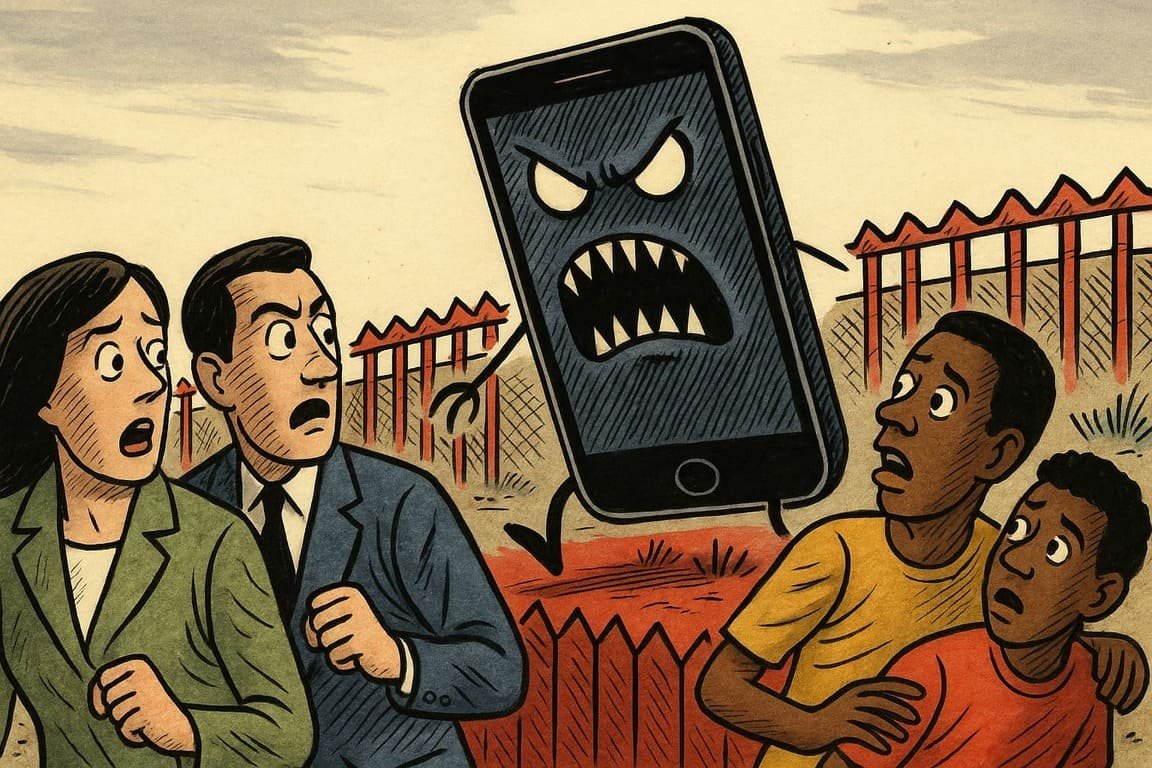
A hush falls over the neighborhood as midnight approaches. Outside, the world blurs beneath a sheet of streetlamp light, but inside homes, invisible boundaries crackle and shift. On the edge of a bed, a teenager’s phone hums with a notification she never signed up for. A smart speaker in the kitchen perks up, catching words never meant to be heard. In a conference room high above the city, executives watch heat maps of private homes, the bright red spots mapping out secrets that were never meant for anyone but family. Cameras hang discreetly, algorithms pulse beneath walls, and privacy is no longer something you own—it’s a privilege, revoked without warning.
Somewhere in a suburban living room, an insurance agent reviews footage from a customer’s doorbell cam, quietly judging risk by what groceries are carried inside. At the border of every digital promise stands a blurry line: one step, one click, one convenience away from violation. The world has become a stage without curtains. No script can guarantee safety.
Tonight, nothing feels truly private. Boundaries that once felt solid—a closed door, a whispered conversation, a locked diary—now feel as fragile as a cookie consent pop-up. The invasion arrives softly, silently, until every part of life feels mapped, measured, monetized. And just beyond the light, the next line waits to be crossed.
Quick Notes
- Tech Invades Quietly: Digital tools slide across old boundaries—home, body, mind—before you notice, redrawing the map of privacy with every update.
- Consent Is a Mirage: Most users “agree” to terms they never read, trading control for access. Companies cross lines, then ask for forgiveness.
- Personal Data Becomes Profit: What feels personal—health, location, even emotion—gets harvested, packaged, and sold. The line between service and surveillance disappears.
- Backlash Brews: Ordinary people, whistleblowers, and even governments push back, demanding new lines be drawn. Resistance becomes survival.
- Real Security Means Saying No: To reclaim dignity, people must understand, resist, and redraw the digital boundaries that matter most.
The Line Between Service and Surveillance
The promise of convenience hides a deeper price. You sign up for a smart device, hoping to save time or feel safer, but quickly discover the device is watching you back. Data flows from kitchen counters and bedrooms to distant servers, each detail logged, analyzed, and sold. A mother in Detroit learned her baby monitor’s video had been streamed to a cloud she couldn’t control. By the time the company apologized, the footage had already been reviewed by contractors across three continents.
The difference between service and surveillance grows thinner by the year. Ride-hailing apps track your every movement, voice assistants eavesdrop on dinner, and home security systems alert strangers when your lights go off. In a small town in Texas, police used footage from smart doorbells to solve crimes—but also to monitor neighbors for “unusual” behavior. The tech that promises protection becomes the tool that pierces safety.
Transparency is rare. Most companies bury details in legalese, relying on exhaustion to win your consent. “No one reads privacy policies,” admits Ravi Patel, an ex-product manager at a global social network. “We make them unreadable on purpose.” When a data breach occurs, companies offer identity monitoring and a vague apology. The real harm—trust lost, boundaries erased—goes uncounted.
Every click, every device, redraws the border between private and public. The new digital landscape is a maze of shifting lines, where comfort and risk travel together. What starts as convenience becomes, over time, an invasion you never agreed to.
Consent and the Mirage of Control
Consent has become a ritual, not a choice. You tap “accept” to access apps, unlock features, or just continue browsing. The process is so routine that most users can’t recall what they’ve agreed to. Legal scholars call it “consent fatigue”—a phenomenon engineered by design. In reality, companies shape your choices, nudging you past every checkpoint until control is little more than an illusion.
Take the story of Leo, a retiree who signed up for a health app to monitor his heart. Months later, he started receiving ads for mobility aids and meal delivery services. His data had been shared, resold, and used to profile his vulnerabilities. The app, buried in its privacy statement, had reserved the right to “share information with selected partners.” Leo’s “yes” was never informed; it was coerced by fine print and a blinking green button.
Children face even starker trade-offs. Parents install tracking apps for safety, only to discover the apps sell location data to marketers. A viral lawsuit in Europe exposed dozens of “kid-safe” platforms quietly harvesting classroom conversations. Regulators called for reform, but most apps stayed live, hidden behind updated user agreements.
Public backlash simmers, but change is slow. Few people can afford to abandon every tool that crosses the line. The reality: every act of consent is a gamble. The more you rely on digital services, the more you must trust unseen actors to honor invisible boundaries.
True control means the power to say “no”—and mean it. Until then, every agreement is a red line waiting to be crossed.
Your Life, Monetized
Nothing is sacred in the new data economy. What once stayed private—sleep patterns, medical histories, whispered secrets—now fuels billion-dollar markets. The sale is subtle, the invasion hidden in dashboards and trend reports. A fitness app, eager to add “community features,” leaked user locations to a marketing agency. Suddenly, running routes became targeted ad zones.
Retailers track not just purchases, but moods and movements. Facial recognition cameras in stores gauge shopper reactions, sending insights to headquarters in real time. When a major supermarket chain rolled out emotion-tracking kiosks, loyal customers discovered their smiles were worth discounts—while frowns meant no perks. A local news anchor, Danielle Wu, exposed the practice after her own loyalty account showed purchases she never made. The company called it a “personalization glitch.”
The most personal lines are the most profitable. DNA testing firms promise ancestry insights, then license genetic data to pharmaceutical companies. Insurance firms offer discounts for wearable fitness trackers, but quietly raise premiums for users flagged as “high risk.” What feels like empowerment is often exploitation.
The hardest part: these trades rarely feel like theft. They’re masked as upgrades, rewards, or even care. By the time you realize what’s missing, the value has changed hands.
Your digital life is mapped and sold, one line at a time. The profit isn’t just in your data—it’s in every border you never noticed being crossed.
The Backlash Begins
Lines, once crossed, can spark rebellion. As the invasion grows, resistance is building—slow, uneven, but unmistakable. Ordinary people, burned by betrayal, share horror stories that go viral. A Berlin artist, Lina Volk, launched a project displaying her own private data on public billboards, forcing neighbors to confront the scale of surveillance. The installation was shut down in days, but the conversation exploded.
Governments are catching up, though always a step behind. New regulations demand clearer consent, stricter boundaries, and “right to be forgotten” policies. Yet, enforcement lags. In California, privacy activists forced a tech giant to delete millions of records, only to learn backups lived on overseas servers. True erasure remains elusive.
Whistleblowers emerge, risking careers to reveal how the lines are crossed. Frances, an ex-engineer at a smart speaker firm, testified to lawmakers about “accidental” recordings stored for years. Her confession changed policy, but the devices stayed on store shelves.
Communities fight back in creative ways. Neighborhoods hold “tech detox” weekends, turning off Wi-Fi and rediscovering analog joys. Schools ban cell phones and teach digital literacy as survival, not just etiquette. These small rebellions redraw lines the market erased.
Change is slow, but the backlash is growing. People want dignity, not just convenience. To defend their borders, they must make noise, demand answers, and learn to live with less.
Drawing New Lines
Reclaiming the digital borderline requires clarity, courage, and sacrifice. You must know your own red lines, even when the world calls them old-fashioned. The simplest act—deleting an app, refusing a discount, saying “no” to one more device—can be an act of radical self-defense.
Real security starts with awareness. Read the fine print, question every request, and resist the urge to trade privacy for perks. Demand better from companies and lawmakers. Support tech that honors your boundaries, not just your wallet.
Organizations can lead by example. A Dutch bank, confronting a scandal over customer tracking, launched a “privacy first” campaign—voluntarily erasing all non-essential data. Customers responded with loyalty and trust. “We crossed a line,” admitted CEO Johan Nys. “Now we draw it ourselves, every day.”
The future belongs to those who defend their space. Teach children to value the unseen room between self and screen. Insist on tools that put you in control, not the algorithm. Remember: every line you hold is a victory for dignity.
The invasion is real, but the fight is not over. With each choice, each small act of resistance, you redraw the world you want to live in.
Final Edge: Where the Line Ends, You Begin
The last lights fade from the kitchen window as dawn threatens the dark. The city breathes in silence, secrets tangled in wires beneath the street. A father watches his daughter sleep, phone face down, firewall armed, knowing that the truest borders are those he chooses every morning. In a world obsessed with access, boundaries become sacred again. The courage to draw a line is the courage to live. Tonight, ask yourself: what is worth defending, and where do you finally say “enough”?
